Encouraging Lifelong Fitness in Kids

The Centers for Disease Control recommends that children have at least 60 minutes of physical activity a day. The activity should include aerobic exercise, muscle strengthening and bone strengthening. As working parents, it is often difficult to find the time or energy to get your kids active. Here are a few tips on getting your children active.

The Centers for Disease Control recommends that children have at least 60 minutes of physical activity a day.  The activity should include aerobic exercise, muscle strengthening and bone strengthening.  As working parents, it is often difficult to find the time or energy  to get your kids active.  Here are a few tips on getting your children active:

1. Make it fun.

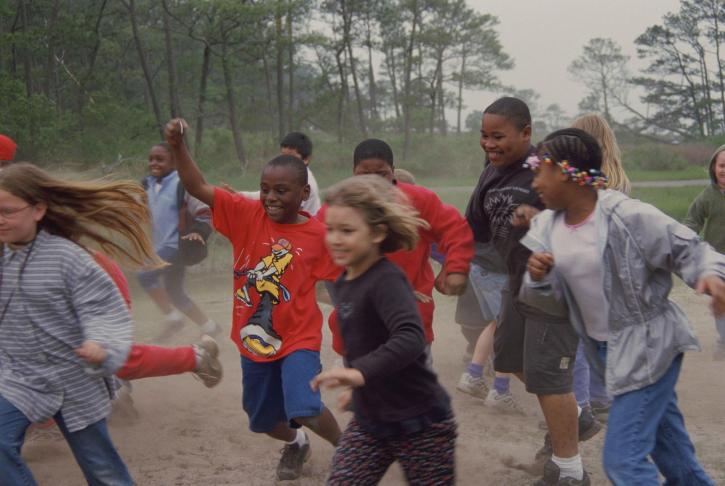
The best way to get your children active is to make it fun.  As a kid, I used to LOVE playing outside. I would spend hours riding my bike, climbing trees and playing tag with my neighborhood friends.  I didn’t call it exercise; I called it play, and I almost never got tired of it.  Nowadays, there are so many distractions that can keep our children from developing the joy of active play.  It’s easier to plop your kids in front of the television or put an iPad in their hands than to worry about their safety outdoors.  What I have learned from my own children, however, is that they still have that innate desire to play.  Even if they don’t say so, I can tell by how often I have to stop them from running through the house and jumping on their beds.

Where possible, allow your children the opportunity to get outside.  Invest in scooters, bikes and skates – just don’t forget a helmet! If your child isn’t interested in toys with wheels, go exploring through your neighborhood allowing your children to get moving with a purpose.  My youngest loves to search for acorns.  He also loves it when we take walks through our local park and I let him lead the way.  If you have a child with a competitive spirit and you’re up to it, challenge him/her to a short foot race. I regularly race my kids to the car in a safe parking lot or up a short flight of stairs.  If you’re like me, you’ll lose, but at least it will get their heart rate up and encourage that love of active play that they will carry into adulthood.

2. Enroll in active extracurricular activities.

Since my boys were three, they have been enrolled in martial arts.  While we initially chose  karate for the discipline and self-defense, we quickly learned about the endurance and strength it takes to practice the art.  Each lesson starts with a work out that includes obstacle courses, running, push-ups, jumping jacks and squats.  By practicing martial arts, my children are engaging in over an hour of aerobic exercise and strength training each week.

As your children get older, the world of athletic extracurriculars will expand.  Whether it’s basketball, lacrosse, football, dance or karate, extracurricular activities allow your children a fun and productive way to get moving! Boys and Girls Clubs and other community centers make extracurricular activities affordable for any budget.  They also enable you to take a break while your children’s instructors do the hard work!

3. Walk when possible.

As a former city kid, I always had opportunities to walk.  So much so that I dreamed of the day that I would be able to drive.  I started taking public transportation alone when I was ten and that was pretty much my primary mode of transportation until I was 18.  Now, as a resident of the suburbs, it isn’t always as easy to stay active.  I can drive pretty much everywhere and the longest walks I get are across a big parking lot.  I find it increasingly important to find opportunities to walk when I am able.

Whether its parking a little farther away from the grocery store or waking up early to allow yourself the time to walk your kids to school in the morning, you can find a way to squeeze in that extra exercise for you and your child.  I knew a mom who lived far away from our elementary school but would park a few blocks away just to get a walk in with her daughter each morning.  She was always sweating when she arrived but her and her daughter looked energized and ready to start the day.  If walking your kids to or from school isn’t an option, you can encourage your child to get in extra steps by avoiding short cuts.  Take the long way to the produce section of Target or park on the opposite end of the mall when taking a trip to Macy’s.  Even if you have a tendency to rush, allowing yourself the extra time to take your time will have lasting effects on the health of your children.

4. Don’t use bad weather as an excuse.

I have been guilty of this one myself.  If it’s raining, cold or too hot, I am tempted to take an ‘L’ on the day.  However, just because you are stuck indoors doesn’t mean you can’t get active.  With the surge of indoor play areas like Pump it Up, Sky Zone and Monkey Joe’s, kids have the option to jump and play for hours in the safety of the indoors.  In addition, certain dancing and sports video games allow children the opportunity to get active while staring at a screen.  If indoor play areas and interactive video games aren’t in your budget, you can also get your children active at home.

I asked Certified Fitness Professional Troy Brown of Tru2Fitness, LLC for advice on getting your children active indoors.  Troy recommends encouraging your children to do push-ups and squats to work their upper and lower body.  If space permits, he also recommends jump ropes for aerobic exercise and resistance bands to build strength.  Troy also notes that everyday household items can be used as weights for more strength training.  A 16oz bottle of water is 1lb and a 24oz bottle is 1.5lbs. With some creativity, you can design a quick workout plan that can get you and your kids active even on a rainy day! You can follow Troy on Twitter, Instagram, YouTube and Pinterest @tru2fitness for more great tips on how to get active!

5. Lead by example.

“Adulting” is hard.  After a long day of work, I usually want to put my feet up, bury my nose in a good book and check out.  Likewise, some weekends, I would be perfectly content to just curl up in my bed and binge watch mindless television.  The thing is, my kids are always watching.  If I want to set a good example for them, I have to practice what I preach about healthy habits, including exercise.  For Mother’s Day 2014, I bought myself a brand new bicycle. What started off as a few circles around the block, turned into a lifestyle for me.  I grew to adore cycling.  It wasn’t long before I started taking my kids with me on my bike rides through local parks and our neighborhood. They absolutely loved it!

During the off season, I joined our local gym to stay in shape and made sure it had a kids’ space designed to keep them active while I work out.  The space has a jungle gym and trampolines.  They love it so much they ask me to go to the gym.  This helps hold me accountable because my kids notice when we haven’t been in awhile.  Family friendly gyms like the YMCA and Lifetime Fitness offer opportunities to get active with your kids. My husband regularly takes our boys to the Y for Open Gym to run around and shoot hoops. For them, it just feels like play but they all come home sweaty with calories burned.


***

About The Author

Faye McCray is anMcCray_AuthorPhoto (1) attorney by day and writer all the time. Her work has been featured on My Brown Baby, AfroPunk, AfroNews, For HarrietMadame NoireBlack Girl NerdsBlack and Married with Kids, and other popular publications.  Faye also has a number of short stories and a full length novel available for purchase on Amazon.  Most importantly, Faye is a proud wife and mother to three beautiful and talented young boys who she is fiercely passionate about raising. You can find Faye on Twitter @fayewrites and on the web at fayemccray.com.
Moving? Here are 5 Tips to Help Identify the Right Neighborhood for You and Your Family

It’s inevitable. At some point in all of our adult lives, we have to choose a place to live. I hate, despise and loathe moving but I love the possibilities of settling into a new place. If a move is in your near future, here are five golden rules for choosing the right fit for you and your family.

It’s inevitable. At some point in all of our adult lives, we have to choose a place to live.  I hate, despise and loathe moving but I love the possibilities of settling into a new place.  If a move is in your near future, here are five golden rules for choosing the right fit for you and your family.

1. Identify your priorities.

For us, we had four major priorities: 1) good schools, 2) diversity, 3) safety and 4) proximity to work.  When we purchased our first home in 2011, neither of our children were school age. However, public education was something that was important to us. We didn’t want to have to send our children to private schools so we could save money for their college education.  My husband and I both graduated with student loan debt and didn’t want the same burden for our kids. We also wanted to raise our boys in a diverse area. We didn’t want to be the only family of color.  I grew up in Queens, New York which is the most ethnically diverse area in the world (actual fact, y’all).  My friends were from everywhere and I think that prepared me to move in this world as a much more well rounded human. I wanted the same for my children.  Safety was also a major priority for us. I wanted to live in a community with a low crime rate so I felt free to take long walks and bike rides with my children without worrying.  Lastly, proximity to work was important to me.  As a New York City native, I knew what it was to spend hours in gridlock on a freeway or moving between buses and trains. It was important to me that my husband and I both made it home in time for dinner and if we had to get to our children in a hurry, we wouldn’t have to worry about a long commute.  Ideally, I wanted to be able to get to work in under a half an hour.

Your priorities may be different but it is important you identify them before you begin your search. That will help you narrow your search range and also identify reasonable expectations in terms of size and price.  Identifying good school districts often has a big impact on price and taxes.  Ultimately, we had to downgrade our expectations in terms of house size in favor of an excellent and diverse school district.

2. Research. Research. Research.

Identifying your priorities should provide you with a search range.  If not, try to come up with a list of desirable counties within your state or even better, towns or cities.  Google was my best friend when researching. You can find everything from the history of an area, to recent news, to community boards.  Specifically, however, it is important to look into crime reports (including the sex offender registry), school score cards and demographics.  The county police department is a good place to start for crime reports.  Our local police department’s website provides statistics and a daily bulletin documenting police reports and crimes. It doesn’t take long to identify areas of high crime activity.  If your unable to find this information online, give them a call.  There are also great sites for school data.  I  begin with the actual school district website and then I move to sites like greatschools.org which provides a comprehensive score card including demographic information. There you can find a percentage of each ethnicity in a school district which will help you weed out school districts that lack diversity (if that is important to you).  Markers like students participating in the free or reduced lunch program also provide a snapshot in the economic diversity of a community. I dig a little deeper into demographics by visiting sites like city-data.com which provides information such as religions, income, weather and how educated a particular community is.  The site also provides forums to ask questions about specific areas that may be more difficult to research (i.e, areas with good Ethiopian food).

Lastly, take advantage of the plethora of real estate websites and apps. I adore realtor.com.  Even now, when we are planning on staying in our house for at least the next five years, I have the realtor.com app on my smartphone and anytime we are in a new community I run a local search of home prices.  Realtor.com allows you to search by school district and provides a snapshot of past property assessments which gives you a great idea of how a community is doing in terms of home value.  It is so important to look into how the home prices have been doing.  While most communities experienced some depreciation following the 2006-07 housing bubble, a good area should have a steady increase in home appreciation.  You want a house that builds equity.  Steady declines or tons of foreclosures and short sales could be a big red flag.

3. Spend time in the community.

Once you’ve narrowed your search, plan a visit.  For us, we rented in our community for two years before buying so we had plenty of time to identify areas that seemed like the right fit.  Whether renting is your end objective or you are going straight to buying, make sure you take time to visit and get a good feel for the communities you are interested in.  A realtor once recommended I visit the area in the morning, afternoon and evening.  This gives you an idea of what a community looks like at all times of day not just during the quiet of the afternoon when everyone is at school and work.  When we were apartment hunting, my husband and I fell in love with this cozy apartment seemingly tucked away in a beautiful wooded area.  We visited in the morning and were ready to sign the lease but decided to grab lunch and talk it over before committing.  When we came back that afternoon to met with the leasing consultant, we were surprised to find the leasing office locked and the leasing consultant sitting behind his desk looking visibly uncomfortable.  There were more people around the once quiet community that didn’t crack a smile at us as we approached. It didn’t take long to realize that the leasing consultant didn’t feel safe in the community and neither did we. We immediately crossed that apartment complex off the list.

While your visiting, also be sure to visit local establishments. Markers of a good community include commerce.  If you are unable to identify a local grocery store or small business within 10-15 minutes of your home that should raise a red flag about the money people are putting into the community.  Visiting local establishments also gives you an idea of the attitudes of the people in the community.  When we were house hunting, we visited a neighboring county with much lower home prices but really great school districts.  The only problem is the community lacked the diversity we were hoping for.  Considering the sacrifice, we spent the day with our realtor looking at some great homes that came in under budget.  When we were done for the day, we went out for pizza at a local spot that had good reviews.  When we walked in, you could hear a pin drop.  To put it plainly, we were the only brown faces and it was clear everyone noticed.  While everyone was decent enough, they were curious where we were from and how long we were staying.  Answer: not here, not long.  Spending time in a community can be one of the fastest ways to identify small minds.

4. Get advice.

Talk to people! As a non-native of my current neighborhood, I didn’t know all the ins and outs of the areas I was researching as I would have in my hometown.  I remember seeing a beautiful area off the interstate and questioning a friend and she said simply you don’t want to live there.  When I pressed her, she told me it was an area of high KKK activity.  She admitted even as a white person she would never go there.  After I google verified, I nearly kissed her.  Sometimes you need a person to tell you what research will not.  Like, the deserted areas where the street lights never work, the roads that people speed down, the local grocery store that always sells spoiled food, or the areas where small minds outnumber progressive ones.  I asked co-workers, friends and even questioned strangers when visiting the areas on my list.

Also, if within your budget, consult a realtor.  A good realtor can be a life saver but be mindful, not every one is a good fit.  When we first started our home search, we hired a realtor that insisted on directing us to areas we weren’t interested in.  After months of back and forth, I started visiting homes on my own and in the process met an amazing realtor who listened.  He knew our priorities and was patient with our search.  I was actually happy to fork him over a check at closing.

5. Don’t settle.

Whether searching for a home or an apartment, the process can be exhausting. From securing financing, to saving, to visiting places, it’s tempting to just pull an “eeny, meeny, miney, moo” and call it a day.  However, whether its a lease or a mortgage, you don’t want to be stuck in a place that makes you miserable for any amount of time.  Take your time and don’t settle. Even if that means putting your search aside or making temporary accommodations like a short term lease while you decide.  You want to have peace of mind where you rest your head each night so choose wisely!


***

About The Author

Faye McCray is anMcCray_AuthorPhoto (1) attorney by day and writer all the time. Her work has been featured on My Brown Baby, AfroPunk, AfroNews, For HarrietMadame NoireBlack Girl NerdsBlack and Married with Kids, and other popular publications.  Faye also has a number of short stories and a full length novel available for purchase on Amazon.  Most importantly, Faye is a proud wife and mother to three beautiful and talented young boys who she is fiercely passionate about raising. You can find Faye on Twitter @fayewrites and on the web at fayemccray.com.

Living History: Meet Betty Soskin, America’s Oldest Park Ranger

At 94 years old, Betty Reid Soskin is the oldest living ranger for the National Park Service. She serves as Interpretive Ranger at the Rosie the Riveter World War II Home Front National Historical Park in Richmond, California. Today, she works up to five days a week and five hours per day. Her work entails giving two or three presentations in the park theater. She answers emails and requests from her office. She also conducts wildly popular bus tours through the areas that make up the park. She speaks honestly in her presentations about both discrimination and efforts for integration that occurred during WWII. Remarkably, she doesn’t use notes or a guide. Instead, she speaks from her lived experience and personal history. Her pace would be incredibly impressive for someone half her age. Here are eight facts you need to know about this American Shero.

At 94 years old, Betty Reid Soskin is the oldest living ranger for the National Park Service.  She serves as Interpretive Ranger at the Rosie the Riveter World War II Home Front National Historical Park in Richmond, California. Today, she works up to five days a week and five hours per day.  Her work entails giving two or three presentations in the park theater.  She answers emails and requests from her office.  She also conducts wildly popular bus tours through the areas that make up the park.  She speaks honestly in her presentations about both discrimination and efforts for integration that occurred during WWII. Remarkably, she doesn’t use notes or a guide.  Instead, she speaks from her lived experience and personal history.  Her pace would be incredibly impressive for someone half her age.  Here are eight facts you need to know about this American Shero:

betty-reid-soskin

1. She was the great-granddaughter of enslaved Americans.

Soskin was born in Detroit, MI and lived part of her childhood in New Orleans before settling in Oakland, California.  Her parents were of Creole and Cajun descent and her great-grandmother was born into slavery in 1846.

2. She was an activist and artist.

In the 1950s, she and her husband were subject to death threats after they built a home in Walnut Creek, California, all-white suburb.  She became active in her local Unitarian Universalist Congregation and the Black Caucus of the Unitarian Universalist Association.  In the 1960s, she became a well-known songwriter in the Civil Rights Movement. Check out a song she wrote reposted on her blog here.

3. She was a part of the American Labor Movement.

During World War II, Soskin served as a file clerk for Boilermakers Union A-36, which was an all African American union derivative that formed because segregationist policies allowed the White union to refuse their entry into the ranks.

4. She was a witness to the Port Chicago Disaster.

In 1944, 320 Americans, mostly African American sailors were killed when two ships being loaded with ammunition and bombs suddenly blew up. Soskin’s family hosted sailors who served in the U.S. Navy during that time.  Notably, the Port Chicago Disaster led to the Port Chicago Mutiny where  258 African American enlisted personnel refused to return to the disaster site and load ammunition until Navy officials changed load procedures to enhance safety.

5. She helped establish the Rosie the Riveter World War II Home Front National Historical Park where she currently serves.

Soskin served as a field representative for California Assemblywomen Dion Aroner and Loni Hancock.  During this time, she became active in the early planning and development of the park set to memorialize women during World War II.   As someone who “lived it”, she became a fierce advocate for preserving the history of African American women during World War II.  She called attention to the often left out group who played a pivotal role in aiding the war effort while being denied basic rights and continuing to be treated as second class citizens within the country.

6. She is an active blogger.

Soskin is an active blogger and maintains updates that are reflections on her life and work. You can read her blog, which she regularly updates here.

7. She was honored by President Obama.

She has several interview requests and has received several honors from luminaries.  In 2015, President Barack Obama gave Soskin a commemorative coin to honor her as the oldest living park ranger.

8. She survived a vicious attack in July 2016.

On July 1, 2016, Mrs. Reid Soskin awoke to a masked man standing over her bed.  The assailant attacked her, ransacked her apartment and stole several things from her including the commemorative coin given to her by President Obama.  She survived the attack by escaping to a bathroom and barricading the door until the assailant retreated.  After the attack, she received hundreds of letters and emails.  A Go Fund Me page was set up for her through the National Park Service that helped her replace some things that were stolen.  She was sent a replacement coin with the Presidential Seal from the White House.  She was able to come out of the incident with only bruises, but her quick thinking and indomitable spirit kept her alive through the ordeal.

***

Information attained from:

Betty Reid Soskin, CBreaux Speaks, http://cbreaux.blogspot.com/

Rachel Gillett, “Meet the 94-year-old park ranger who works full-time and never wants to retire”, http://www.businessinsider.com/94-year-old-park-ranger-betty-reid-soskin-interview-2016-8

Richmond Pulse, “Q&A: Nation’s Oldest Park Ranger Cites Outpouring of Support in Healing After Robbery”, http://newamericamedia.org/2016/08/qa-nations-oldest-park-ranger-cites-outpouring-of-support-in-healing-after-robbery.php


***

About The Author

Rick McCray is a maRAMrried father of three amazing sons. He is also a proud graduate of Duke University where he holds a BA in History and African/African American History, and Howard University School of Law. He is also a regular commentator on the In The Black podcast.  Rick is passionate about our history and helping to educate our community concerning the great contributions of people of color to the world. You can find Rick on Twitter @RealRickMcCray.


Best of the Worst: Kid’s Meals at Your Favorite Chain Restaurant

From Chili’s to Olive Garden, here are the best and worst options at 6 of the most popular restaurant chains.

Here we go again! Despite my best intentions, eating out is often inevitable for my family. With two kids and another on the way, I’ve learned to cut myself some slack when I am not able to serve home cooked meals everyday. However, with nutritional info often buried on websites and in secret books, it isn’t always easy to make informed decisions when making choices for my children.  I did some digging to make it easier for all of us! From Chili’s to Olive Garden, here are the best and worst options at 6 of the most popular restaurant chains.

Note: According to the Centers for Disease Control and the American Heart Association, kids should have between 19-30g of sugar per day and 1,500mg of sodium per day.  Children ages 4 to 8 need 33 to 78 grams of fat daily; kids ages 9 to 13 require 39 to 101 grams of fat daily.  Sources of healthy, unsaturated dietary fats for children include vegetable oils, purified omega-3 oils, avocados, olives, peanut butter, nuts and seeds. Saturated, unhealthy fats are found in high-fat meats, lard, butter, cream, ice cream and full-fat dairy products, such as whole milk and cheese. The options below were measured by calories, fat, sodium and sugar content.  It did not include a review of artificial ingredients or other chemicals used in the making of these foods.  Many of these options, when combined, exceed recommended daily intake for sodium, sugar and/or fat. As always, use your best judgment when making choices for your children!

1. Chili’s

BEST: Grilled Chicken Platter, 160cal, 4g of fat, 690mg of sodium, 31g of protein with a side of celery sticks or steamed broccoli and to drink: Water or Cranberry Juice 80cal, 20g of sugar

WORST: Pepperoni Pizza, 34g of fat, 1250mg of sodium and 8g of sugar and Homestyle Fries, 190cal, 8g of fat, 710mg of sodium, Kid’s Float 330cal, 10g of fat, 63g of sugar

2. Applebees

BEST: Kid’s 4oz Sirloin, 140cal, 6g of fat, 180mg of sodium, 23g of protein; Side: Applesauce, 40cal, 8g of sugar; Chicken Griller is a good alternative at 4g of fat but has 760mg of sodium; Drink: Water or Milk 1%, 110cal, 2.5g of fat, 12g of sugar

WORST: Kid’s Grilled Cheese, 640cal, 32g of fat, 2080mg of sodium, 42g of protein; Side: Fries 430cal, 20g of fat, 970mg of sodium; To drink: Oreo Cookie Shake, 820cal, 39g of fat, 460mg of sodium and 74g of sugar;

3. TGIF Friday’s 

BEST: Pasta & Marinara, 240cal, 150mg of sodium, 9g of protein, 2g of fat; side: Side Salad or fruit cup, to drink: Water or Kid’s Crush Strawberry Lemonade, 60cal, 15g of sugar.

WORST: Kid’s Sliders, 470cal, 31g of fat, 1290mg of sodium; Side: Seasoned Fries, 320cal, 16g of fat, 1010mg of sodium; Drink: Kid’s Chocolate Milk, 230cal, 3.5g saturated fat, 36g of sugar, 135mg of sodium

4. Pizzeria Uno’s

BEST: Kid’s Pasta, 300cal, 3g of fat, 280mg of sodium, 8g of sugar, 11g of protein; Side: Carrots and Cucumbers, 60cal, 80mg of sodium, 7g of sugar; Water or Non-Carbonated Drink

WORST: Chicken Pops, 970cal, 42g of fat, 55g of sugar, 2130mg of sodium; Side: French Fries, 350cal, 27g of fat, 1190mg of sodium; To drink: Chocolate Cookie Freezer, 480cal, 14g of fat, 83g of sugar.

5. Cheesecake Factory

BEST: Kid’s Roadside Sliders, 390cal, 5g Saturated Fat, 620mg Sodium; Side: Kid’s Fresh Fruit; To Drink: Water or Milk

WORST: Kid’s Pasta with Alfredo Sauce, 1250cal, 55g Saturated Fat, 784mg Sodium; Kid’s French Fries, 270cal, 2g Saturated Fat, 1228mg sodium

*Cheesecake Factory info was incredibly difficult to uncover. While a large majority of the menu information is available on the website, the kids meal information is notably absent. According to Calorie Lab, this info is available in a booklet upon request inside their locations.

6. Olive Garden

BEST: Kid’s Grilled Chicken, 490cal, 11g fat, 710mg sodium, 34g protein; Side: Steamed Broccoli; To Drink: Water or 1% Milk

WORST: Cheese Ravioli 340cal, 16g fat, 990mg sodium, 17g Protein, To Drink: Raspberry Lemonade, 100 cal, 28g of sugar


***

About The Author

Faye McCray is anMcCray_AuthorPhoto (1) attorney by day and writer all the time. Her work has been featured on My Brown Baby, AfroPunk, AfroNews, For HarrietMadame NoireBlack Girl NerdsBlack and Married with Kids, and other popular publications.  Faye also has a number of short stories and a full length novel available for purchase on Amazon.  Most importantly, Faye is a proud wife and mother to three beautiful and talented young boys who she is fiercely passionate about raising. You can find Faye on Twitter @fayewrites and on the web at fayemccray.com.


Patriotism and Our Children

As a thinking child of color being raised and educated in the United States, it doesn’t take long to recognize your place in this country’s celebrated history. During the 1787 Constitution Convention, the same folks that declared “all men are created equal” also drafted the Three-Fifths Compromise which counted non-voting enslaved Africans as three-fifths of a person. Those same men denied women the right to vote. This conflict between principle and practice was a theme throughout history and still resonates today.

Speaking in Milwaukee, Wisconsin in February 2008, while her husband was still campaigning for President, the future first lady Michelle Obama stunned many when she declared, “… for the first time in my adult life I am proud of my country and not  just because Barack has done well but because I think people are hungry for change and I have been desperate to see our country moving in that direction and just not feeling so alone in my frustration and disappointment.”  While during the rally her comments were met with applause, almost immediately the media pounced.  People questioned her patriotism and her allegiance to a country her husband was campaigning to represent.  Things worked out.  However, I remember thinking at the time how much I valued her honesty in that moment.  It clearly wasn’t scripted and frankly, I don’t know any intellectual who didn’t know exactly what she meant.

With all the recent controversy over Colin Kaepernick (the football player calling national attention to police killings of unarmed people of color by lowering himself to one knee during the National Anthem), it has reignited the debate about what patriotism is and who has the right to exercise it.

According to Merriam-Webster, patriotism is defined simply as the “love for or devotion to one’s country.” The word is derived from the latin word “patriota” which means countryman.  The noun “patriotism” began to popularize in 18th century Europe to inspire a love and loyalty of their country in students.  Interestingly, during the American revolution, revolutionaries, those fighting for American independence, were dubbed “Patriots.”  Although they were rejecting the ruling British monarch, they were committed to the principles of republicanism which held liberty and unalienable individual rights as central values, making white men sovereign and rejecting monarchy, aristocracy, inherited political power and corruption.

As a thinking child of color being raised and educated in the United States, it doesn’t take long to recognize your place in this country’s celebrated history.  During the 1787 Constitutional Convention, the same folks that declared “all men are created equal” also drafted the Three-Fifths Compromise which counted non-voting enslaved Africans as three-fifths of a person.  Those same men denied women the right to vote.  This conflict between principle and practice was a theme throughout history and still resonates today.

“All I could think while he was bellowing out “land of the free and home of the brave” was that the song was written in 1814.  His ancestors, while brave, were anything but free.  Was it my responsibility in that moment to interrupt the song my then five year old was so proud to sing to me and tell him the truth?”

Like most parents, I feel a responsibility to my children to tell them the truth.  However, at six and nine, it isn’t always easy to know how much truth they can handle.  Our history in this country can be complex.  Our current primary education system doesn’t really allow for a discussion of that complexity.  It is Eurocentric and designed to create loyalists, much in the same way the old British monarch envisioned it.  As a parent, I want to reveal those complexities and challenge my children to think.  However, I struggle with revealing the truth to them in a way that doesn’t burden them or make them feel anger and shame.  Last year, my middle baby began Kindergarten.  I remember how enthusiastic he was when he came home and insisted on singing the new song he had learned in music class.  It was “The Star Spangled Banner,”our national anthem.  All I could think while he was bellowing out “land of the free and home of the brave” was that the song was written in 1814.  His ancestors, while brave, were anything but free.  Was it my responsibility in that moment to interrupt the song my then five year old was so proud to sing to me and tell him the truth?

In present day society, as a mother of three brown boys I would be lying if I didn’t admit loving them involves a considerable amount of worry.  Police corruption and violence is a reality.  The school to prison pipeline is a reality.  Mass incarceration is a reality.  All of which disproportionately impact humans that look like them.  I can’t deny my disappointment in a government and citizenship that makes it a habit of looking the other way rather than committing to its own founding principles and insisting on change.  Watching Kaepernick take a knee and a multitude of athletes follow suit, I can’t help but recognize the act as a direct affront to that conflict I recognized as a child.  The physical act calls attention to the disparities between principle and practice. Viewing the act through a parental gaze, I can only hope that my boys would make a similar choice one day.  Although they may never have the opportunity to take a knee on a national stage, I would hope they would question the reality of the world around them and be brave enough to take action, much like this country’s Founding Fathers did even if our people were left on the side lines. To recall the 2008 words of our first lady, I have “been desperate to see our country moving in [the direction of change]” and to not feel “so alone in my frustration and disappointment.”

“If no one ever criticized their governments, there would be no abolition of slavery, no civil rights movement and frankly, no United States of America.”

Which begs the question, what do I teach my children about patriotism? Is it to stand on the side of those that say America “right or wrong”? Those that hurl racial epithets and demand revocation of citizenship to those that hold America accountable to its own standards? Or is it to stand on the side of those that recognize the complexity and disappointment that can sometimes go along with American citizenship? Those that recognize that there is still an underclass of people brandished to the side lines? Leading question, right? Obviously for me, the answer is to stand on the side of the thinkers.  Blind loyalty above criticism is the antithesis of patriotism.  If no one ever criticized their governments, there would be no abolition of slavery, no civil rights movement and frankly, no United States of America.

I want my children to question everything and challenge the status quo. I want them to seek knowledge even if it means stepping outside of what makes them comfortable and admitting when they are wrong.  I didn’t stop my five year old from singing the National Anthem.  However, as my children get older, I hope to act as their teacher, unfolding the truths hidden in history.  I hope to encourage their questions, their skepticism and their empathy for the citizens left out or addressed as footnotes.  I hope we can be truth seekers together, since I am the product of the same education system.  I hope with that truth comes criticism. In fact, I expect it. If one day those choices are met with the label of unpatriotic, by today’s definition, I can only be proud.


***

About The Author

Faye McCray is anMcCray_AuthorPhoto (1) attorney by day and writer all the time. Her work has been featured on My Brown Baby, AfroPunk, AfroNews, For HarrietMadame NoireBlack Girl NerdsBlack and Married with Kids, and other popular publications.  Faye also has a number of short stories and a full length novel available for purchase on Amazon.  Most importantly, Faye is a proud wife and mother to three beautiful and talented young boys who she is fiercely passionate about raising. You can find Faye on Twitter @fayewrites and on the web at fayemccray.com.

Overcoming Failure

Failure and loss are parts of life. As a child, these experiences can be devastating. Here are five tips to help your child overcome setbacks.

Failure and loss are parts of life.  As a child, these experiences can be devastating. Here are five tips to help your child overcome setbacks.

1.Failure is part of the process.

Competition, in all forms, brings up some of our prehistoric instincts of survival and tenacity.  In high school, I competed in basketball and debate.  I can still remember the rush of energy and excitement I felt preparing to compete.  If I lost, that heightened adrenaline could make it feel like the world was ending.  I felt like I wasn’t good enough, and everyone watching me fail saw the same thing.

It’s hard not to take failure personally.  Even as adults. Our job as parents is to constantly remind our children of the bigger picture.  In my case, it was to become a better basketball player and debater.  My mother would remind me that every great athlete, artist, and entrepreneur failed many times on their path to success.  With each failure, they learned something that contributed to what made them great.

2. Celebrate small victories.

My youngest son had a hard time learning to write.  He would grow frustrated, drop his pencil and claim he was “too tired” to write any more words.  We decided to work with an Occupational Therapist to get him ready for Kindergarten.  She helped in many ways but one of the things we appreciated the most was how she celebrated his small achievements.  For instance, although his ‘B’ may have still been backwards, she would praise him for keeping it on the line.  His ability to see his progress encouraged him to keep trying when he felt like giving up.

No one becomes great without practice.  The thing about practice is that it can look messy.  You try and fail and repeat until you stop making mistakes.  It is important to help our children appreciate their progress so they are able to recognize how far they have come.  That makes the path to victory all the more attainable.

3. Have fun.

Some of my greatest memories are being on the court with my teammates during basketball games.  They helped me push myself beyond what I thought I was capable of.  In retrospect, it is hard for me to remember every win or loss.  I mostly remember how I felt playing the game.

The actual joy comes from the game itself.  There is always another game.  Maybe not for a championship, but when you can compete there is always the possibility you can win next time.  The ability to compete is a true blessing.  Tell them to go out there, give their best and most importantly, have fun.

4. Praise effort, not just results.

While watching the 2016 Olympics a few weeks ago, my sons were upset to see a hurdler lose her lead because she stumbled and tripped over a hurdle. The competitor dropped to her knees and cried.  Initially my boys could not get over the heartbreak of her public failure.  She was devastated and it was hard to watch.  It was easy to forget she was competing in the Olympics.  Win or lose, she had to be an incredible athlete to even qualify.

So often we are bombarded with news about winners. While it is wonderful for our children to see people doing exceptionally well, it can be misleading.  Only seeing the success creates the illusion that successful people never struggle, falter or fail.  We rarely hear about the team that won second place even though that team may be comprised of exceptional players.  Success is giving your best effort and being better today than you were yesterday.  Our children should focus on how they can improve and show a better effort every time they compete and not just the end result.

5. Remember your child is competing, not you.

I am a black belt in Karate.  I was about twelve when I started and continued practicing throughout high school.  My eldest son began practicing when he was six.  While now he is older and takes it more seriously, when he first started it was hard for him to make it through class without being distracted.  He would stare at himself in the mirrored walls.  He would pose, do spins and get overly excited when it was time to do high energy moves.  It took everything in me not to pull him out of class. I knew the focus it took to become a black belt and initially, it was difficult for me to respect that it was his process, not mine.

We can not compete for our children.  As much as we want to, we can’t go on the court and shoot their shots or tackle their little opponents on the field.  If we did, we might end up in jail.  We have to fight the urge to relive our successes or rewrite our failures through our children.  Take a step back and breath.  Remember, our children are writing their own stories and they do not need our paragraphs roughly inserted onto their page.  If you put too much pressure on them, they will feel like they let themselves down and you each time they do not succeed.


***

About The Author

Rick McCray is a maRAMrried father of three amazing sons. He is also a proud graduate of Duke University where he holds a BA in History and African/African American History, and Howard University School of Law. He is also a regular commentator on the In The Black podcast.  Rick is passionate about our history and helping to educate our community concerning the great contributions of people of color to the world. You can find Rick on Twitter @RealRickMcCray.
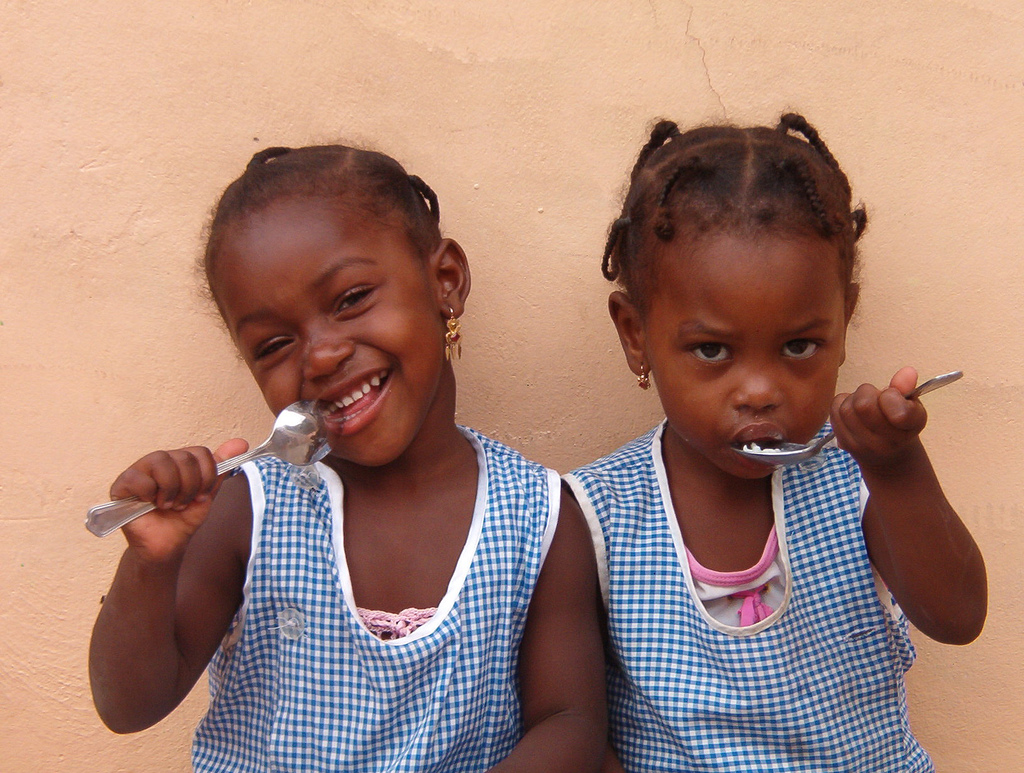
 

Cheesy Grits and Mangu: Parenting a Multicultural Child

An Afro-Latina mom’s experience parenting a multicultural child.

by Jahayra Guess

At one of my daughter’s many well visits, the sweet nurse who showed us to our exam room looked at me and then looked at my adorable caramel skinned baby with a massive curly top of hair and asked if she was “mixed.”  I paused for a moment because I really hadn’t considered that before. As an Afro-Latina married to an African American man, I really didn’t see us as a biracial couple. Not knowing how to get into the complexities of why I don’t consider her “mixed” when it comes to race but “mixed” when it comes to culture, I simply replied, “Yes.” I knew that wouldn’t be the last time we would come across the question, and I realized that this made it all the more important to teach my daughter the amazing aspects of both mine and my husband’s cultures.  Here are five ways we make it a priority every day:

1. Hablamos Espanol

For me, the most glaring difference in cultures between us is the language we grew up speaking. My mother moved to the United States from the Dominican Republic in her early 20s. Her home base became the rich melting pot of New York City, specifically Queens. She was able to get by without English for most of her life since she worked and lived around people who spoke Spanish. She learned enough to order food or ask for directions with broken English, hand signals, and a kind smile. This meant that I first learned English from watching cartoons at home and later, in school. This shaped who I am and the love of my rich culture. When my husband and I were engaged I made it clear that I wanted our future children to grow up speaking Spanish like I did. He was fully on board with raising bilingual children. Now, a couple of years later, we speak mostly Spanish to our daughter at home. Even though my husband doesn’t speak Spanish fluently, he encourages my daughter’s learning by using Spanish words. He calls milk “leche,” nose “naris,” water “agua,” and himself “Papi.” Don’t get me wrong, it’s not easy to do this when my husband and I primarily communicate in English, but when speaking to my daughter, I am 100% Spanish and even translate things Papi says to her. They are both learning.

2. Bilingual Books with Characters That Look Like Us

One of the first gifts I bought my daughter when she was still growing inside me was a set of books to start off her library. I made sure to find the classics in Spanish: La Oruga hambrienta (The Very Hungry Caterpillar), Buenas Noches A Todos (The Going To Bed Book), Clifford el Gran Perro Colorado (Clifford, The Big Red Dog), Jorge El Curioso (Curious George). As she gets older we are also making sure to find books illustrating beautiful ninos y ninas that look like her: What Can You Do With A Paleta?, Please, Baby, Please, I Love Saturdays y Domingos, and many more.

3. Doc McStuffins and Our Generation Dolls

This goes right along with number 5. We buy toys and dolls that reflect the beauty and magnificence of our cultures. I am personally a huge fan of Our Generation dolls that come in a multitude of shades and background stories. Growing up I LOVED dolls, so much so, that my doll collection still lives with my mom. When I was looking through my well-preserved dolls for a few I could pass on to my daughter, I felt a little sad for young me. Out of close to 100 dolls, I only had about two that I could say looked like me. I know that contributed to the insecurities I sometimes felt growing up “different.” I did not see myself represented. Losing myself in a pretend world meant being a different race and culture. This was something I could definitely change for my children by being more conscience of what I buy her.

4. Cheesy Grits and Mangu

Food has always been a huge part of who I am. Family gatherings or even quick visits always ended in us gathered around a big meal. I want to make this a tradition in my home too but this, I have to say, was a hard one since I didn’t grow up cooking much in my house. I am loving experimenting with old school recipes so my husband, daughter, and I can come together at the end of each day at our dinner table. This has also brought me, my mom, and mother-in-law much closer together as it involves many phone calls, emails and texts asking for their secret recipes. Nothing like learning to make moro (Dominican rice and beans), collard greens, and giblet gravy with the moms walking me through it step by step.

5. Abuela/Abuelo and Grandma/Grandpa

Who is more qualified to teach the younger generation about where they come from than the grandparents who helped shape their parents? We don’t live close to either sets of parents but thankfully, in this age of technology that doesn’t matter much. Our daughter video chats with Abuela, Abuelo, Grandma and Grandpa a few times a week. They read stories, sing songs and play games. Visits are even more special of course. Seeing the excitement on my daughter’s face when she spends time with her grandparents is truly priceless.


About The Author

11082559_10153200722361354_7545776313321473290_n

Jahayra Guess is an Emmy®-award winning Director of Marketing and Social Media. Her most recent position was held at Harpo Studios, a multimedia production company founded by media mogul Oprah Winfrey. Jahayra is also a married mom of one and passionate about life hacks and unique ways to find a bargain.  Follow Jahayra on Twitter @Jai7575!

Innovative and Resourceful Apps Created by Blerds

From a directory of books featuring characters of color, to a scholarship database, to a way to finally “unsend” a text message you regret, check out these innovative and resourceful apps created by Blerds!

From a directory of books featuring characters of color, to a scholarship database, to a way to finally “unsend” a text message you regret, check out these innovative and resourceful apps created by Blerds!

1. We Read Too

Price: Free

We Read Too is a book resource app created by Kaya Thomas that includes hundreds of children’s and YA books written by authors of color and featuring characters of color! This one is a must for the next trip to the library or bookstore! Available on iPhone, iPad and iPod Touch.

2. A Song for Miles

Price: $2.99

A Song for Miles, created by Tiffany Russell, Ph.D., is an interactive storybook that takes children on a colorful and musical journey through the lyrics of artists like Stevie Wonder, Earth, Wind, and Fire, and Marvin Gaye. According to the developer, “A Song for Miles nurtures children’s inquisitive nature and love of music and sounds, all while teaching valuable lessons such as “initiative, compassion, civility, respect, empathy, responsibility, and perseverance.” Available of iPhone, iPad and Kindle.

3. Where U

Price: Free

WhereU is a local business search app created by Dr. Dionne Mahaffey that connects users with local African American and Latino owned businesses for services such as house cleaning, catering, lawyers, doctors, graphic designers, beauty salons and more. According to the developer, the app includes a real-time leaderboard of black owned businesses across categories, ranked by peer-to-peer referral counts.  Available on iOS and Android.

4. Scholly

Price: Free with In-App Purchases (including a Scholly Account for $2.99)

Scholly is a college scholarship app created by Christopher Gray, Philadelphia native and son of a single mom, who won $1.3 million in scholarships as a senior in high school.  Finding the process difficult and time consuming Gray created Scholly to make things much easier. Gray landed a deal with Daymond John and Lori Greiner on Shark Tank growing his app to #1 overall for three weeks! Actor and activist Jesse William recently joined Scholly on the Board of Directors. Most importantly, however, Scholly has helped students and families find over $50 million in scholarship money to go college! Available on iOS and Android.

5. On Second Thought

Price: Free

On Second Thought is a mobile messaging app that was created by Maci Peterson which lets you take back text messages before they get to the other person’s phone.  The app allows for a grace period of up to 60 seconds after a message has been sent before it is actually sent to the other person’s phone to allow you to change your mind. You can also program a curfew that stops messages from being sent after a certain hour. Available on Android (iPhone Beta in progress).


***

About The Author

Faye McCray is anMcCray_AuthorPhoto (1) attorney by day and writer all the time. Her work has been featured on My Brown Baby, AfroPunk, AfroNews, For HarrietMadame NoireBlack Girl NerdsBlack and Married with Kids, and other popular publications.  Faye also has a number of short stories and a full length novel available for purchase on Amazon.  Most importantly, Faye is a proud wife and mother to three beautiful and talented young boys who she is fiercely passionate about raising. You can find Faye on Twitter @fayewrites and on the web at fayemccray.com.

Best of the Worst Kid’s Options at 6 of The Most Popular Fast Food Chains

The truth is, there are no healthy fast food chains. There just aren’t. Anything with a drive-thru attached typically has sugary drinks and an obscene amount of fat and sodium. The bigger truth is, however, that sometimes as parents fast food is the only option. Between unexpected traffic jams, late night work hours and extracurricular activities, your options may be fast food or starve. If you must get in that line, here are a list of the best of the worst options at 6 popular fast food chains.


by Faye McCray

The truth is, there are no healthy fast food chains.  There just aren’t.  Anything with a  drive-thru attached typically has sugary drinks and an obscene amount of fat and sodium.  The bigger truth is, however, that sometimes as parents fast food is the only option.  Between unexpected traffic jams, late night work hours and extracurricular activities, your options may be fast food or starve.  If you must get in that line, here are a list of the best of the worst options at 6 popular fast food chains.

Note: According to the Centers for Disease Control and the American Heart Association, kids should have between 19-30g of sugar per day and 1,500mg of sodium per day.  Children ages 4 to 8 need 33 to 78 grams of fat daily; kids ages 9 to 13 require 39 to 101 grams of fat daily.  Sources of healthy, unsaturated dietary fats for children include vegetable oils, purified omega-3 oils, avocados, olives, peanut butter, nuts and seeds. Saturated, unhealthy fats are found in high-fat meats, lard, butter, cream, ice cream and full-fat dairy products, such as whole milk and cheese. 

1. Chick fil A

Founded in 1961 by Conservative Southern Baptist Truett Cathy, Chick fil A boasts an alternative to red meat with their famous slogan “Eat Mor Chikin”.  As a native New Yorker, I hadn’t even heard of Chick fil A until I moved to D.C. for school.  As a broke student, it quickly became my go-to spot for quick and tasty meals. Now that I am a parent (in my thirties with a slower metabolism), I try to avoid fast food where possible.  However, when the family and I are on a long road trip and we are in desperate search of food, Chick fil A is my typical choice.

And the award goes to…

Hands down, the healthiest option for your tiny humans is the 6 ct Grilled Nuggets Kid’s Meal 100 cal, 3g of fat, 200mg sodium, 1g of sugar (for comparison, the 6ct fried nuggets are 200cal, 10g of fat and 790mg of sodium), Fruit Cup side, 30 cal, 0g sodium, 7g of sugar (for comparison, waffle fries are 310cal, 16g fat and 140mg of sodium), and to drink, Water or Honest Kids Apple Juice 40cal, 9g of sugar (believe it or not, a small kids lemonade is 170cal and 43g of sugar!)

For Dessert? If you must, the best bet is the Small Icedream cone, 170 cal, 115mg of sodium, and 25g of sugar. It is by no means healthy but it has the lowest sugar content.

2. Subway

Founded in 1965 by Fred DeLuca, Subway is one of the fastest growing franchises in the world.  My kids aren’t crazy about the options at Subway but really enjoy their kids totes and cookies.

And the award goes to…

The best option on the menu is the Kids Veggie Delite, 150 cal, 1.5 of total fat, 190mg of sodium but if your kids want something heartier, the second best option is the Kids Turkey Breast, 180 cal, 2.0g of fat, and 430mg of sodium.  Choose the Mini Wheat bread 140 cal, 1.5g of fat, 180mg of sodium. The Mini Italian bread is slightly lower calorically but it doesn’t have the health benefits of wheat bread. The best option for dressing is none but if you must, the Honey Mustard has 60 cal, 1g of fat, 240mg of sodium and 11g of sugar. The Sweet Onion is pretty much a tie with 80 cal, 170mg of sodium and 16g of sugar. For toppings, I’d skip the cheese and stick with veggies (avoiding pickles and olives due to sodium content). For a side, the Apple Slices are a clear choice with 35 cal, 7g of sugar and to drink, Water or Juice Box, 100 cal and 21g of sugar.

For Dessert? If you must, all Cookies are pretty much created equal at Subway. They range between 200-230cal, 14-20g of sugar and 100-130mg of sodium.

3. Panera Bread

Founded in 1987 as the St. Louis Bread Company, Panera was purchased by Au Bon Pain in 1993 and renamed.  The name is a combination of the Italian words ‘Pane’ meaning bread and ‘Era’ meaning time – time of bread.  That sounds pretty darn amazing to me. There is a Panera on pretty much every street corner where we live so it is often our go-to restaurant in a pinch.

And the award goes to….

The healthiest option on the kids menu is the Kids Seasonal Green Salad.  It is only 90cal, 75mg of sodium and 7g of sugar.  But – if your kids are anything like mine, the salad thing probably isn’t happening.  Unfortunately, the Kids Turkey Sandwich and Peanut Butter & Jelly are a distant second.  While the Turkey Sandwich is the lowest caloric sandwich on the Kid’s menu at 310 cal, it also has 11g of fat and 820 mg of sodium! Believe it or not, by comparison with the rest of the menu, it is actually on the low end (the Grilled Cheese has 1090mg of sodium and the Smoked Ham Sandwich has 1210mg, yikes).  The Peanut Butter & Jelly has 400 calories and about half the sodium of the Turkey at 460mg but sadly has 19g of sugar and 17g of fat (which may not be as bad as it sounds, read more here).  Friendly warning, I would stay away from soups and pastas due to the sodium content – especially the Mac and Cheese which has an insane 1100 mg of sodium in one serving! The healthiest side is definitely the Apple.  While the yogurt tube has only 60 calories, it has 10g of sugar.

For Dessert? If you must, the Petite Chocolate Chipper is your best bet.  Those are the cookies that come about 5-6 to a bag usually available at the register. One cookie has 100 cal, 5 g of fat, 8g of sugar. For comparison, the full chocolate chipper has 440 cal, 22g of fat and a whopping 33g of sugar!

4. Wendy’s

Founded in 1969 by Dave Thomas, Wendy’s is the world’s third largest hamburger chain. I’ll always have a soft spot for Wendy’s. When I was a teenager, I was a camp counselor at the YMCA in Bellerose, New York, and there was a Wendy’s nearby.  I would go there on my lunch breaks with fellow counselors and devour their grilled chicken sandwiches smothered in honey mustard sauce.  I don’t live near one now, but I know for some, Wendy’s is still an option.

And the award goes to…

If you can’t get your kid to eat salad, your best best is probably the 4 Piece Chicken Nuggets, 180 cal, 13g of fat, 390mg of sodium.  Though with 13g of fat, you probably want to make Wendy’s a really, really rare option.  The Grilled Chicken Wrap has slightly less fat at 11g but an insane 620mg of sodium.  For the side, Apple Slices, 35cal, omg sodium, 7g of sugar, and to drink, Water or Honest Kids Fruit Punch, 35 cal, 15mg sodium, 8g of sugar.

For Dessert? If you must, the Jr. Vanilla Frosty, 190 cal, 95mg sodium, 27g of sugar. Not at all healthy but the least bad among pretty bad options.

5. McDonald’s

Founded in 1940 as a barbecue restaurant by brothers Richard and Maurice McDonald, McDonald’s is the world’s largest chain of hamburger fast food restaurants and the world’s second largest private employer.

As a kid, I lived for happy meals but I have watched one too many YouTube videos about what’s in that stuff to ever sit in one of their drive-thrus again.  However, as one of the most recognizable chains, for some, McDonald’s may be unavoidable.

And the award goes to…

When looking at fat and sodium content (and if you can’t get your kid to eat salad), your best bet is likely the 4 Piece Chicken Nuggets, 190cal, 12g of fat, 360mg of sodium, 0g of sugar. At 12g of fat, it is by no means healthy.  However, when compared to the other options on the menu, it is the best choice.  The Honey Mustard Grilled Chicken Snack Wrap has less fat at 8g but it is also 650mg of sodium. For a side, stick with the Apple Slices 15 cal, 0 sugar (they probably didn’t count fruit sugar) and sodium (kids fries are 110 cal, 8g of fat, 65g of sodium), and for a beverage, Water or Minute Maid Apple Juice Box, 80 cal, 19g of sugar (thats a lot of sugar).

For Dessert? If you must, Kiddie Cone, 45 cal, 1.5 g of fat and 6g of sugar.

Note: There has been some controversy about McDonald’s cooking oils and the content of their nuggets. I’d read more on McD’s chicken nuggets here and here before feeding them to your kids.

6. Pizza Hut

Founded in 1958 by brothers and students at Wichita State University, Dan and Frank Carney, Pizza Hutt is owned by Yum! Brands (KFC, Taco Bell, etc.), one of the world’s largest restaurant companies.

After my parents were divorced, my phenomenal single mom returned to school and got both her Bachelor’s and Masters.  While she was incredibly wonderful, inspiring and present, she didn’t always have the time to cook.  Enter, Pizza Hut, the staple of my childhood meals.  My mouth waters just thinking about that buttery crust.  As an adult, I don’t live near one, but I know plenty of folks still do.

And the award goes to…

I have to start by saying the sodium content at Pizza Hut, like the soups and pastas at Panera, is through the roof! I’m pretty sure they are just throwing massive amounts of salt in the air and catching it on pizza stones. With that said, by slice your best bet overall are the Small Hand Tossed Pies with no processed meats (sausage, pepperoni, etc.) and real veggies.  A single Veggie Lover’s Small Hand Tossed Slice is 120cal, 4g of fat and 260mg of sodium not bad when you compare it with the the 1, 110mg of sodium in one Large Pan slice of the Pepperoni’s Lovers!

Do keep in mind, the nutritional content for Pizza Hut is measured by a single slice.  I don’t know anyone who just has one (even kids), calculate accordingly!

For Dessert? Just don’t. Between the carbs and fat, your kids will probably just be overeating. I’d suggest a nice after dinner walk instead!

***

Note: The options were measured by calories, fat, sodium and sugar content.  It did not include a review of artificial ingredients or other chemicals used in the making of these foods.  Many of these options, when combined, exceed recommended daily intake for sodium, sugar and/or fat. As always, use your best judgment when making choices for your children.  When possible, avoid fast food.

***

About The Author

Faye McCray is anMcCray_AuthorPhoto (1) attorney by day and writer all the time. Her work has been featured on My Brown Baby, AfroPunk, AfroNews, For HarrietMadame NoireBlack Girl NerdsBlack and Married with Kids, and other popular publications.  Faye also has a number of short stories and a full length novel available for purchase on Amazon.  Most importantly, Faye is a proud wife and mother to three beautiful and talented young boys who she is fiercely passionate about raising. You can find Faye on Twitter @fayewrites and on the web at fayemccray.com.

Are You Okay?

With the filming of police violence, the divisive and dangerous rhetoric soundtracking the 2016 election, and the flooding of microaggressions sneaking their way into mainstream media, the current sociopolitical climate can be exhausting. Often our social media news feeds are a reflection of all that is wrong in the world. When is the last time you asked yourself, “Am I okay?”

by Faye McCray

With the filming of police violence, the divisive and dangerous rhetoric soundtracking the 2016 election, and the flooding of microaggressions sneaking their way into mainstream media, the current sociopolitical climate can be exhausting.  Often our social media news feeds are a reflection of all that is wrong in the world. When is the last time you asked yourself, “Am I okay?”

I’ll never forget picking up my phone the morning after Philando Castille was murdered and watching what would be his final moments.  I was still under the covers, barely awake, and crying helplessly into my pillow.  Just a few hours later, I would be seeing my husband off to work and my two sons off to camp.  I wondered if I had the strength to let them go knowing the dangers that could await them.  Everything in me wanted to stay in bed, nestled beside my husband in the comfort of knowing that he and our children were safe. I was wary of the time we were living in, the strange world and the motivations of the people in it. I was also pregnant. I couldn’t help but wonder what burdens I was placing on my unborn son, just by being alive.

Needless to say, that wasn’t a positive way to start a morning.

Clinical psychologist and Director of the Center for Mental Health Disparities at the University of Louisville, Monnica Williams says, “Graphic videos,” which she calls vicarious trauma, “combined with lived experiences of racism, can create severe psychological problems reminiscent of post-traumatic stress syndrome.”  Dr. Williams studies the link between racism and post-traumatic stress disorder, which is known as race-based traumatic stress injury, or the emotional distress a person may feel after encountering racial harassment or hostility.

Parenting in this climate undoubtedly adds another level of stress and anxiety.  In addition to shouldering the average parental worries, as parents of kids of color, we also have to worry about how our children will be perceived when occupying certain spaces in their brown bodies.  It took me awhile to confront the fact that I was suffering the emotional toll of race-based trauma and significantly, that it was affecting how I loved and parented.  Here are a few steps we can take to ease our anxiety while parenting in the age of vicarious trauma:

1. Turn it off.

I used to get CNN alerts on my phone. They would come through by way of text message with uppercase headlines that were 99.9% negative.  They would jolt me out of my day.  There was another shooting.  Another person not held accountable.  Another dismal poll about the state of human existence.  I thought being informed somehow raised my level of consciousness.  Someone would ask,”Did you hear?” And I could respond, “Sure did.” And I had an opinion about it.

While there is nothing wrong with remaining informed, there is also nothing wrong with doing so in moderation. Based on the headline, I was running the gamut between anger, fear and tears in a single afternoon.  I had to recognize the emotional toll those alerts were taking on me and disable them.  I chose instead to check media outlets in my own time when I was in a safe space free to think in terms of solutions and not just outrage.  For me, that also included social media.  I gave myself permission to unfollow certain people on Facebook, and significantly, I gave myself permission to not watch every video.  I had to be honest with myself about my own sensitivity.  It was hard for me to rebound from watching someone killed. It stayed with me and in my consciousness for days.  I had to put myself first and that’s okay.

2. Find support.

Self-care is crucial to dealing with any trauma. Are you getting enough sleep? Are you eating enough? Are you taking time out for yourself? Are you talking about it? Sometimes it helps to talk to other parents who are grappling with similar anxiety about navigating the current sociopolitical climate.  You feel less alone in your worry and that can bring you peace.  I remember how good the embrace of a friend felt after hearing about Tamir Rice.  That support and solidarity is crucial to navigating these difficult times.

If you find your worry goes beyond a friendly ear, don’t be afraid to seek the help of a professional.  Some of us have emotional needs that require more regular assistance in processing the world around us.

3. Be present in your reality.

I live less than an hour away from Baltimore.  In the middle of the riots before charges were brought in the Freddie Gray case, I remember feeling a sense of heightened vigilance. I was on guard in every encounter, wary of every interaction and filled with worry and anxiety.

In those situations, I have learned to remind myself to be present.  Take a deep breath and ask yourself: Right now, am I safe? Are my children safe? Are the people I love safe? Living in the age we live in, it easy to take on every experience as your own.  While it is important to be empathetic, it is crucial that we don’t get lost in the emotional turmoil of shouldering another person’s burden.  It is okay to take a step back and remind yourself of your reality.  That will give you a clearer head to think in terms of solutions.

4. Brainstorm solutions.

And speaking of solutions, I find the best way to ease my anxiety is to figure out what I can do to make a change.  Remember the serenity prayer? God, grant me the serenity to accept the things I cannot change, the courage to change the things I can and the wisdom to know the difference.  While we can’t solve every problem, we can certainly find small ways to contribute to a solution.  From  getting more involved in your child’s school or community to facilitating honest, productive dialogue in diverse settings to donating to advocacy groups fighting for the change you seek, we all have the power to become more active in the fight for justice. Outrage is rarely a solution.  Updating your status or changing your profile picture on Facebook or Twitter is not a solution. I find nothing beats the fulfillment of taking affirmative steps towards a solution.

***

About The Author

Faye McCray is anMcCray_AuthorPhoto (1) attorney by day and writer all the time. Her work has been featured on My Brown Baby, AfroPunk, AfroNews, For HarrietMadame NoireBlack Girl NerdsBlack and Married with Kids, and other popular publications.  Faye also has a number of short stories and a full length novel available for purchase on Amazon.  Most importantly, Faye is a proud wife and mother to three beautiful and talented young boys who she is fiercely passionate about raising.

Colin Kaepernick Wasn’t The First To Challenge Blind Patriotism

Given the level of media coverage of his actions, you would think Colin Kaepernick was the first person to challenge blind patriotism. However, here are six other public figures that refused to honor their countries because of moral or political reasons.

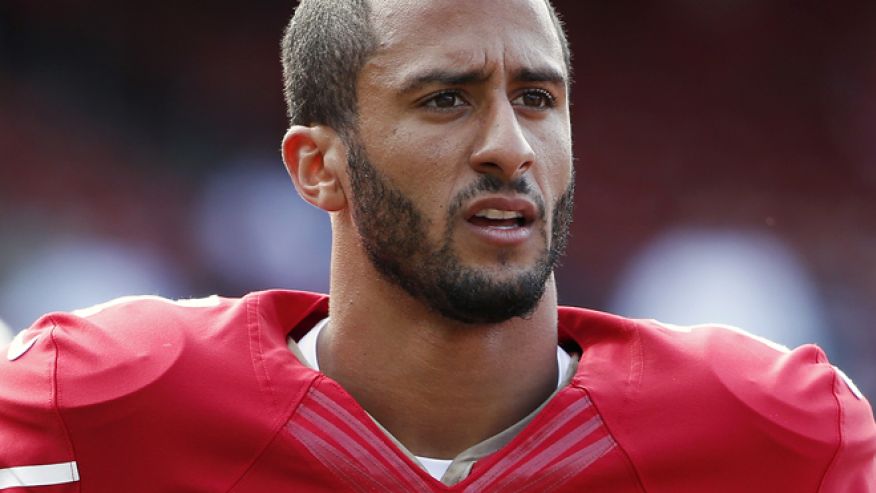
Featured Photo Credit: Jonathan Ferrey/Getty

On August 26, 2016, before a preseason game, Colin Kaepernick, a quarterback with the San Francisco 49ers chose to sit instead of stand during the playing of the United States National Anthem.  During a post-game interview, Kaepernick stated, “I am not going to stand up to show pride in a flag for a country that oppresses black people and people of color,” Kaepernick told NFL Media.

“To me, this is bigger than football and it would be selfish on my part to look the other way. There are bodies in the street and people getting paid leave and getting away with murder.”

Although both the 49ers and the National Football League have declined to take disciplinary action, public reaction has been mixed.  Some are calling him unpatriotic while others are calling his civil act of disobedience heroic.  Given the level of media coverage of his actions, you would think Kaepernick was the first person to challenge blind patriotism.  However, here are six other public figures that refused to honor their countries because of moral/political reasons:

1. Frederick Douglass 

frederick-douglass-1847-52

On July 5, 1852, Frederick Douglass was invited to give a speech at an event commemorating the signing of the Declaration of Independence, held at Corinthian Hall in Rochester, NY. The audience got more than they bargained for when instead he told them,”This Fourth of July is yours, not mine. You may rejoice, I must mourn.” He went on to ask, “Do you mean, citizens, to mock me, by asking me to speak today?”

In his speech, which became one of his most famous, he said:

“What, to the American slave, is your 4th of July?  I answer; a day that reveals to him, more than all other days in the year, the gross injustice and cruelty to which he is the constant victim… There is not a nation on the earth guilty of practices more shocking and bloody than are the people of the United States, at this very hour.”

Frederick Douglass was arguably the most famous orator of the 19th century and was the most photographed person of the 19th century.  He sat for several pictures because he wanted to show the dignity of Black people during a time when minstrel shows were prominent.

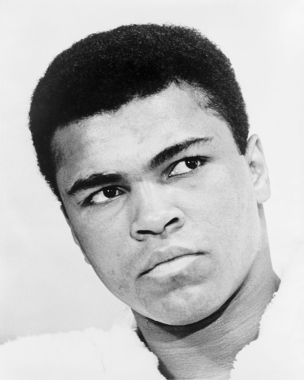
2. Muhammad Ali 

ali

On April 28, 1967, boxing champion Muhammad Ali refused to be inducted into the United States Army and his heavyweight boxing title was subsequently taken away. Ali, who converted to Islam and changed his name in 1964, cited religious reasons for his decision to forgo military service. However, in March 1967, Ali explained:

“I will not disgrace my religion, my people or myself by becoming a tool to enslave those who are fighting for their own justice, freedom and equality… If I thought the war was going to bring freedom and equality to 22 million of my people they wouldn’t have to draft me, I’d join tomorrow. But I either have to obey the laws of the land or the laws of Allah. I have nothing to lose by standing up for my beliefs. So I’ll go to jail. We’ve been in jail for four hundred years.”

On June 20, 1967, Ali was convicted of draft evasion, sentenced to five years in prison, fined $10,000 and banned from boxing for three years. He stayed out of prison as his case was appealed and returned to the ring on October 26, 1970.  On June 28, 1971, the Supreme Court of the United States overturned his conviction for refusing the draft.Muhammad Ali would go on to be an international symbol of strength and perserverance despite incredible odds.  His public battle with Parkinson’s disease while maintaining a very active lifestyle inspired millions.  

3. Tommie Smith and John Carlos

john-carlos-tommie-smith

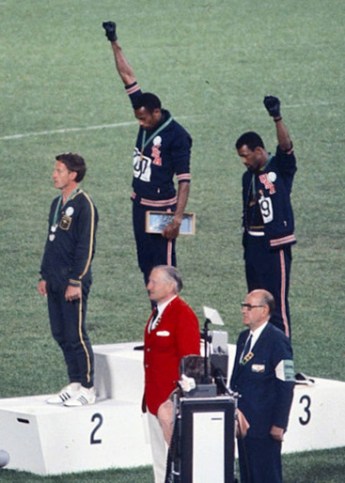
On October 16, 1968, Tommie Smith and John Carlos, winners of the gold and bronze medals in the 200 meter sprint, bowed their heads and each raised one fist in protest during the playing of the national anthem.  The men wore black socks with no shoes to symbolize poverty in many African American communities, and black gloves to represent our strength. Smith also wore a scarf and Carlos wore beads in memory of lynching victims.   Both men were banished by the International Olympic Committee and suspended from the United States team.  They both suffered ostracism from the track and field community and Olympic community for years afterward. Tommie Smith is quoted as saying:

“It was only done to bring attention to the atrocities of which we were experiencing in a country that was supposed to represent us.”

Prior to the Olympics, both men were involved with the Olympic Project for Human Rights (OPHR) where they had originally called for a boycott of the 1968 Mexico City Olympic Games unless four conditions were met: 1) South Africa and Rhodesia were uninvited from the Olympics because they were nations that practiced apartheid, 2) the restoration of Muhammad Ali’s world heavyweight boxing title, 3) Avery Brundage to step down as president of the IOC, who they believe supported racist regimes, and 4) the hiring of more African American assistant coaches. Although the boycott failed to materialize, the men still made history.

4. Jackie Robinson

j-robinson

In his 1972 autobiography, I Never Had It Made, American Baseball League Hall of Famer Jackie Robinson, described the moment when he confronted his own hesitation to stand during the National Anthem at a major league baseball game.

“There I was,” he wrote. “The black grandson of a slave, the son of a black sharecropper, part of a historic occasion, a symbolic hero to my people. The air was sparkling. The sunlight was warm. The band struck up the national anthem. The flag billowed in the wind. It should have been a glorious moment for me as the stirring words of the national anthem poured from the stands. Perhaps, it was, but then again, perhaps, the anthem could be called the theme song for a drama called The Noble Experiment. Today, as I look back on that opening game of my first world series, I must tell you that it was Mr. Rickey’s drama and that I was only a principal actor.” He continued:

“As I write this twenty years later, I cannot stand and sing the anthem. I cannot salute the flag; I know that I am a black man in a white world. In 1972, in 1947, at my birth in 1919, I know that I never had it made.”

Throughout his historic career, Robinson was the target of racial epithets, baseball field violence, hate letters, and death threats.

4. Charles Roach

roach
Aaron Vincent Elkaim/The Canadian Press


Born in Trinidad and Tobago, Charles Roach immigrated to Canada in 1955.  He attended the University of Toronto Law School and became an important civil rights attorney and activist in Toronto.

Roach sought Canadian citizenship; however, it never materialized because he refused to swear loyalty to a colonialist sovereign.  To become a Canadian citizen, one must pledge the following: “I… do swear that I will be faithful and bear true allegiance to Her Majesty Queen Elizabeth the Second, Queen of Canada, Her Heirs and Successors. So help me God.” As a result of refusing to pledge, Roach gave up the right to vote, run for public office, and attain a Canadian passport.  However, non-citizens bear the burden of still paying the same taxes as regular citizens and the risk of deportation for committing certain crimes.  Roach also reportedly declined an opportunity to become a judge over his principled stance against taking the oath.

Throughout his career, he fought to change Canada’s citizenship requirements to allow people to swear an oath to Canada instead of the throne, which he said represented a legacy of oppression, imperialism and racism.  For the majority of his adult life, he fought several court cases where he argued that an oath of allegiance to a sovereign is unconstitutional.  The cases proved unsuccessful, but his fight gained much attention and support.  As he stated in 2011:

“I don’t believe that anyone should have a political status just because of your birth and I feel strongly about that.  For that reason, I wouldn’t take an oath to any such institution, which is based on race and religion.”

Roach had several high profile cases where he aided members of the Black Panthers from the United States who were seeking political asylum in Canada.  He also helped form the Black Action Defence Committee, which pushed for the creation of Ontario’s Special Investigations Unit, a civilian-led unit, which investigates cases where officers seriously injure or kill people.

Despite efforts of long time colleagues, when Roach passed away in 2012, Canada refused to grant Roach citizenship posthumously.

5. Mahmoud Abdul-Rauf 

mahmoud-abdul-rauf

In 1996, Mahmoud Abdul-Rauf was a starting point guard for the Denver Nugggets.  During the national anthem, he would stretch or stay inside the locker room instead of taking the floor.  When a reporter finally asked about it, Abdul-Rauf said he viewed the American flag as a symbol of oppression and racism. Abdul-Rauf also said standing for the anthem would conflict with his Muslim faith.

“You can’t be for God and for oppression…” he said at the time. “I don’t criticize those who stand, so don’t criticize me for sitting.”

Abdul-Rauf was suspended for one game on March 12, 1996.  The NBA cited a rule that players must line up in a “dignified posture” for the anthem. Although the player’s union supported him, he lost $32,000 in salary.  For the remainder of the season, Abdul-Rauf agreed to stand but to pray for the oppressed with his head down during the national anthem. At the end of the season, the Nuggets traded Abdul-Rauf to the Sacramento Kings.  At the time, he was leading the team in points (19.2) and averaged 6.2 assists.  After his contract expired in 1998, he played overseas and had a brief stint back in the league with the Vancouver Grizzlies in the 2000-2001 season.

***

Information attained from:

  • “The Meaning of July Fourth for the Negro” http://www.pbs.org/wgbh/aia/part4/4h2927.html
  • Muhammad Ali refuses Army induction, http://www.history.com/this-day-in-history/muhammad-ali-refuses-army-induction
  • “Muhammad Ali Refuses to Fight in Vietnam (1967) http://alphahistory.com/vietnamwar/muhammad-ali-refuses-to-fight-1967/
  • David Davis, Olympic Athletes Who Took a Stand, SMITHSONIAN MAGAZINE, http://www.smithsonianmag.com/people-places/olympic-athletes-who-took-a-stand-593920/?no-ist
  • Andy Blatchford, After decades fighting monarchy oath in citizenship requirements, Toronto activist dies without becoming Canadian, The Canadian Press  http://news.nationalpost.com/news/canada/charles-roach-dies-before-court-rules-on-oath-to-queen-for-citizenship
  • Jesse Washington, Still no anthem, still no regrets for Mahmoud Abdul-Rauf, http://theundefeated.com/features/abdul-rauf-doesnt-regret-sitting-out-national-anthem/
  • Kirsten West Savali, Jackie Robinson in 1972: ‘I Cannot Stand and Sing the Anthem; I Cannot Salute the Flag’ http://www.theroot.com/articles/culture/2016/08/jackie-robinson-colin-kaepernick-star-bangled-banner/


***

About The Author

Rick McCray is a maRAMrried father of three amazing sons. He is also a proud graduate of Duke University where he holds a BA in History and African/African American History, and Howard University School of Law. He is also a regular commentator on the In The Black podcast.  Rick is passionate about our history and helping to educate our community concerning the great contributions of people of color to the world. You can find Rick on Twitter @RealRickMcCray.
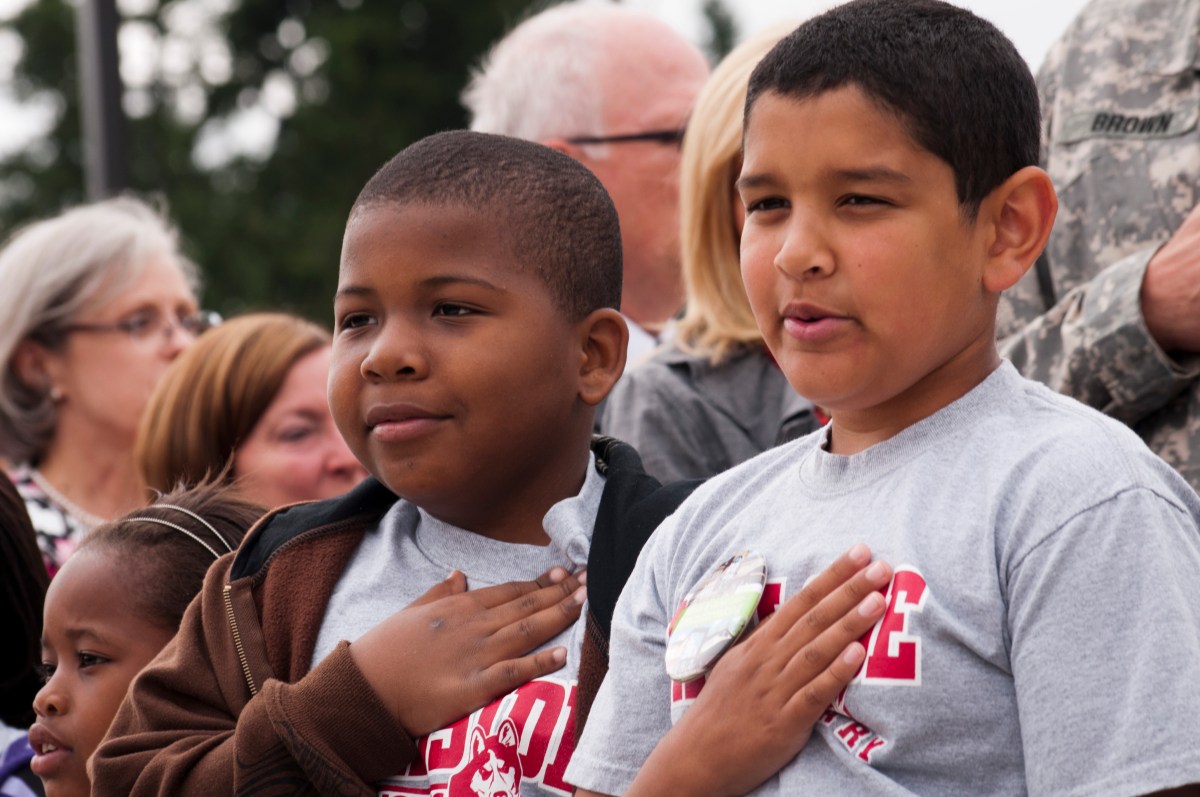
20 Quotes to Inspire Young Women

Sometimes you need to call on the words of our great ancestors and elders for motivation and inspiration. Here are 20 quotes by amazing women to inspire you and the young girls in your life.

Sometimes you need to call on the words of our great ancestors and elders for motivation and inspiration. Here are 20 quotes by amazing women to inspire you and the young girls in your life.

1.  “I will not have my life narrowed down. I will not bow down to somebody else’s whim or to someone else’s ignorance.” – bell hooks

2.  “In every crisis there is a message. Crises are nature’s way of forcing change — breaking down old structures, shaking loose negative habits so that something new and better can take their place.” — Susan L. Taylor

3.  “When I dare to be powerful – to use my strength in the service of my vision, then it becomes less and less important whether I am afraid.” – Audre Lorde

4.  “A lot of people refuse to do things because they don’t want to go naked, don’t want to go without guarantee. But that’s what’s got to happen. You go naked until you die.” – Nikki Giovanni

5. “No person is your friend who demands your silence, or denies your right to grow.” – Alice Walker

6. “Think like a queen. A queen is not afraid to fail. Failure is another steppingstone to greatness.” – Oprah Winfrey

7. “Winning is great, sure, but if you are really going to do something in life, the secret is learning how to lose. Nobody goes undefeated all the time. If you can pick up after a crushing defeat, and go on to win again, you are going to be a champion someday.” – Wilma Rudolph

8. “Deal with yourself as an individual worthy of respect, and make everyone else deal with you the same way.” – Nikki Giovanni

9. “Once we recognize what it is we are feeling, once we recognize we can feel deeply, love deeply, can feel joy, then we will demand that all parts of our lives produce that kind of joy.” – Audre Lorde

10. “Someone was hurt before you, wronged before you, hungry before you, frightened before you, beaten before you, humiliated before you, raped before you…yet, someone survived…You can do anything you choose to do.” – Maya Angelou

11. “The thing that makes you exceptional, if you are at all, is inevitably that which must also make you lonely.” – Lorraine Hansberry

12. “It’s not the load that breaks you down, it’s the way you carry it.” – Lena Horne

13. “We have to talk about liberating minds as well as liberating society.” – Angela Davis

14. “Nothing will work unless you do.” – Maya Angelou

15. “Don’t feel entitled to anything you didn’t sweat and struggle for.”  – Marian Wright Edelman

16. “There’s always something to suggest that you’ll never be who you wanted to be. Your choice is to take it or keep on moving.” – Phylicia Rashad

17. “You don’t make progress by standing on the sidelines, whimpering and complaining. You make progress by implementing ideas.” – Shirley Chisholm

18. “Sometimes you’ve got to let everything go—purge yourself . . . If you are unhappy with anything . . . whatever is bringing you down, get rid of it. Because you’ll find that when you’re free, your true creativity, your true self comes out.” – Tina Turner

19. “I really don’t think life is about the I-could-have-beens. Life is only about the I-tried-to-do. I don’t mind the failure but I can’t imagine that I’d forgive myself if I didn’t try.” – Nikki Giovanni

20. “I am not tragically colored. There is no great sorrow dammed up in my soul, nor lurking behind my eyes. . . . Even in the helter-skelter skirmish that is my life, I have seen that the world is to the strong regardless of a little pigmentation more or less. No, I do not weep at the world—I am too busy sharpening my oyster knife.” – Zora Neale Hurston


***

About The Author

Faye McCray is anMcCray_AuthorPhoto (1) attorney by day and writer all the time. Her work has been featured on My Brown Baby, AfroPunk, AfroNews, For HarrietMadame NoireBlack Girl NerdsBlack and Married with Kids, and other popular publications.  Faye also has a number of short stories and a full length novel available for purchase on Amazon.  Most importantly, Faye is a proud wife and mother to three beautiful and talented young boys who she is fiercely passionate about raising.