8 Kid Geniuses, Innovators and Entrepreneurs You Need to Know

This extraordinary group of kids and teens have already accomplished more than most adults in a lifetime. Here are 8 gifted humans who are sure to inspire you and your little ones!

This extraordinary group of kids and teens have already accomplished more than most adults in a lifetime! Here are 8 gifted humans who are sure to inspire you and your little ones:

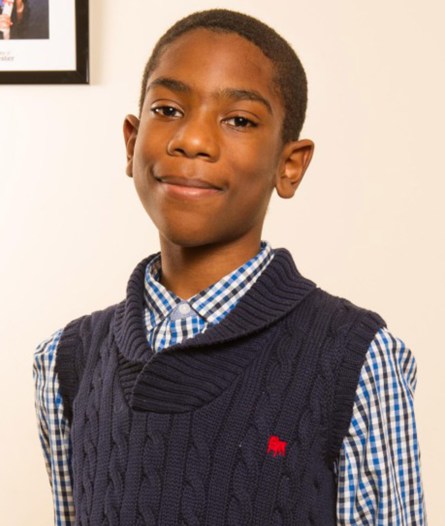
2. Boffin Ramami Wilfred

Rammami

Dubbed “Britain’s Smartest Schoolboy” in 2014, 11 year old Ramami scored a 162 on an IQ test, higher than Stephen Hawking, Bill Gates and Albert Einstein!  Ramami’s mom knew he wasn’t the average child when his favorite book as a toddler was the encyclopedia.  Ramami’s incredible scores allowed him to be a member of Mensa, an organization open to folks who score in the 98th percentile or higher on an IQ or other approved intelligence test.

On his tremendous achievement, Ramami said:

“I believe that having a high IQ isn’t that important unless you do something really special with it.”

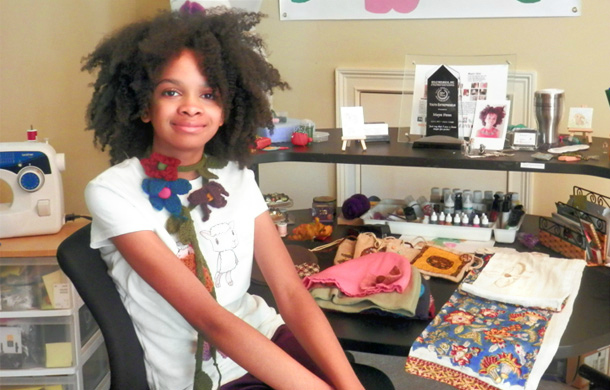
3. Rochelle Ballantyne

rochelle-ballantyne.pf_.jpg

In 2012, at just 17 years old, Rochelle was the only girl featured in Brooklyn Castle, a documentary about inner-city students that ranked among the nation’s top chess players. At the time, she was in the 99th percentile of American junior players!  When asked what was driving her, Rochelle said:

“My grandmother. When I first started playing, she introduced to me the idea of being the first African-American female chess master. I didn’t think about it much because for me it seemed like an impossible feat, and I didn’t think it could happen. I wasn’t as focused and dedicated as I am now. I didn’t think I was a good chess player—people told me I was, but it wasn’t my mentality at that moment. But then after she died, that really affected me, because she was the one person that always had confidence in me. She never pushed me, and she always respected me for who I was. I have to reach that goal for her.”

This amazing young lady is currently an undergraduate at Stanford University double majoring in Political Science and African American Studies.  She is interested in “helping to give voice to those who are often neglected or ignored.

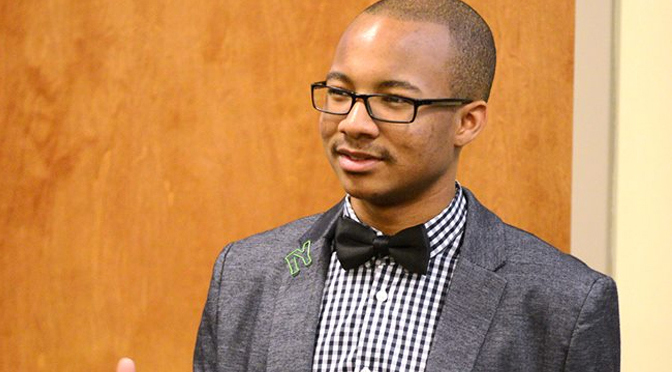
6. Jaylen Bledsoe

jaylenbledsoe

At just 12 years old, Jaylen started his own information technology consulting business with $100.  Now, at 17 years old, Jaylen has built a $3.5 Million dollar global enterprise as an investor, motivational speaker and business development consultant.

On his success, Jaylen said:

“I don’t find anyone that’s going to demean me… who is going to bring me down. [I only find] people who bring me up to make my purpose prosper.”

Check out his powerful interview with T.D. Jakes below:

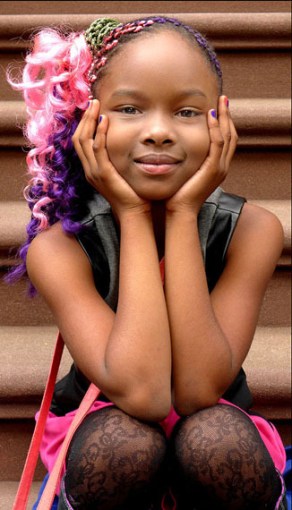
8. Daquan Chisholm

Daquan

In 2007, at just 10 years old, Baltimore native Daquan Chisholm attended a three week course called “Inventions” and was tasked with creating his own invention.  He created a bullet-proof police helmet with a built-in walkie talkie to keep police safe.  Although he didn’t have enough money to patent his idea, his invention gave him a sense of drive and motivation knowing that one day he had it in him to make the world a better place.

He hopes to motivate others to do good and stand out.  He wants kids like him to know:

“If you feel you have something special, just share it with the world.”

In 2015, Daquan was a senior in high school hoping to attend college and attain a degree in engineering or natural sciences.

***

About The Author

Faye McCray is anMcCray_AuthorPhoto (1) attorney by day and writer all the time. Her work has been featured on My Brown Baby, AfroPunk, AfroNews, For HarrietMadame NoireBlack Girl NerdsBlack and Married with Kids, and other popular publications.  Faye also has a number of short stories and a full length novel available for purchase on Amazon.  Most importantly, Faye is a proud wife and mother to three beautiful and talented young boys who she is fiercely passionate about raising.

How to Confront Bias in the Classroom

While as adults, we learn to sweep powerless microaggressions under the rug, when it comes to our children, these behaviors, especially in the educational system, can be irrevocably damaging. We are often forced to fight for them, even when we haven’t always been willing to fight for ourselves.

by Faye McCray

It’s a burden that can be uniquely ours.  And by ours, I mean people of color.  As we move into different career paths or socioeconomic statutes or merely try to introduce ourselves to different experiences, the rooms tend to get less brown.  In a good room, it’s a fleeting thought.  You notice but it doesn’t silence you. In fact, it may encourage you to be brighter, since you are already standing out.  In a difficult room, the otherness can be palpable, leaking from every stare and comment.  You are center court, dodging decades of expectations, and assumptions about your thoughts, beliefs and lifestyle.  You have to fight your way out without shrinking or being defined.

At thirty-something, I feel like an old pro but when it comes to my kids, I still feel like a rookie.  While as adults, we learn to sweep powerless microaggressions under the rug, when it comes to our children, these behaviors, especially in the educational system, can be irrevocably damaging. We are often forced to fight for them, even when we haven’t always been willing to fight for ourselves.  It was with this thought in mind that I wondered, how would I defend my child against bias in the educational setting?

For us, the seemingly inevitable came in my eldest’s second grade year when he came to me and declared that Ms. V*, a paraeducator at his school “…did not like brown boys.”  As I listened to him rattle off the list of infractions: from telling him and other brown boys she was “watching” them to telling him he wasn’t better than anyone else to accusing him of lying about asking to use the bathroom, it was clear she was targeting him but connecting the dots between her behavior and racism would be a much more daunting task.  After all, racism is a very strong accusation.  By definition, it means “a belief that race is the primary determinant of human traits and capacities and that racial differences produce an inherent superiority of a particular race.”  That’s heavy.  I knew going into his school ready to hurl that word at the first one to listen wasn’t the way to be heard. Whether I believed it to be true or not.

1. Remain calm.

My husband’s karate teacher used to teach self defense to women. He said the women would always start off throwing weak jabs and hits, too shy to use their full strength.  However, as soon as the instructor challenged them to fight like they were protecting their children, all bets were off.  I would wager nothing makes a human more feral than the thought of having to protect your children.  However, when it comes to protecting our children in the education setting, we must remain calm. In spite of what reality TV has taught us, no one ever hears you when you’re yelling. This I know. Though my first instinct was to contact the school immediately upon learning of this educator’s behavior, I knew I needed to calm down first.  In my case, it meant waiting for my husband to come home so we could strategize, have some tea, and get a good night’s sleep.

2. Identify your objective.

In our case, we wanted the behavior to stop. We were fortunate Ms. V was a paraeducator and not his primary teacher. We adored his primary teacher.  We also had a great relationship with his school’s administrators. We didn’t think we were confronting a systemic problem but more of a problem with this particular educator.  Thus, we knew disciplinary action could potentially rectify the situation. We also knew from previous interactions with Ms. V, discussing the issue directly with her may cloud our objective.  She wasn’t personable and seemed like the kind of small-minded individual that may antagonize the situation.  We knew calmly discussing the issue with the principal was the best way to find a solution for the problem.

Identifying your objective is crucial in determining what path of redress you should take. If you suspect the problem is systemic, your starting point may be beyond the administrators but with the school board.

“Make [the issue] child specific. All parents are critical of their children’s progress. Everyone will understand that. When you start with race, you put people on the defensive and that is counterproductive.”

3. Focus on the child.

Princess Lyles, Executive Director of Democracy Builders, an organization focusing on parental advocacy in public schools, recommends: “Make [the issue] child specific. All parents are critical of their children’s progress. Everyone will understand that. When you start with race, you put people on the defensive and that is counterproductive.”

Our first step was sitting down with the principal and expressing our disappointment with our son’s experience. We used phrases like, “Ms. V’s words made our son feel vulnerable” and “Ms. V made him feel targeted.”  We let the principal know our son was enthusiastic about learning and looked forward to going to school each day.  We were worried his interaction with this educator would ruin that.  Our son didn’t have a history of behavioral problems or problems with any other teachers in the school.  This made it clear that the issue was more with this particular educator.

4. Document and investigate.

We were fortunate that our principal was very receptive so our battle ended there. In fact, while we used words like “vulnerable” and “targeted.”  She used phrases like “resistant to change” and “from a different time.”  It was clear we were ALL on the same page.

Although our principal was receptive to our grievances, we were prepared to go further.  Our son’s concern about Ms. V’s interaction with all “brown boys” stemmed from weeks of watching her berate and target brown children.  We knew he wasn’t the only one at stake.

Lyles recommends documenting your child’s allegations, observing interactions (where possible) and talking with other parents.  “Poke around to see if there are similar circumstances,” she said.  If the issue warrants going beyond teachers and administrators, you may have to  bring your grievances to the school board.  In which case, you want to prepared.

5. Explore other options.

“Education is a partnership,” said Lyles. “To the extent the school isn’t working to make it a partnership, it may not work for you.  Unfortunately, one size does not fit all, you will constantly be on a mission to find the school that’s the right fit.”

The truth is, not everyone is cut out to be the Norma Rae of inclusive education. Often your priority is to protect your child and that’s okay.  If your child is attending a private school or if a private school is within your means, the solution may be as easy as finding another private school.  If private school is not an option, many school districts offer open enrollments, charter schools and variance applications that open the door to attending schools outside of your neighborhood.  Do your homework and know your options.

“You are your child’s best advocate.”

6. Remain involved.

Whether it’s the beginning, middle or end of your child’s educational career, it is important to remain involved.  My husband and I are both active members of our school community. We have held positions on the PTA and volunteered regularly in our son’s classrooms. We also encourage constant dialogue with our children’s teachers and administrators.  When I emailed my son’s principal to request a meeting, she already knew who we were.  She knew we were invested in our child’s education, not just when there was a problem but when things were going well.  After our meeting, she also knew we wouldn’t just disappear. We would remain active and thus, she would remain accountable.

Even if your work schedule makes it difficult to give face time at your child’s school, emails and social media make it easier to remain active.  Send an email checking in every once in awhile.  Ask about your child’s progress and what you can do at home.  Be sure to introduce yourself and your child to school administrators where possible.

“You are your child’s best advocate,” said Lyles.  The best way to avoid problems is to be there before they start.

*name changed.

***

About The Author

Faye McCray is anMcCray_AuthorPhoto (1) attorney by day and writer all the time. Her work has been featured on My Brown Baby, AfroPunk, AfroNews, For HarrietMadame NoireBlack Girl NerdsBlack and Married with Kids, and other popular publications.  Faye also has a number of short stories and a full length novel available for purchase on Amazon.  Most importantly, Faye is a proud wife and mother to three beautiful and talented young boys who she is fiercely passionate about raising.

20 Positive Affirmations to Start Your Child’s Day

Send your children (and yourself) out into the world with these positive affirmations for a great start to any day!

A positive mindset is the best way to start your day. Though navigating this world can be unpredictable, starting off your day with the right frame of mind can prepare you to handle whatever comes your way. Send your children (and yourself) out into the world with these positive affirmations for a great start to any day!

1. I am loved.

2. I am brave.

3. I make good choices.

4. I am happy.

5. I am smart.

6. I work hard.

7. I learn from my mistakes.

8. I am a good friend.

9. I am honest.

10. I am responsible.

11. I am proud.

12. I am a good listener.

13. I am handsome/beautiful.

14. I am a problem solver.

15. I am calm.

16. I am strong.

17. I am creative.

18. I believe in myself.

19. I respect others.

20. I respect myself.

***

About The Author

Faye McCray is anMcCray_AuthorPhoto (1) attorney by day and writer all the time. Her work has been featured on My Brown Baby, AfroPunk, AfroNews, For HarrietMadame NoireBlack Girl NerdsBlack and Married with Kids, and other popular publications.  Faye also has a number of short stories and a full length novel available for purchase on Amazon.  Most importantly, Faye is a proud wife and mother to three beautiful and talented young boys who she is fiercely passionate about raising.


Saturday Morning Cartoons Just Got Way Cooler

Here are 7 shows that will take your kids around the world and back in your living room!

Representation in kids television is often just as hard as finding representation in kids books.  However, with the demands are modern lives, it is difficult to avoid turning to the television on a rainy day or when you just need fifteen minutes to take a shower. Here are 7 shows that will take your kids around the world and back in your living room!

1. Bino and Fino

Bino and Fino is a cartoon aimed at three to five year olds, about a brother and sister who live with their grandparents in an unnamed African city.

“I said I’m not going do African folk tales, animals — that’s what you get in (animated movie) ‘Madagascar’ — we don’t want to do that,” Creator Adamu Waziri said to CNN.
“We want to show a couple of kids in a middle class life, which I know isn’t the reality of all the kids in Africa, but let’s show that reality — the reality of people using laptops, phones, going to school, doing their daily business — no talking ants, no dancing ‘jinga jinga’ music — just a cartoon of life.”
Chhota-Bheem_(1).jpg

2. Chhota Bheem

According to Wikipedia, Chhota Bheem is “an Indian animated comedy-adventure series. First premiered in 2008 on Pogo TV, it focuses on adventures of a boy named Bheem and his friends in the fictional kingdom of Dholakpur. In this series Bheem and his friends are usually involved in protecting Raja (Hindi for King) Indravarma of Dholakpur to save the kingdom from various evil forces. Sometimes they are seen helping other kingdoms as well. It is one of the most popular animated series for children of India.”
Full episodes are available on YouTube!  The show is in Hindi but as with most kids shows, I found my kids were engaged by the exciting animation and the universally awesome theme song (seriously, listen to it once and you will be singing it for the rest of the day).
Burka-Avenger-feat600

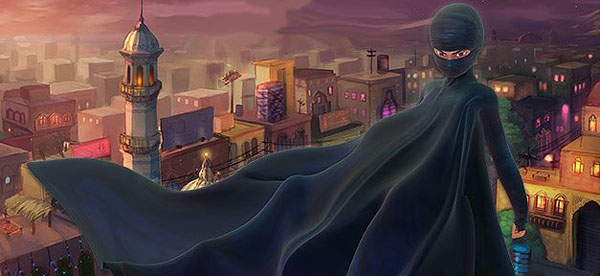
3. Burka Avenger

According to Wikipedia, “Burka Avenger is set in the fictional town of Halwapur in northern Pakistan. It features a superheroine who wears a burka as a disguise to conceal her identity while fighting villains. Her alter ego is Jiya, an “inspirational teacher”at an all-girls’ school. Jiya fights corrupt politicians and vengeful mercenaries who attempt to shut down girls’ schools, using “Takht Kabadi”, a martial art that involves throwing books and pens. Together with children ‘Ashu’, ‘Immu’ and ‘Mooli’, the Burka Avenger fights the evil magician ‘Baba Bandook’, his henchmen and corrupt politician ‘Vadero Pajero’.”

This awesome show is in Urdu but has English subtitles.

SaraSolvesIt-FB_Still_5.jpg

4. Sara Solves It 

Sara Solves It was a “musical animated series on Amazon Prime that follows 9-year-old whiz kid Sara and younger brother Sam as they solve mysteries in their apartment building, at school, and beyond — employing math, music, and creative thinking.”

The good news is mini-episodes are available on YouTube. The bad news, the show didn’t get picked up.  The bright side: if your kids are anything like ours, if they like something, they can watch the same thing over and over… and over again.

maya and miguel.jpg

5. Maya and Miguel

According to Wikipedia, “[t]he show chronicles the adventures, and sometimes misadventures, of fraternal twins Maya and Miguel Santos and features their family, friends and a diverse neighborhood. This show centers on Maya’s well-intentioned meddling in her family and friends’ lives, ultimately creating new quandaries to fix. Their mother is from Mexico, and their father is from Puerto Rico. The underlying message is the importance of doing good for the family and community, and the philosophy that shared happiness is greater than personal gain. The show presents a positive, culturally rich portrayal of Latino family, language and cultures. In some markets, each episode ends with Maya announcing, “Here’s what some of our friends are up to,” introducing clips of children engaging and interacting in ways consistent with the show’s themes. Maya concludes episodes by exhorting viewers to “visit your local library like ‘Maya & Miguel.'”

Episodes and games featuring Maya and Miguel are available on PBS Kids.


adventures of Tip and Oh

6. Home Adventures with Tip and Oh

My 9 year old says its “funny, cool and happy (like never really sad, unlike the movie).”

There you have it.

MC2

7. Project Mc2

If your kids are a little older, Netflix pulls another win with this diverse all girl team!

According to Wikipedia, “the series revolves around the fields of STEAM and the adventures of McKeyla McAlister and her friends, who work for an organization called NOV8 (pronounced “innovate”), a highly secretive group of female operatives that are trying to protect the world.”

***

About The Author

Faye McCray is anMcCray_AuthorPhoto (1) attorney by day and writer all the time. Her work has been featured on My Brown Baby, AfroPunk, AfroNews, For HarrietMadame NoireBlack Girl NerdsBlack and Married with Kids, and other popular publications.  Faye also has a number of short stories and a full length novel available for purchase on Amazon.  Most importantly, Faye is a proud wife and mother to three beautiful and talented young boys who she is fiercely passionate about raising.

7 Ways to Teach Your Children to See Their Beauty

How to encourage your children to love and appreciate their inner and outer beauty.

by Faye McCray

It’s summertime and if your children are anything like mine, they have been browning like little turkeys in the sun. Each day, my children come inside a shade darker, and I can’t resist kissing their sweaty sun-kissed faces and marveling at how breathtakingly beautiful they are.  As the school year resumes and they are thrust back into a regimented routine, I want to be sure they are armed with the tools necessary to counteract any negativity they may feel from the outside world.

Here are a few tips on teaching your children to see their own beauty:

1. Surround them with positive images of themselves.

Whether it is artwork, television shows, books, action figures or dolls, make sure the images your introduce your child to are healthy and positive. Whether it’s reality shows or the evening news, our children see enough negative versions of themselves.  Counteract the negativity by surrounding them with positivity.  Find books that feature heroes and heroines of color. Buy them dolls that look like them.  Allow them the opportunity to see themselves for that they can be.

2. Celebrate what is unique about them.

As a woman, I stand a little over 6ft tall.  I was always tall for my age and at certain points in my life, I wanted desperately to blend in with everyone else. The kindest thing someone ever said to me was “When you grow up, you will love being tall. You will command every room you walk into.” I didn’t know if was true then but I stood a little taller and prouder just in case it was. Whether freckles, chubby cheeks or big feet, find the positive in things that are unique about your child.  Celebrate it and they will too.

3. Celebrate your own beauty.

I had a childhood friend whose father used to drill into our heads to “Do as I say, not as I do.”  Even as a kid, I didn’t buy it.  The thing is, children are always watching you. They watch more than they listen.  If they see you gazing at yourself in the mirror and criticizing your broad nose or tightly curled hair, what do you think they will think about themselves when they look in the mirror and see those same features? It may not always be easy, but celebrate your own beauty and allow your child to witness it.

4. Teach them the history of their people.

The history of people of color in this country is rich and diverse.  Teach them about our scientists, inventors, artists, musicians, athletes, businessmen and others who changed the landscape of the world. It’s easy to look back at dark places like slavery and segregation and feel burden and shame. However, even in the dark places we can find tremendous strength.  Let them know they have royal blood running through their veins and because of that, they can accomplish anything. Never make them feel burdened by the color of their skin.

5. Don’t stifle their curiosity.

This has never been an easy one for me. As a self-proclaimed helicopter mom of three boys, I am inclined to hover over my sons. I want them to remain safe and protected. However, I have learned the more I stifle their curiosity, the more withdrawn they will become.  They will be afraid to speak up in class, speak up for themselves and speak up for others. Within reason, allow your children to explore the world around them. Indulge their interests. Allow them to try new things and find answers for their questions.  Allow them to see the beauty in their growing minds.

6. Be discriminating with who you allow into their lives.

The truth is, like in any community, some members of our community aren’t as enlightened as others. They are unable to find beauty in certain skin tones and features and unfortunately, they are not so good at hiding it.  If possible, limit contact or keep these people away from your children. If you can’t, be sure to let your child know that you do not condone that persons comments or behavior. I have found that nothing has made me braver than being a mother. It’s not necessary to be insulting. However, I have shut down many a negative comment by saying, “Please do not say that to or around my child.”

7. Compliment, Praise, and Encourage.

In the early nineties, Toni Morrison was on Oprah discussing “The Bluest Eye.” She asked a simple question, “Does your face light up when your children walk into the room?” I was a teenager at the time but even then something about that moment touched me.  It is important to feel loved, appreciated and valued.  In this age of handheld devices, it is so easy to become distracted. I am guilty of having to be told to put down my electronic device by my own children when I am not giving them the attention they deserve.  At the back, front, side and middle of our brain, we should all hold ourselves accountable for how we receive our children when they walk into a room.  How we respond to them when they do something to make us proud.  How we react when they want to feel handsome or pretty.  Tell them they are beautiful, tell them they matter, tell them they are smart and they are loved.  Whether we want the burden or not, it is us who will teach them their value.

***

About The Author

Faye McCray is anMcCray_AuthorPhoto (1) attorney by day and writer all the time. Her work has been featured on My Brown Baby, AfroPunk, AfroNews, For HarrietMadame NoireBlack Girl NerdsBlack and Married with Kids, and other popular publications.  Faye also has a number of short stories and a full length novel available for purchase on Amazon.  Most importantly, Faye is a proud wife and mother to three beautiful and talented young boys who she is fiercely passionate about raising.
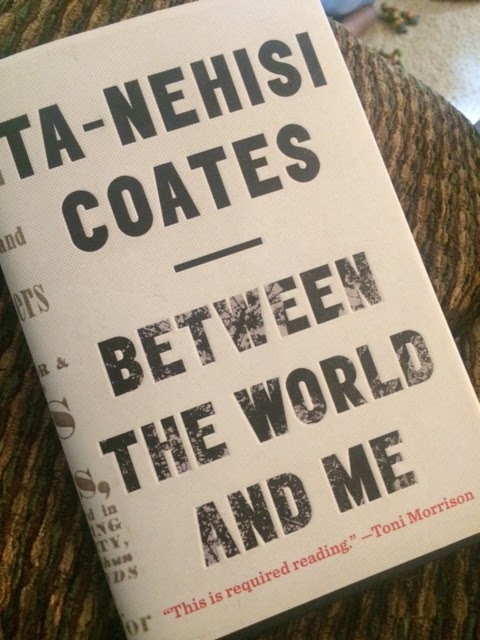
Confronting My Fear: Lessons from Ta-Nehisi Coates

One Mom’s thoughts on Bestselling Author Ta-Nehisi Coates’ book “Between The World and Me.”

by Faye McCray

When my first son was born, I nicknamed him pickle.  Not for any real reason.  He wasn’t green or lumpy.  In fact, he was a beautiful golden boy with a mound of dark, curly hair and the pinkest little lips.  He was the spitting image of my husband so I fell in love with him instantly and with ease.  I already trusted that smile, memorized those lips and I felt myself melt wrapped in those arms.  He was born with his eyes open.  The physical trait he most inherited from me.  Big, dark, oval eyes looking at us with razor-sharp focus, as if he was thinking, already, about who he would become and how we would fit into his life.

When my second son was born, I nicknamed him peanut.  Odd really, because he would be the only one of us to develop an allergy to them.  He was born bright red and wrinkly, screaming so loudly, his voice echoed throughout the delivery room.  Unlike his brother, his eyes were squeezed shut, we joke he wasn’t ready to be born.  My sweet, kind boy clung closely to me for his first year of life. He, who I affectionately joked would prefer I had a pouch, like a mama kangaroo.  He was perfectly content burrowed in a wrap, tight against the warmth of my body, only peeking out with a toothless smile when he saw fit.

Born three years apart, I fell hard and deeply for my guys.  Their beauty.  Their energy.  Their curiosity.  Now five and almost eight, they still squeal with glee at a chocolate chip pancake or a butterfly that lands unexpectedly on the car’s passenger side door.  I am proud I was chosen to be their mother.  Every single day.

I recently finished Ta-Nehisi Coates’s book Between The World and Me.  In it, Coates writes to his son about race, humanity and navigating this life in a black body.  When I knew the book would adopt the narrative of a father speaking to his son, I knew I had to read it.  I listened to it on audio with the spouse and then read it in print to linger a little longer in the language.

There are so many themes in the book that stopped me.  Halted me really.  Left me sitting in my chair short of breath.  He ran a highlighter along things I had been reluctant to see.  The most profound of which was Coates hard-hitting words on fear.  Fear growing up amidst the sickness of the inner city and the fear he felt from the adults around him who loved him so hard, it hurt, and most significantly to me, his fear as a father of a black son.

I identified with the fear.  From growing up as a black girl in New York City, to loving my beautiful black sons. Reading his words forced me to confront how deeply I feel afraid.  In some ways, I think it was the universe’s way of toughening me up to give me two black boys to love.  To make me a heterosexual female who fell in love with a black man.  I am sensitive.  My mother crowned me with that label as a child. Emotional wounds have always felt deeper for me and the pain felt by people I love always struck me as deeply as my own. The people I love the most walk this life in black bodies. A fact that, as of late, has been nothing sort of torturous to my sensitive soul.

In his book, Coates speaks of an experience taking his son on a visit to a preschool with his wife. His son jumped right in with the other children.  His first instinct, was to grab his arm, pull him back and say, “We don’t know these folks! Be cool!” He didn’t.  “I was growing,” he wrote.  “…and if I could not name my anguish precisely I still knew there was nothing noble in it.  But now I understand the gravity of what I was proposing – that a four-year-old child be watchful, prudent, and shrewd, that I curtail your happiness, that you submit to a loss of time.  And now when I measure this fear against the boldness that the masters of the galaxy imparted to their own children, I am ashamed.”

I read this and cried.  I saw myself in this passage.  Governing my own children’s moves and reactions.  Curtailing their happiness in favor of my wariness.   “Don’t get too close to that child.” “Don’t be the loudest at the party.” “Don’t touch another child’s toys at the playground.” “Don’t dance to wildly at the school picnic.” I am so very afraid and reading his words, I felt so very ashamed.

Truth is, I am afraid for my beautiful boys.  I am afraid of the looks my taller than average eight-year old gets when he moves with too much eagerness in public.  The excitement that bubbles in him animating every long limb he is not quite accustomed to navigating. I am afraid of his sensitivity.  The tears he cries when his feeling are hurt.  The frustration he releases when he doesn’t feel heard.  I am afraid for his fearless intelligence.  His insistence on questioning everything.  His cleverness and keen ear, picking apart questions so well, adults forget the answers.  I am afraid of the grown-up teeth squeezing their way into my five-year old’s mouth.  The changing contours of his baby face.  His burgeoning athletic frame, broad like my husband.  I am afraid for his charm.  His beautiful smile.  His ease with and adoration of little girls.  I am afraid for my boys.  Their huge spirits moving in black bodies with little knowledge of the hurt that awaits them.  The limits people will place on them.  And the ill-will strangers will project on them.  Or the dangers that arise in policing them.

Reading Coates’s words, I felt damaged by my own wounds. I was only ten when a person with white skin first made me feel inferior because of my black skin.  She called me “black” on a school bus.  Hissed it.  Because I took a seat she thought rightfully belonged to her.  I still remember her icy eyes, staring at me in hate, as if any triumph I could ever feel would always be marred by the body I was in.  I knew what it felt like to be judged before I said a word.  To be presumed guilty and have to prove my innocence.  To be presumed ignorant and have to prove my intelligence.  I am hard on my boys because I want to protect them but the reality is my protection can be suffocating. I am chipping away at their beautiful spirits.  The parts of their humanity that introduced themselves even as infants, as their skin first parted the air in this new world.  I’ve become so consumed with how this world will react to them, I almost forgot to nurture and respect how they will react to the world. How they might even change it.

I want my children to be free. In order to do that, I may have to be one of the ones to step out of their way.

Thank you for your words, Mr. Coates.

This post has also appeared on FayeMcCray.com and MyBrownBaby.

***

About The Author

Faye McCray is anMcCray_AuthorPhoto (1) attorney by day and writer all the time. Her work has been featured on My Brown Baby, AfroPunk, AfroNews, For HarrietMadame NoireBlack Girl NerdsBlack and Married with Kids, and other popular publications.  Faye also has a number of short stories and a full length novel available for purchase on Amazon.  Most importantly, Faye is a proud wife and mother to three beautiful and talented young boys who she is fiercely passionate about raising. You can find Faye on Twitter @fayewrites and on the web at fayemccray.com.