Parenting Through Grief

The pain of grief is arguably one of the deepest pains of the human experience. It can’t be stuffed away. No matter how hard you try. Here are few things I learned are essential when confronting grief.

Grief is an inevitably.  Loss is a natural part of life. No matter how religious, spiritual or prepared we may seem, when someone we love dies, grief can slice at the core of us like an enemy’s dagger. It is sudden, sinister and somehow unexpected, even though death is one of life’s only certainties.

While I had suffered some loss of extended family growing up, my first intimate experience with death was when I was 28 years old.  My 38 year old brother passed away unexpectedly after a day-long bout with an illness none of us knew he had.  I remember standing in the hospital when we lost him and feeling somehow catapulted out of the functioning world. Everything around me was still spinning, but I was standing painfully still.  I, like so many suffering from grief, had the audacity to wonder how death could have happened to him… to us.  As if my knowing him and loving him somehow made him immune.  At the time, my eldest, and then only son was two years old.  He and my husband had stayed behind when I traveled to New York for what I thought was a quick trip to check in on my brother.  The next morning, my brother was gone.  As I lay in the crook of my arm, my face wet with hours worth of tears, I waited  for my young family to arrive at my childhood home in Queens.  Every thing about our happy life seemed so far away, and I wasn’t sure I was strong enough to parent my son without crumbling from the weight of my new reality.  For me, motherhood was strong, hopeful and fearless.  I felt weak, hopeless and afraid.

man-person-fog-mist

In the months following my brother’s passing, I tried my best to be everything I thought I should be – pushing aside my fear and any perceived weakness. I was the dutiful daughter, tending to my mother’s and father’s needs; a supportive sister, helping my other brother as we took the lead on arrangements and other matters; and doting mother and wife, trying my best to remain strong, present and hands on.  In truth, I was caring for everyone but myself.  It wasn’t until over a year later that I took the time to confront my own neglect with the help of a therapist that I realized how carelessly I had treated myself. I had months worth of pain bottled up inside me and it manifested itself in ways that were affecting my physical and emotional health.  The pain of grief is arguably one of the deepest pains of the human experience.  It can’t be stuffed away. No matter how hard you try.  Here are a few things I learned are essential when confronting grief:

1. Let other people help you.

After my brother passed, my mother’s house had a revolving door of visitors.  I categorized them in three ways: 1) the spectators, those who just came to stare and watch as we grieved, 2) gift bearers, those who dropped off food, hugs and gift baskets and 3) the doers – those who were ready to help. While everyone has their role, these doers are wingless, walking angels.  The thing about these angels is that they don’t always come in the form you expect. There were friends and family I had expected to be there for me who just didn’t know how.  However, there were people that emerged in my life who were there for me in such profound ways that I get emotional even thinking about them.  Like my aunt, who was constantly cleaning and washing dishes at my mother’s house when I didn’t have the strength or my mother’s best friend who checked in on me when I so desperately needed a parent and my co-worker, who I now consider a dear friend, who would sit with me at lunch for hours each week as I shared memories of my brother in the months following his passing.

As a self-sufficient person, it has always been difficult for me to ask for or accept help.  However, when you’re grieving, you have to have respect for the fact that you need help.  No one can do it all.  Let someone else make calls for you.  Let someone else cook for you.  Accept the offer from someone you trust to watch your children.  Allow yourself time to feel the loss without busying yourself with all that you think you need to do.  If you can’t do it for yourself, think of it as a way to honor the person you lost.

2. Be mindful of your emotional health.

Packing my feelings away after my brother passed generally made me feel numb.  However, there is one emotion I felt unmistakably and that was anger.  I was so angry.  I was angry at the doctors and nurses for not saving my brother. I was angry at the funeral director for existing. I was angry at some friends and family for not saying the right things. I was angry at myself for not realizing he was so sick and saving him.  Anger for me was the easiest emotion to feel.  Luckily for those around me, I wasn’t lashing out.  However, I was spending a great deal of time seething and stewing.  I was bubbling up and ready to boil over. I was lashing inward which can sometimes be just as bad.

The best thing I did for myself during that time is seek professional help.  Even before I made my first appointment with a therapist, I purchased books on grief and read essays online about other people coping with sibling loss.  While I ultimately made the personal choice to seek professional help, I know it is not an easy thing to sit down with a stranger and unload. I know it’s particularly hard when you are a private and/or prideful person.  What I have learned is most professional therapists are trained listeners.  They have been taught to ask the right questions so you can formulate the right answers.  It isn’t so much that they know more about you than you, they are helping you learn more about you.  Seeking help was one of the best things I did for myself.

3.  Eat, sleep, breath and see a doctor.

Just as grief can be emotionally harmful, it can be physically harmful.  I am a migraine sufferer.  In the weeks following my brother’s passing, I had a migraine every single day.  This was complicated by the fact that two weeks after he passed away, I found out I was pregnant with my second son.  I was constantly functioning on ‘E’, barely sleeping, barely eating. I was worried about burdening my amazing husband. I was worried about my mother, father and brother; and I was worried about how everyone’s grief was affecting my nephew and sons.  Something in my body was always aching, and I was constantly exhausted.  I realize now I was feeling the physical effects of grief.  My unborn son saved me in many ways because I was forced to see the doctor for prenatal care.  However, our physical health is one of the things we neglect the most when grieving.

Broken Heart Syndrome is very real.  According to the American Heart Association, stressful events like grief can trigger cardiomyopathy leading to severe chest pain.  It is important to eat, sleep and breath when grieving. For my mother, who naturally took the loss of my brother the hardest, we were constantly reminding her of what she had to live for: my brother and I, her grandchildren, her sisters and countless nieces and nephews that would be devastated if we lost her.  Journaling helped me a great deal during the grief process. Not only was I able to work through my feelings, I was also able to remind myself of all the things I had to be grateful for including my own life and the lives of the people I loved who were still with me.  It is so easy to get lost in the darkness of grief.  Everything good can get sucked into its core and it can feel like nothing positive remains.  It is important to remind yourself of all you have to live for and make your physical health a priority.

4. Be vulnerable… even with your kids.

While I don’t recommend crying into the lap of your two year old, if age appropriate, it is important to be vulnerable with your children.  This spring, my father in law passed away unexpectedly.  My children, 5 and 8 at the time, were old enough to be aware of the complex emotions of the adults around them and they had questions. Although my husband and I believe in God, we are not particularly religious.  We didn’t have definitive answers for my children when they asked where Grandpa went or whether he was with Uncle Tommy.  We are generally honest with them about our own existential questions and our own uncertainty.  What we could convey was the emotional burden of loss.  They knew their Grandma, Daddy and Aunt were very sad, and they watched them shed tears as an expression of that pain.

Had I not experienced losing my brother, my first instinct probably would have been to shield them from the pain.  However, it was important to me that they recognized that it was okay to grieve.  I wanted them to know that our worlds had stopped momentarily and that was natural.  What would have been unnatural would be to pretend everything was okay. I also wanted them to have a lesson in empathy.  Had they been the only ones outwardly expressing pain, maybe they would have thought they were the only ones feeling it.  When you see other people in pain, it makes your world bigger. Although my children shed their own tears, I couldn’t have been prouder of my eldest when he chose to embrace his aunt and grandmother after the funeral after witnessing them in a moment of deep pain.  He realized he wasn’t the only one suffering, a lesson at the center of building empathy.

What are your thoughts? I know this is a difficult subject, family, but if you have any tips of your own, please feel free to leave them in the comments.

***

About The Author

Faye McCray is anMcCray_AuthorPhoto (1) attorney by day and writer all the time. Her work has been featured on My Brown Baby, AfroPunk, AfroNews, For HarrietMadame NoireBlack Girl NerdsBlack and Married with Kids, and other popular publications.  Faye also has a number of short stories and a full length novel available for purchase on Amazon.  Most importantly, Faye is a proud wife and mother to three beautiful and talented young boys who she is fiercely passionate about raising. You can find Faye on Twitter @fayewrites and on the web at fayemccray.com.

Trick or Treat: Tips on Keeping Your Kids Healthy This Halloween

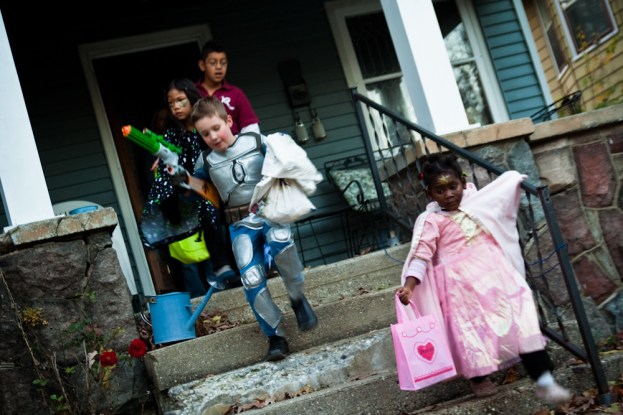
As a health conscious mom, when Halloween rolls around, I often try to find a balance between being the penny-dispensing lame house and the more-sugar-the-better cool house. I know it’s fun to indulge once and a while. However, I wouldn’t be me if I didn’t do so responsibly. Here are some tips on making the best choices for your kids this Halloween.

Halloween was HUGE deal in my neighborhood growing up. Back then, we knew every family on our block, so our parents felt comfortable letting us run from house to house hoarding as much candy as humanly possible.  We knew the houses with best candy. We also knew the houses with the worst.  For instance, we had one neighbor, Mr. G, that would give us pennies… pennies (!), instead of candy.  I won’t lie to myself and say he was looking out for our health. He was the sole hold out in a demographically shifting neighborhood in the 80s and spent most of his time shouting us off his grass.  However, I did recognize the value in offering something different.

As a health conscious mom, when Halloween rolls around, I often try to find a balance between being the penny-dispensing lame house and the more-sugar-the-better cool house. I know it’s fun to indulge once and a while. However, I wouldn’t be me if I didn’t try to do so responsibly.  Here are some tips on making the best choices for your kids this Halloween!

kids-halloween

1. Offer healthy alternatives.

With more kids with gluten allergies and other food restrictions, you can redefine your own cool by offering sweet alternatives to traditional Halloween candy.  When shopping for goodies to hand out to trick or treaters, I usually avoid artificial dyes and artificial preservatives like TBHQ, BHT and BHA.  I also avoid artificial sweeteners such as aspartame and sucralose, nitrates/nitrites, sulfites, or potassium bromate.  Often these ingredients contain known carcinogens.

The good news is, most grocery stores offer snack packs of healthy treats. Instead of reaching for the candy, try a snack bag of popcorn, veggie chips or fruit snacks. Prepackaged raisins, dried cranberries and other dried fruit are also a great alternative. GoGo squeeZ also offers organic, slurpable apple sauce in different flavors that my kids love.  Honey and chocolate chip Teddy Grahams are also free of the scary stuff. Also, companies like YummyEarth make dye-free, organic candy like lollipops and gummies.  With a little digging, you can usually find them at Target or your local grocery store. The unfortunate reality is that many of these things will end up costing you a bit but if you run out, there are always pennies.

2. Make candy collection the objective.

Truth be told, in my house, my kids don’t consume the Halloween candy they collect. I know, I know… but at least I’m not Mr. G! The thing is with diabetes, obesity, and heart disease heavy in my kids’ gene pool (and that of many in our community), it is important to me that I give them a healthy foundation.  The truth is, kids don’t miss what they never had; so outside of curiosity, they rarely ask for the bad stuff.

I promise: all fun is not lost!  At the end of the night, we lay all of the candy out on the living room floor and count it.  It becomes a competition to see who collected the most.  In the following days, a number of organizations, including our local dentist, coordinate a Halloween candy buy back that allows then to make some change for their piggy banks.  There are also some companies that allow you to donate candy to the military or other groups that could use a little sweet treat.  Keep an eye out for postings in your community or google deals near you.

candy

3. Consume unhealthy treats in moderation

If you just can’t resist those yummy Halloween treats, educate yourself on what is in them and do so in moderation.  According to the Centers for Disease Control and the American Heart Association, kids should have between 19-30g of sugar per day and 1,500mg of sodium per day.  Children ages 4 to 8 need 33 to 78 grams of fat daily; kids ages 9 to 13 require 39 to 101 grams of fat daily.  Sources of healthy, unsaturated dietary fats for children include vegetable oils, purified omega-3 oils, avocados, olives, peanut butter, nuts and seeds. Saturated, unhealthy fats are found in high-fat meats, lard, butter, cream, ice cream and full-fat dairy products, such as whole milk and cheese.

Below is a list of some of your favorite sweet treats along with their calories, sugar and fat content. Many of these options, when combined or consumed in excess, exceed recommended daily intake for sodium, sugar and/or fat. Instead of allowing your kids unrestricted on access to all the candy they collect, spread it out over the days following Halloween to be sure you are staying within recommended guidelines.

  1. Snickers, Fun Size  80 cal, 4g of fat, 8.5g sugar

  2. Kit Kat, Snack Size 70cal, 3.6g of fat, 7g sugar

  3. 3 Musketeers, Fun Size 63cal, 2g of fat, 10g sugar

  4. M&Ms, Fun Size 73cal, 4g of fat, 11g sugar

  5. Reese’s Peanut Butter Cups 110cal, 6.5g fat, 10.5g sugar

  6. Hershey Kisses (4 pieces) 88cal, 5g of fat, 10g sugar

  7. Candy Corn (Brachs, 19 pieces) 140cal, 0g of fat, 28g sugar

  8. Smarties (1 roll) 25cal, 0g of fat, 7g sugar

  9. Skittles, Fun Size 80cal, 0.8 of fat, 14.5 sugar

  10. Jolly Rancher Sucker (1 lollipop)  120cal, 0g of fat, 26g sugar

  11. Charms Blow Pop (1 lollipop) 70cal, 0g of fat, 13g sugar

  12. Tootsie Rolls (6 pieces) 140cal, 3g of fat, 19g sugar

4. Screen Your Kids Treats

Unlike when I grew up, I don’t know all of my neighbors. While Halloween is still a HUGE deal in our neighborhood, often we are knocking on the doors of houses and taking treats from people we never met.  For that reason, it is extremely important to inspect all goods you allow your kids to consume.

As a tip, make sure all treats are prepackaged. While homemade goodies are thoughtful, if you don’t know the chef or their safety habits, you may be endangering your child.  Stay away from perishables that don’t have a clearly  visible expiration date. Lastly, inspect, inspect, inspect. Make sure all packaged items are properly sealed and closed. When opened, screen for discolored or foul-smelling items.  As my mom would say, when in doubt, throw it out.

Happy Halloween! 

***

About The Author

Faye McCray is anMcCray_AuthorPhoto (1) attorney by day and writer all the time. Her work has been featured on My Brown Baby, AfroPunk, AfroNews, For HarrietMadame NoireBlack Girl NerdsBlack and Married with Kids, and other popular publications.  Faye also has a number of short stories and a full length novel available for purchase on Amazon.  Most importantly, Faye is a proud wife and mother to three beautiful and talented young boys who she is fiercely passionate about raising. You can find Faye on Twitter @fayewrites and on the web at fayemccray.com.

Advocating for Women: One Mother’s Path to Becoming a Doula

With c-sections births occurring far more frequently and rising hospital costs, many women are exploring alternative birth options. One option is hiring a doula. I had the opportunity to discuss this option with Briana Green, a Doula and phenomenal mother of two girls who turned her challenging birth experience into an opportunity to advocate for other moms.

The night I gave birth to my first son, the doctor I’d carefully hand-picked was unavailable. I went through 26 hours of non-progressive labor, had an emergency c-section, and spent 5 hours recovering without my son, who had been rushed to NICU… or my husband, who I’d forced to go with him.  I wasn’t the kind of mom who had a detailed birth plan. However, what I experienced certainly was not what I had envisioned.  Every thing turned out fine but for a long time, I couldn’t talk about the experience without growing emotional.  At the time, there was so much about my experience I didn’t understand.  I was given medications I didn’t have the opportunity to research and had major surgery without really understanding the lifelong consequences.  Although my second birth experience was far less traumatic, it’s still hard to look back on my first without wishing I had made different choices.

As I near the end of my third pregnancy, I consider myself far more informed.  In addition, I have gained a healthy respect for my first birth experience and the time it took to move past it.  Often described as Birth Trauma or Postpartum PTSD, some women suffer from a painful psychological toll following a traumatic birth experience.  With c-section births occurring far more frequently, particularly in our community, and rising hospital costs, many women are exploring alternative birth options.  One option is hiring a doula.  I had the opportunity to discuss this option with Briana Green, a Doula and phenomenal mother of two girls who turned her challenging birth experience into an opportunity to advocate for other moms.

20161013_061829

Q. Tell us a little about yourself. Where are you from? Where do you live? How would people who know you describe you?

I am a lawyer by trade and have also worked in real estate. I am a mom of two beautiful girls ages 10 and 4. I am from and currently live in Prince George’s County, MD. People usually describe me as a very laid back person and loyal friend. I am a bit of a straight shooter, too.

Q. What is a doula?

A doula can be described as a support person for women during pregnancy, labor and delivery, and the immediate postpartum period. Doulas are not medical providers; however, due to the nature of our business, we do have knowledge of the medical processes taking place during labor and delivery. Doulas are primarily women although I have heard of a few men in the field. We provide education prenatally, arming expectant moms and their partners and in some cases families with information about the labor and delivery process, breastfeeding, newborn care and hospital procedures. This allows our clients to make the best choices for themselves during their pregnancies and ultimately during labor and delivery and the care of their new baby. We help mothers draft detailed plans for their birth and help them implement the plan as much as possible during their labor and delivery.

“The goal of a doula is to empower mothers so that they may make the choices they deem best for them and be active participants in their birth experiences. Doulas help moms learn to advocate for themselves with their care providers.”

The goal of a doula is to empower mothers so that they may make the choices they deem best for them and be active participants in their birth experiences. Doulas help moms learn to advocate for themselves with their care providers. During labor and delivery we may ask questions or be a sounding board for the mother and her family as they face any given choice. We also provide physical support for moms in labor, helping them manage their contractions by utilizing techniques such as massage, counter pressure, acupressure, and the application of heat and/or cold. Doulas are trained in techniques which in some cases can speed or optimize labor by encouraging optimal fetal positioning. Some doulas specialize in postpartum care working more intensively with moms after delivery as they adjust to having a new baby at home. They provide support in the home with meal preparation, newborn care, and breastfeeding support.

Q. How long have you been a doula?

I have been a doula for almost two years.

Q. Why did you decide to become a doula? How did your previous experience lead you to becoming a doula?

After the birth of my first daughter, I was disappointed in my labor and delivery experience. I was in law school at the time and did as much research as I could.  However, I couldn’t devote as much time to it as I would have liked. I made some choices during that labor that resulted from me not being fully informed on their consequences. The result of which left me with an unsatisfying experience. With my second pregnancy and labor, I was much more informed and made what I consider better choices. However, upon reaching the hospital very near delivery, things fell apart. I needed someone there who was knowledgeable and able to help me advocate for myself as I was in no condition to do it alone. Having another informed voice there making suggestions or asking questions would have made a world of difference.

As a result of my birth experiences, I had a desire to be a support for other mothers to help them have the experiences they desire. I studied all things birth in my spare time. I was a resource for my pregnant and breastfeeding friends. Eventually, I took the plunge and decided to get certified as a birth and postpartum doula. I strongly believe that if a mother feels her voice was heard and she made the choices that were best for her along the way, she will consider it a positive experience even if things don’t go as planned. That is what was missing from my own birth experiences and it is what I wanted to help provide for other mothers.

 “I strongly believe that if a mother feels her voice was heard, and she made the choices that were best for her along the way, she will consider it a positive experience even if things don’t go as planned. That is what was missing from my own birth experiences and it is what I wanted to help provide for other mothers.”

Q. How did you prepare? How much time did it take?  

I took my training with a nonprofit organization in Washington, DC. My training included 14 weeks of classroom education, covering the physiologic and psychological processes of birth, holistic birth, hospital procedures, comfort measures, encouraging optimal fetal positioning, breastfeeding support, childbirth education, postpartum support, newborn care and much more. The training was very intensive. We also were assigned a mentor within the organization with whom we would attend our first births so we could get the hands on experience with an experienced birth worker supporting us along the way. Upon completion, I was provisionally certified as a birth and postpartum doula, child birth educator, as well as a lactation coach. There was a lot of follow up work to be done to gain full certification which included an extensive reading list as well as a requirement to provide birth support, postpartum support and breastfeeding support to a certain number of mothers.

Most programs are not this intensive. They generally include a shorter classroom period, which is generally an extended seminar over several days. The students receive the core information in supporting mothers in labor and postpartum. Students are then required to do additional study on their own, such as taking child birth courses and of course attending their required births, before receiving full certification. The prices for doula trainings range from on average $300-1000 depending on how much follow up education is needed for full certification from your certifying agency.

Q. I am currently eight months pregnant with my third son.  I am planning on a repeat c-section but am open to a Vaginal Birth After Cesarean Section (VBAC) if I labor.  Because of my past experience, I would feel safest in an environment where I am closely monitored by physicians and a surgical team. When I think of a doula, I think of a child birth experience free of excessive medical intervention.  Is that accurate? Who would be a good candidate for a doula?

Doulas assist mothers in all types of births. Doulas are not just reserved for intervention free births, home births or birth center births. I have supported moms with planned c-sections, emergency c-sections, inductions, multiples, high risk moms and/or babies, epidurals, breech babies, VBAC, fetal loss, the list goes on. You name it, I have probably seen it. A doula is equipped to support moms in any type of birth experience, planned or otherwise.  If a doula is experienced they are very skilled and familiar with working with hospital personnel to ensure that a mother has a safe and satisfying experience, even in high risk birthing scenarios that require medical intervention. If you ask me, everyone is a good candidate for a doula!

Q. How would I find a doula?

Many doulas work with agencies which you can find listed online. There are also online databases that list doulas and the services they provide. Another good way to find a doula is to speak with your care provider. Many OB/GYNs and midwives have contact information from doulas with which they have worked before or with which they have met in the office that they will pass along to you if asked.

“This is a very intimate relationship and your doula should be someone with whom you are comfortable and someone you trust.”

Q. What is the average cost?

The cost for a doula varies greatly depending on geographical location. The range is from approximately $500 – $2000. Each doula will vary in what this price includes, but generally you can expect to receive at least 2 prenatal visits, continuous labor support starting at active labor, 1-2 postpartum visits and phone support.

Q. What are factors an expectant mom should consider in finding the right doula?

Moms should look for a doula who feels like a good fit personally for them. Feel free to interview more than one doula if the first one interviewed doesn’t feel like the best fit for you. This is a very intimate relationship and your doula should be someone with whom you are comfortable and someone you trust. Other factors to consider are the doula’s experience, particularly if you have a high risk pregnancy, you would want someone who is familiar with your specific needs. A doula’s philosophy is important to consider as well. For example, if you are a mom who is most comfortable with a medically centered birth you may not want a doula whose preference is for intervention free deliveries. You can find out a lot about a doula’s philosophy during an initial consultation.

Q. What has been your most memorable experience thus far?

I have had a lot of memorable experiences. I guess I will share my most recent memorable experience. Recently one of my clients delivered her 7th child in the car in front of the hospital! We couldn’t get her into the hospital. Her husband ended up catching the baby. Hospital staff came running out after everything was over. That was an interesting one and a first for me.

“Your birth plan should take into account that some things may not go as planned, and there should always be a Plan B. Go over your birth plan with your provider so that you can be certain that you are on the same page and none of your desires will contradict any hospital or birth center policies. Do not be afraid to advocate for yourself.”

Q. Any advice for expectant moms in developing their birth plan?

When developing a birth plan, I suggest that you get as much education as possible beforehand. Study the pros and cons of each choice so you can create an informed birth plan. At the same time, it is very important to be flexible. Understand that even the most well laid plan can go to pot in labor and delivery. That is why it is important to be well informed. Your birth plan should take into account that some things may not go as planned and there should always be a Plan B. Go over your birth plan with your provider so that you can be certain that you are on the same page and none of your desires will contradict any hospital or birth center policies. Do not be afraid to advocate for yourself. Sometimes your desires may not be what is typically asked of your provider, and they may say it is not possible to accommodate. However, sometimes with a little creativity you can find a way to come up with a plan that is agreeable to you both.

For more information on Briana Green and her amazing services, visit: www.sacredcirclebirths.com.

***

About The Author

Faye McCray is anMcCray_AuthorPhoto (1) attorney by day and writer all the time. Her work has been featured on My Brown Baby, AfroPunk, AfroNews, For HarrietMadame NoireBlack Girl NerdsBlack and Married with Kids, and other popular publications.  Faye also has a number of short stories and a full length novel available for purchase on Amazon.  Most importantly, Faye is a proud wife and mother to three beautiful and talented young boys who she is fiercely passionate about raising. You can find Faye on Twitter @fayewrites and on the web at fayemccray.com.
20 Affirmations for Expectant Mothers

There are so many beautiful things about pregnancy. Your child will never be closer to you and that fact can bring you peace. However, it’s easy to get lost in worry and “what ifs” if you allow yourself to give in to all that can go wrong. Here are twenty affirmations to repeat if you find yourself overwhelmed with doubt.

There are so many beautiful things about pregnancy. Your child will never be closer to you and that fact can bring you peace. However, it’s easy to get lost in worry and “what ifs” if you allow yourself to give in to all that can go wrong. Here are twenty affirmations to repeat if you find yourself overwhelmed with doubt.

Dads, feel free to say them with your partners.

infant-948119_1280.jpg

  1. I am beautiful

  2. I am safe.

  3. I am protected.

  4. I am strong.

  5. I am worthy.

  6. I am intuitive.

  7. I am able.

  8. I am growing.

  9. I am confident.

  10. I am vulnerable.

  11. I am grateful.

  12. I am happy.

  13. I am healthy.

  14. I am powerful.

  15. I am peaceful.

  16. I am rested.

  17. I am responsible.

  18. I am hydrated.

  19. I am capable of love.

  20. I am loved.

    ***

    About The Author

    Faye McCray is anMcCray_AuthorPhoto (1) attorney by day and writer all the time. Her work has been featured on My Brown Baby, AfroPunk, AfroNews, For HarrietMadame NoireBlack Girl NerdsBlack and Married with Kids, and other popular publications.  Faye also has a number of short stories and a full length novel available for purchase on Amazon.  Most importantly, Faye is a proud wife and mother to three beautiful and talented young boys who she is fiercely passionate about raising. You can find Faye on Twitter @fayewrites and on the web at fayemccray.com.

Army of Motherhood: One Mom’s Journey Navigating Autism with Love and Resilience

Recently, I had a candid conversation with a dear friend, phenomenal woman and mother of two children diagnosed with Autism Spectrum Disorder, Lola Dada-Olley. Mrs. Olley, an attorney and journalist, shared her experience recognizing the signs, getting treatment and emotionally coping with the diagnosis.

When my husband and I first moved into our suburban community in the D.C. Metro Area, I was taken with the hypervigilance of parents and teachers in my community.  Even in preschool, it seemed like every parent I knew had a child in occupational therapy, physical therapy or some form of early behavioral intervention to ensure their children were keeping up with their peers. Initially, I found it comical.  I assumed the vigilance was due to societal pressure to raise competitive, Type A children.  I wasn’t interested in placing that level of pressure on my children.  However, I realized my attitude, for better or worse, was a product of my environment. As a child raised in the inner city, I didn’t really know anyone who suffered from a developmental disorder growing up.  I knew “weird” kids or “quiet” kids, and I never met a “weird” kid who wasn’t expected to eventually “grow out of it.”  As I have gotten older and my experience has diversified, I realize how dangerous that attitude can be to addressing mental illness or any developmental deficits in our children, particularly as it pertains to autism.

According to the Autism Society, “Autism spectrum disorder is a complex developmental disability, typically appearing during childhood and affecting a person’s ability to communicate and interact with others.” While, autism affects children of every race, our communities have disproportionate rates of misdiagnosis and late diagnosis.  While everything from lack of access to medical care to community stigma may be the blame, it is clear we must make a change to improve the outcomes in prognosis for our children.

Recently, I had a candid conversation with a dear friend, phenomenal woman and mother of two children diagnosed with Autism Spectrum Disorder, Lola Dada-Olley.  Mrs. Olley, an attorney and journalist, shared her experience recognizing the signs, getting treatment and emotionally coping with the diagnosis.

autism_awareness_ribbon

Q. Tell me a little about your family.

I have a five year old son and a three year old daughter in Kindergarten and Pre-K.

Q. When did you first realize something was wrong?

Maybe it was because he was my first baby, but I was very in tune with my son. He was super energetic and met his milestones for the most part.  Around eighteen months, he was a little bit delayed verbally but he caught up.  When he was about two and a half, we had a major life change that unearthed everything.  We sold our house in Illinois and moved to Wisconsin.  Literally around August 1, he was talking, answering questions, and he was bubbly.  By the end of that month, something had drastically changed. The same questions you would ask before would get a  blank stare or a stark one-word answer. He was very advanced in some areas before we left, he was learning English, Spanish and Portugeuse.  What I have since learned from my little bubble of moms, is parts of an autistic child’s brain are often highly advanced before the onset of the autistic symptoms. My son has hyperlexia which is the opposite of dyslexia. There are some parts of his brain that are highly advanced, there are other parts that need support.

Q. For your son, it seems like the impetus was that big life change: the move. Is that typical?

Our son had a serious need for routine so it helped us see the change more. It would have masked itself in another situation.  I first started seeing little things when I was pregnant with my daughter.  His eye contact started changing but verbally, it didn’t change until the move.

“You are suddenly drafted into an army that’s different from other parents.  Most of us enlist into the army of motherhood. Then there is a special unit you get drafted into that requires you to be even more hypervigilent than the “conventional” mom because your child needs extra support.”

Q. What steps did you take once you realized something was wrong?

I suspected it could be autism because I have a baby brother with autism.  Now, they have support groups for siblings of kids with special needs.  When I was growing up, I became like a second mom. I would do research on autism thinking it was for my brother, but it was really for my son that was coming.  All the research I had done was on something called Applied Behavioral Analysis (ABA) therapy. I looked into ABA therapy in Wisconsin.  What I didn’t know when I started my search is that Wisconsin has the best autism treatment in the United States because it is home to both a research center and treatment center rolled into one in a place called the Waisman Center.  It was a like a triage for parents.  You are suddenly  drafted into an army thats different from other parents.  Most of us enlist into the army of motherhood. Then there is a special unit you get drafted into that requires you to be even more hypervigilent than the “conventional” mom because your child needs extra support.  There was a six month waiting list at the Waisman Center.  We were only planning on being in Wisconsin for two years because of my husband’s MBA program. I had done enough research to know that the ages between 0 and 5 were crucial for early childhood and the longer we waited, the less favorable the outcome.  A social worker recommended a private facility and as luck would have it, they had an opening in two weeks.

The psychologist, who is a sweetheart, I still talk to him today, told us: “It has been confirmed that your son is diagnosed with Autism Spectrum Disorder.  This could just be a phase or it could be a lifelong battle. We don’t know yet because he is just two and a half. We do know your son is incredibly bright and gregarious and very compassionate and loving so we know he will be a delight to work with.”  I cried, they gave me the kleenex and all that good stuff. I realized then that my brother was my greatest teacher.  But for my brother, my son would have been languishing before I realized what was wrong.

maxresdefault

Q. Once you got the diagnosis, what was next?

My son was diagnosed in the fall and by January, he had a team of in-home therapists set up.  He was in therapy eight hours a day and six days a week. We did a half a day on Saturday and took Sundays off to go to church and rest as a family.   Our in-home team consisted of 4 line therapists (the “in the trenches” therapists who would execute our son’s treatment plan), their supervisor, regional supervisors, a board certified behavioral analyst (in Wisconsin, this was a PhD), a pediatrician and developmental pediatrician.  Six months in, he also had a speech and occupational therapist. We had a big team.  Also, every week, a senior therapist would come to our house with the team to discuss what worked and what did not.   People were constantly coming in and out of our house. Fortunately, our insurance covered forty hours of ABA.  Research suggests that thirty hours and over yields the best outcome for kids on the spectrum.

Q. That sounds intense. How did you handle having all those people in your home? 

When my son started therapy, I was still nursing my daughter who was under a year old. You have to be vulnerable when you get a diagnosis like this, the last thing you want to do is go into denial because you are hurting your child.  The sooner they can get support, the better off their lives will be. I immediately went into a mindset of, I no longer look at my kids as five year olds and three year olds.  There is not a day that goes by when I don’t think about a sixteen and eighteen year old version of what my babies will look like. I am very well aware that the clock is ticking.

Q. What role did you play in your son’s treatment?

You hear stories about parents and you don’t want to be a helicopter parent, but you need to be very involved.  It’s a fine line. We would be in the room.  In the sit downs, we would add on what we saw outside of the therapy room. We stayed in constant contact. When someone is constantly in your house, you are always talking about your kids.   Once he got used to the therapy, we would let them do their thing. We had to realize social skills involve other people, not just Mom and Dad.  Our son called his therapists his “big friends.”

“You have to be vulnerable when you get a diagnosis like this, the last thing you want to do is go into denial because you are hurting your child.  The sooner they can get support, the better off their lives will be. I immediately went into a mindset of, I no longer look at my kids as five year olds and three year olds.  There is not a day that goes by when I don’t think about a sixteen and eighteen year old version of what my babies will look like. I am very well aware that the clock is ticking.”

Q. Your daughter was also diagnosed with Autism Spectrum Disorder. Was her path to diagnosis similar to your son’s diagnosis?

A month into therapy, our son started showing progress which was a big blessing. However, our daughter started pulling her hair out of her head.  We took her to the pediatrician and determined at thirteen months old, she had severe allergies. She was allergic to dairy, eggs, fish, nuts, dogs, cats, summer grass and spring trees. I threw all my breast milk out and stopped eating everything.  That cleared up.  However, her speech was delayed around that time. She had about two or three words and stuck there.  I asked our pediatrician to test her for Autism. However, they don’t test until eighteen months.  So, I called in our state’s Early Childhood Intervention team (every state has one).  Once a week, a therapist would come in and work with her.  As soon as she hit the eighteen month mark, we took her in for an evaluation and she was diagnosed with Autism.  Autism typically impacts boys more than girls. However, when it comes in girls, it could be more severe.  That has so far been the case.

Q. In terms of progress, where are they now?

Our son is doing so well that he will no longer need traditional ABA by the end of the year. He has mastered all the goals. He is in traditional school and doing well.  He is getting along with his peers and socially, he is at the age he needs to be.  He goes to a social skills group a couple of days a week at a clinical center. He is one of those kids you call an early intervention success story.  When the chief therapist told us she thought we could discharge him, she said she never discharged a child before.  We both teared up. We will always have to be vigilant.  The preteen years and adolescence is another hard time. It’s hard for a neurotypical kid; but, its particularly hard for a child who has difficulty with social skills.

Our daughter is three and a half now and non-verbal.  She has been in ABA therapy since twenty months old.  We saw progress. Then, we moved to Texas and had to wait three months for services and she regressed. She is still in the trenches.  However, she has an amazing special education teacher that is dedicated and she is beginning to learn sign language.

Being able to communicate with your child is something people take for granted. Every time my son talks I think, “Thank you, God.”

Q. Is your daughter in the same type of rigorous therapy that your son was in? How do you know which treatment style is best for your child?

She is in a clinical setting.  There are two types of therapy.  It depends on your child.  Some parents go in home first to focus on life skills such as putting on shoes and clothing.   A clinical setting is like a day care setting.  Your child is around other children.  My daughter is at a center with other kids with special needs.  There is a team of  Board Certified Behavior Analysts (BCBA) that overlook the treatment schedule for 5 days a week.  My daughter spends the first part of the day in an early childhood school which is a pre-K for kids with special needs and then moves to her center.

Q. Parenting is tough in general. However, dealing with this diagnosis twice must have been difficult.  What emotional obstacles did you face? 

I’ve learned to be a lot more mindful of the blessings in the moment.  We don’t have the same lives as other people.  We pray. It’s hard.  We get down and we get scared.  We are human, but you have to just keep moving. If you work more on the front end, you won’t have to work as much on the tail end.

“Being able to communicate with your child is something people take for granted. Every time my son talks I think, ‘Thank you, God.'”

Q. How important is a strong support system?

People say the divorce rate among parents of special needs children is higher.  That’s debated. We have great support.  Our church has a respite night every other month that cares for kids with special needs and their siblings to give parents 3-4 hours for a date night. Our city in Texas also has a respite night.  You can’t just have any babysitter. You need a babysitter that understands your needs.

I don’t know how else to say it but God has sent us people that have come to support us. I met a woman in Wisconsin who did not have a special needs child but was persistent in getting our children together for regular playdates each week for over a year.   One of my son’s first sentences were at her house.  After we moved to Texas, one of our therapists in Wisconsin just happened to move here, too.  She offered to babysit anytime we needed.

Q. Any tips on finding resources?

Look up where nearest chapters of local support groups with the Autism Society of AmericaAutism Speaks has an amazing resource guide broken down by age group, early intervention, etc.  Call up your local ABA therapy center or find a pediatrician who specializes in autism and talk through your concerns. Find a pediatrician that understands the journey. Remember: persistence, persistence, persistence.  Not all states are created equal when it comes to autism treatment.

I’ve also met some people whose health care coverage doesn’t cover autism therapy at all and they have had to buy health insurance on the Affordable Care Exchange (which is something we have done) or supplement it in some ways.  If you have the means, make sure to get ABA therapy included in some way. Research, research, research.  Even if you aren’t naturally a good researcher, consult the Google. If you work on this early, there will be some strides made.

“This is not your fault. There is nothing you did in pregnancy to your baby, when you nursed, or didn’t nurse. This is not your fault, but you now have the responsibility to make sure you child is the best version of themselves. That is your assignment.”

Q. What advice would you give to a parent just staring this journey?

This is not your fault. This is not your fault. There is nothing you did in pregnancy to your baby, when you nursed or didn’t nurse. This is not your fault, but you now have the responsibility to make sure you child is the best version of themselves. That is your assignment.

Below is a TED Talk from Temple Grandin. Temple was diagnosed with autism in her 40s and is a professor and world renowned spokesperson on autism.

***

About The Author

Faye McCray is anMcCray_AuthorPhoto (1) attorney by day and writer all the time. Her work has been featured on My Brown Baby, AfroPunk, AfroNews, For HarrietMadame NoireBlack Girl NerdsBlack and Married with Kids, and other popular publications.  Faye also has a number of short stories and a full length novel available for purchase on Amazon.  Most importantly, Faye is a proud wife and mother to three beautiful and talented young boys who she is fiercely passionate about raising. You can find Faye on Twitter @fayewrites and on the web at fayemccray.com.

Q&A with Weemagine Co-Founders Rick and Faye McCray

Meet Weemagine Co-Founders, Rick and Faye McCray and learn more about them and what inspired them to create Weemagine.

Meet Weemagine Co-Founders, Rick and Faye McCray and learn more about them and what inspired them to create Weemagine.

1

Q. Tell us a little bit about yourselves.

Faye: I’m originally from Queens, New York. I currently reside in the D.C. Metro Area. My parents divorced when I was a kid so I was primarily raised by my mom.  I was raised with two phenomenal older brothers. One of which became my angel in 2009.  I was the first of my siblings to go to college and as far as know, the first law school graduate in my family (though I’m sure this new generation of kids in my family will far surpass me).  My parents were married young but they both went back to school as adults which has always been a tremendous source of inspiration for me.  I went to an HBCU for law school and majority institution for undergrad.  I  am a devoted wife and mom. I also work full time as an attorney, and I am also a published author. In my spare time, I love to ride my bike, have brunch, and throw impromptu dance parties with my kids.

Rick: I’m originally from North Carolina. My folks also divorced when I was young, but interestingly enough they remarried each other and moved back in together when my sister and I were attending college.  My mother raised my younger sister and me.  My father unexpectedly passed away in mid-2016.  Both of my parents went to HBCUs and like Faye and I, they met at Howard University School of Law.  I love reading, specifically historical biographies of business people. I love anything involving real estate. I also love watching inspirational videos on YouTube.

Q. Where did you meet? How long have you been married?

Faye: Rick and I met our first year of law school at Howard University School of Law. We officially met at a birthday party of a mutual friend but I always tease him that he introduced himself to me (and all the girls) in the library before then. We have been together 13 years and married for 10.

Rick: Our first date was to the final Matrix movie.  It was great because my wife, (then girl I was trying to date), was driving and we got lost.  I got to practice some of my best humor on her, which is obviously why she fell in love with me!  We both agreed how bad the movie was so we bonded over that and by the end of the movie, we wanted to see more of each other. On a side note, our date almost never happened.  My wife thought I was very weird and tried to get every friend she could think of to go on the date with her, like a dang chaperone!  Thankfully, all of her girlfriends said no and she was forced to enjoy my company by herself.

2

Q. How many children do you have?

Rick: We have two boys and another baby boy due in November 2016.

Faye: This is a rainbow baby for us. We had a miscarriage in December 2015 so this baby and pregnancy has been an absolute blessing.

“We wanted to provide positive and helpful information, everyday, that would help other parents inspire their children no matter what was going on in the outside world.  It is something that we were seeking that we didn’t see enough of. We decided to provide it because we knew if we were looking for it, other parents were too.”

Q. Why did you start Weemagine?

Rick: We started Weemagine because we wanted a place that was specifically catering to parents of children of color. We wanted to provide positive and helpful information, everyday, that would help other parents inspire their children no matter what was going on in the outside world.  It is something that we were seeking that we didn’t see enough of. We decided to provide it because we knew if we were looking for it, other parents were too.

Faye: Well, my reason is probably more emotional. As a mother of brown boys, I was afraid. I am afraid. Every video, shooting, arrest, and acquittal was hitting me emotionally. I felt like I was drowning.  I wanted to be part of the solution.  Weemagine began as a Facebook group called Celebrating Black Boys.  The group was primarily friends and friends of friends looking to celebrate our beautiful sons. We would share pictures and good news. We created a Facebook page shortly after to allow other people to share their stories. We started digging through the news to bring positive stories of black boys and men to inspire our growing community. Weemagine launched in 2016 as a part of a bigger mission to celebrate and inspire all of our children and the people who love them. We couldn’t escape that moms of little girls were feeling the burden too. We wanted to unite as a community.

Q. What does the name Weemagine mean?

Rick: To me, it means creating the world as we want to see it. It means a place where our children are safe, creative, fun and celebrated.  It is a collective feeling of “this is our space to enjoy.”

Faye: It’s also a play on the words “We” and “Imagine”.  The extra “e” is because our goal has always been the babies!  “Wee” means little.

42

Q. Why now?

Rick: Why not now? We see negative imagery all the time, and we rarely see solutions.  We feel like our site is our way of showing solutions.  It shows parents how to live in this moment empowered and compassionate.

Faye: I agree. We need sites like Weemagine now. We are such a resilient, spirited people.  I think once we have solutions, we work towards them.  This is just one small solution. Let’s love our babies. Let’s raise them to be proud and strong.  Let’s work together to find inspiration and positivity.

Q. Who do you hope to reach?

Rick: I want to reach young mothers and fathers who are afraid for their children. I’d like to reach grandparents who are raising grandchildren who want to know how to relate to this generation.  I want to reach anyone who is seeking solutions and ways to make the environment better for children in our society.

Faye: Right. Our goal has always been to celebrate and inspire the babies. That necessarily involves inspiring parents and other people who love and have access to them.

“We are such a resilient, spirited people.  I think once we have solutions, we work towards them.  This is just one small solution. Let’s love our babies. Let’s raise them to be proud and strong.  Let’s work together to find inspiration and positivity.”

Q. As a mother, what do you hope to bring to Weemagine?

Faye: I have been a mom for nine years. I am by no means a veteran but I am proud of the experience and knowledge I have gained. I hope I inspire conversation. I want to be honest about what has worked for me but also my shortcomings as a parent. Also, as a woman, I am incredibly inspired by other women. I hope to bring stories of moms overcoming obstacles, trusting their intuition, and giving their babies the best life they can.

Q. As a father, what do you hope to bring to Weemagine?

Rick: I want to bring a positive male perspective. I want to show a black father who is 100% there for his kids and doesn’t just discipline but loves. That’s my reality and that’s the reality for guys I know.

109

Q. What are your short term goals?

Rick: We want to increase our viewership, continue to put out great content, and get the word out. There are more people that don’t know that we exist than do.  There is a huge opportunity for growth.

Q. What are your long term goals?

Faye: Certainly to spread positivity to a larger audience. I’d like to spread our content throughout social media, including videos. I’d like to meet more people and share their stories.  As an author, I’d also like Weemagine to play a role in spreading diverse literature, whether its original content or as a resource for finding positive images of our children.

***

About The Author

Faye McCray is anMcCray_AuthorPhoto (1) attorney by day and writer all the time. Her work has been featured on My Brown Baby, AfroPunk, AfroNews, For HarrietMadame NoireBlack Girl NerdsBlack and Married with Kids, and other popular publications.  Faye also has a number of short stories and a full length novel available for purchase on Amazon.  Most importantly, Faye is a proud wife and mother to three beautiful and talented young boys who she is fiercely passionate about raising. You can find Faye on Twitter @fayewrites and on the web at fayemccray.com.

Minute Mentor: School Counselor Tanefa Wallace

Minute Mentor provides a space for real people to tell their stories so if you or your little one is in search of mentorship on how to achieve their dreams, you can look no further than right here! Sometimes the best inspiration comes from seeing someone that looks like you achieving similar goals.

Minute Mentor is a series of posts profiling real people achieving their dreams. It began with the simple idea that “seeing is being.”  When cofounders Rick and Faye’s oldest son was born, it was clear he was musically inclined. He was playing piano by ear at age 4 and neither of them ever even picked up an instrument! When Faye remembered an old neighbor who had gone on to become a Julliard trained musician, she immediately reached out to him and said, “What do we do?”  He patiently answered all of her questions on how best to nurture her budding musician.

Minute Mentor provides a space for real people to tell their stories so if you or your little one is in search of mentorship on how to achieve their dreams, you can look no further than right here! Sometimes the best inspiration comes from seeing someone that looks like you achieving similar goals.

If you have any questions or comments for the featured guest, leave a comment, and we will do our best to bring it to their attention! Happy imagining!

Name: Tanefa Wallace

Age: 40 and over

Occupation: School Counselor

Career Level:

  • Entry
  • Mid-level
  • Executive
  • Entrepreneur
  • Retired

How hard do you work? 

  • Lots of Leisure Time
  • Typical 40-50hr Workweek
  • More than Average
  • I never stop working

Lifestyle/Income: 

  • Side Hustle/Didn’t Quit My Day Job
  • Getting By
  • My bills are Paid with Some Room for Fun
  • You get a car! You get a car!

Describe your job:

I am a [high school] counselor, so that means that I wipe tears over lost boyfriends and “crazy” parents, and I help students keep their grades up and focus on goals to reach college. I also help students apply [to college] and figure out where to apply to be the most successful.

What education level is required for your job? Tests? Certificates? Years of School?

In order to do my job you have to have a [Bachelor’s] degree and a Master’s degree. You also have to be certified as a School Counselor by the educational district where you are working. In order to maintain your certification, you have to complete at least 6 continuing education credits in your field or CEUs through workshops in your field. The years of school add up! There are 4 for undergrad and 2 for graduate/masters work, then you have to continue to go back to school or to trainings to stay sharp and above the fray! Some schools require exit exams, and if you want to become a Nationally Certified School Counselor, you have to take an exam that qualifies you for that level of work.

“I find that when you are new to your field or want to be cutting edge, you have to seek out the people who are doing what you do well.”

What kind of student were you?

I was [an] on again off again student. I had a childhood that was fraught with trauma so there was a lot of times where I didn’t want to be in school and didn’t live up to my potential as a student. I was a B student with a few Cs here and there but it didn’t reflect my ability levels at all.  I was exceptional on all of the standardized testings and was even awarded a full academic ride to an HBCU, including room and board.

Did you have a mentor? How did you meet?

I have one now. I met her through a recommendation. I have had one in every job I have ever had. I find that when you are new to your field or want to be cutting edge, you have to seek out the people who are doing what you do well. Befriend them, get them to give you all of their secrets, and show them your appreciation in ways they will enjoy.

How did you get your current job?

I was picked out of 300 applicants based on my interview and resume.

Is your job family-friendly?

I am able to be a parent and do it without too much pressure. I am in the school system [so] I have the same days off and summers and winter break [as my children].  So, I would say yes, it is very family friendly.

Do you find your work fulfilling?

Yes! I love it. I thoroughly enjoy bonding with the students and assisting them navigate life as they know it, the processes of getting to their goal schools, and [their] lives once they graduate. It gives me a sense of purpose and allows me to use my gifts in service to students and families.

Did you always know you wanted to be a school counselor?

No! I wanted to be a radio DJ. I love music, and [I] love interacting with those types of creative folks. After all, I am a creative as well on my own time.

What advice would you give a parent of a child/young adult interested in pursuing a job in your field? 

Make sure you are doing it for the right reasons: love of children and students, a passion to serve educationally, work with the general public, a strong urge to be organized and assist students to reach their goals. Being a highly organized person is a plus! I would also state that being certified and attending an accredited institution would be beneficial to being able to do your job efficiently by creating a strong knowledge base.

You can find out more about Tanefa Wallace:

On Instagram: @Soul_On_Purpose
On Facebook: www.facebook.com/SoulOnPurpose
On the Web: www.SoulOnPurpose.wix.com/soulonpurpose

***

About The Author

Faye McCray is anMcCray_AuthorPhoto (1) attorney by day and writer all the time. Her work has been featured on My Brown Baby, AfroPunk, AfroNews, For HarrietMadame NoireBlack Girl NerdsBlack and Married with Kids, and other popular publications.  Faye also has a number of short stories and a full length novel available for purchase on Amazon.  Most importantly, Faye is a proud wife and mother to three beautiful and talented young boys who she is fiercely passionate about raising. You can find Faye on Twitter @fayewrites and on the web at fayemccray.com.


Cracking the Introverted Child: Getting Your Tween to Open Up

As a tween life can run the gamut of emotions. Our children often have the additional burden of processing other people’s microaggressions and stereotypes that aren’t always easy for a young mind to understand. It is important to me that my son knows I am available to listen whenever he needs me. Here are some tricks I have learned to get my son to open up.

Even when raised in the same family, children can be vastly different. They are unique and their little personalities take shape well before we have the chance to mold them.  Soon after my second son was born, I remember being astounded at how differently he and his brother would respond to the same situation.  As they grew older and their personalities took shape even more, I realized dealing them in exact same way often does not work. Altering my parenting style is often necessary, especially when getting them to open up.  For instance, while my middle son will talk the ear off most willing listeners, my eldest rarely gives more than a one word answer when asked about his day.  While being guarded isn’t always a bad thing, it is important to me that he doesn’t get bottled up.  As a tween life can run the gamut of emotions. Our children often have the additional burden of processing other people’s microaggressions and stereotypes that aren’t always easy for a young mind to understand. It is important to me that my son knows I am available to listen whenever he needs me.  Here are some tricks I have learned to get my son to open up:

1. Create a judgment-free zone.

I found some of what fuels my son’s unwillingness to open up is a fear of being judged.  He is extremely sensitive and when he speaks, is it very important to him that he feels heard and not judged for his feelings or actions. If my husband or I rush to a conclusion about something he has confided in us, he grows emotional or worse, he shuts down.

As a parent, it is instinctual to want to protect your child.  Often that means listening to them with some level of judgment. We all do it. We want to make sure they are making the right choices when they aren’t with us, and if they tell us something that we know may lead to harm, our first instinct is to get them back on the right path.  However, I have learned to be gentle in that guidance when it comes to my guarded son. I start by letting him know how much I value his honesty. I also consistently let him know he can talk to me about anything and everything and I will (try my best to) listen without anger.  Rather than lecturing him immediately, I have learned to ask him questions that will lead him to the right conclusion. Instead of saying, you shouldn’t have done that.  I ask, what consequences do you think you could face? What do you think you could have done differently? These open-ended questions not only fuel the conversation, but they give him the intellectual freedom to draw his own conclusions without feeling judged.

2. Make one-on-one time.

I always know my son wants to talk when he volunteers to go with me on an errand.  It is usually a random request to ride with me to Target or walk with me to the cluster mailbox in our cul de sac.  As a family of four (soon to be five), it isn’t always easy for him to grab alone time with me or my husband.  I learned quickly that these seemingly small requests were his way of getting the alone time he craved. Inevitably, he starts talking.

When you have more than one child, alone time is important to all children, not just your introverted child.  Each child needs your undivided attention outside the often judgmental and immature ears of siblings.  When my middle son was in preschool, we discovered a local cafe that had a “cookie of the day.”  It was such a fun discovery for both of us because the place had little tables by the lake and plenty of space for him to run around. It became a regular ritual for us to go get a quick cookie during the time between when he was dismissed from school and when my oldest got out a few hours later. Even at four years old, it quickly turned into a time for us to talk.  Even if you can’t steal away time with your child, find small moments at home.  When my eldest was small, I would snuggle with him for a few moments in his room before he fell asleep.  Now, he has a later bedtime than his younger siblings so sometimes he spends it smashed between my husband and I on the couch giggling at a family-friendly TV show.  These moments provide him with an opportunity to open up to us about anything that may have been weighing on him throughout his day.

3. Be open about your own thoughts and feelings.

Last school year, my son had some issues with a few boys in school when they decided they didn’t want to play with him anymore.  He didn’t come right out and admit it bothered him but he mentioned the incident in passing with a small shrug.  I knew he was affected by it but he wasn’t quite comfortable being vulnerable enough to admit it.  Knowing that coaxing him would not work, I told him a story of a similar experience I had when a few girls in my elementary school treated me in a similar way.  It was surprisingly easy to dig back to that time and remember my own hurt and confusion.  He listened intently and it wasn’t long before he was echoing my feelings and asking me how I solved the problem.

Developing a relationship with your child is a two-way street. In order to gain their trust, it is often necessary to give them yours. By confiding in your child about your own insecurities and vulnerabilities, you allow them to see your humanity.  Building that foundation is crucial to breaking your introverted child out of their shell.

4. Give your child your full attention.

My sons ALWAYS know when I am distracted.  They call me on it and hold me accountable.  I work from home and have additional projects that make my schedule unconventional.  I would probably lose days on my computer if it weren’t for my children constantly reminding me to exist in reality.  Introverted children are particularly sensitive to distraction.  Opening up is not easy. When they do, it is important they have your full, undivided attention. If it’s not possible to drop everything when they need to talk, make sure you schedule a time when you can.  Don’t just say “we’ll talk later.” Give them specifics and make sure to follow through.  Scheduling a time to talk shows them that what they have to say is important to you and you will make it a priority to hear it.

What do you think, family? Share your tips and tricks for getting your child to open up in the comments below.  It takes a village!


***

About The Author

Faye McCray is anMcCray_AuthorPhoto (1) attorney by day and writer all the time. Her work has been featured on My Brown Baby, AfroPunk, AfroNews, For HarrietMadame NoireBlack Girl NerdsBlack and Married with Kids, and other popular publications.  Faye also has a number of short stories and a full length novel available for purchase on Amazon.  Most importantly, Faye is a proud wife and mother to three beautiful and talented young boys who she is fiercely passionate about raising. You can find Faye on Twitter @fayewrites and on the web at fayemccray.com.

Living History: Freedom Fighter, Former Political Prisoner and Educator Angela Davis

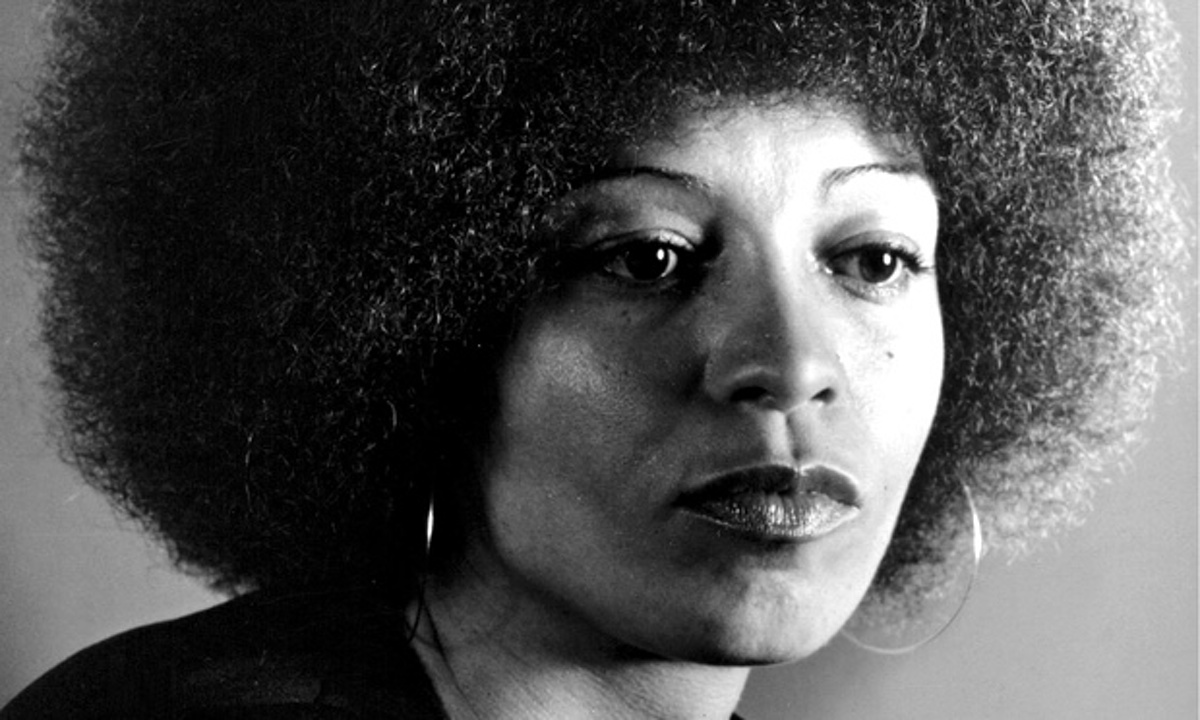
Close your eyes and conjure up an image of Angela Davis. If you’re like me, that image most likely includes a powerful woman with a fist raised and a beautiful fro. I knew her image and name long before I knew anything about her but once I learned, I was proud to call her an elder. Here are 7 must-know facts about living legend and pioneer, Angela Davis.

Close your eyes and conjure up an image of Angela Davis. If you’re like me, that image most likely includes a powerful woman with a fist raised and a beautiful fro.  I knew her image and name long before I knew anything about her but once I learned, I was proud to call her an elder.  Here are 7 must-know facts about living legend and pioneer, Angela Davis.

1. Angela Davis was born and raised in “Dynamite Hill.”

Angela Yvonne Davis was born in Birmingham, Alabama in 1944 in an area nicknamed “Dynamite Hill.” The area gained it’s nickname because the Ku Klux Klan would regularly bomb and set fire to homes and businesses inhabited by African Americans to deter integration.  Notably, Condoleezza Rice and Alma Johnson, wife of Colin Powell, were from the same community.

2. Davis knew two of the girls killed in the 16th Street Church Bombing.

Davis grew up two houses down from Cynthia Wesley and Carole Robertson, two of the little girls murdered in the 16th Street Church Bombing in 1963. The day of the bombing Davis’s mother drove Carole Robertson’s mother to the church to pick up her daughter not knowing she had been murdered. Davis was in college at the time.

Watch Davis talk about growing up in Birmingham and the 16th Street Church Bombing below:

3. She was only one of three black students when she enrolled at Brandeis University.

While attending Brandeis, she met German philosopher Herbert Marcuse who she credits with teaching her “it was possible to be an academic, an activist, a scholar, and a revolutionary.” She graduated from Brandeis magna cum laude.

4. She was a member of the Communist Party.

Davis attended graduate school at the University of California, San Diego.  While attending, she joined the Black Panthers and also the Che-Lumumba Club, an all-black branch of the Communist Party named after Che Guevera and Patrice Lumumba.  Her affiliation with the Communist Party caused her to get fired from her job as an Assistant Professor at the University of California, Los Angeles.  In 1969, University of California’s policy barring Communists from employment was struck down in Los Angeles Superior Court and Davis was reinstated.

5. She spent 18 months in jail.

In January 1970, three African American prison inmates of Soledad Prison, John Wesley Cluchette, Fleeta Drumgo, and George Lester Jackson, were accused of killing a prison guard following the murder of several African American inmates by another guard. Davis organized protests, raised funds for the inmates’ defense, and publicly called for their release. Davis received death threats for supporting the inmates and reportedly purchased guns for her protection. During Jackson’s trial in August 1970, his younger brother attempted to free him by holding the courtroom at gun point and taking the judge, a district attorney and jurors hostage.  The judge, Harold Haley, was killed during the escape attempt.   The guns used by Jackson’s brother were registered to Davis.  Davis was brought up on several charges, including murder.  After spending roughly 18 months in jail, Davis was acquitted in June 1972. During her time in jail, many celebrities and members of the community came to her defense dubbing her a political prisoner.

boston_1970_protest_against_the_vietnam_war

6. Davis now works as a professor and lecturer.

During the last twenty-five years, Professor Davis has lectured nationally and internationally.  She is the author of nine books, including Angela Davis: An Autobiography; Women, Race, and Class; Blues Legacies and Black Feminism: Gertrude “Ma” Rainey, Bessie Smith, and Billie Holiday; The Angela Y. Davis Reader; Are Prisons Obsolete?; a new edition of Narrative of the Life of Frederick Douglass; and The Meaning of Freedom.

Following her termination from the University of California, San Diego, then-California Governor Ronald Reagan vowed that Angela Davis would never teach in the University of California system again. As of this writing, Professor Davis is Distinguished Professor Emerita in the History of Consciousness and Feminist Studies Departments at the University of California, Santa Cruz. In 1994, she was appointed as the University of California Presidential Chair in African American and Feminist Studies.

7. Davis endorsed Hillary Clinton in the 2016 Presidential Election.

On October 1, 2016, at the “Many Rivers to Cross Festival” in Atlanta, Georgia, Davis stated that although she is not enthusiastic about Democratic presidential nominee Hillary Clinton, she will vote for Clinton to prevent Donald Trump from winning the presidential election.

Information Attained From:

http://www.history.com/topics/black-history/angela-davis

http://atlantablackstar.com/2016/10/03/angela-davis-claims-there-will-be-a-political-revolution-just-vote-clinton-in-meantime

http://www.npr.org/sections/codeswitch/2013/07/06/197342590/remembering-birminghams-dynamite-hill-neighborhood

http://www.nytimes.com/1997/04/14/us/jerry-pacht-75-retired-judge-who-served-on-screening-panel.html

http://www.fembio.org/english/biography.php/woman/biography/angela-davis/

http://feministstudies.ucsc.edu/faculty/singleton.php?singleton=true&cruz_id=aydavis


***

About The Author

Faye McCray is anMcCray_AuthorPhoto (1) attorney by day and writer all the time. Her work has been featured on My Brown Baby, AfroPunk, AfroNews, For HarrietMadame NoireBlack Girl NerdsBlack and Married with Kids, and other popular publications.  Faye also has a number of short stories and a full length novel available for purchase on Amazon.  Most importantly, Faye is a proud wife and mother to three beautiful and talented young boys who she is fiercely passionate about raising. You can find Faye on Twitter @fayewrites and on the web at fayemccray.com.

Meet Lynquay Sanford: Incredible Mom and Entrepreneur Who Returned to School to Pursue Her Dreams

My own mother’s choice to achieve her dreams not only changed the opportunities available to me and my brothers, it motivated me to pursue my own dreams. When I heard Lynquay Sanford’s story of similar fortitude and grit for her own children, I knew I had to talk to her to learn more.

When I was nine, my mother went back to school to pursue her Bachelor’s degree in Political Science.  Just a few year earlier, she and my father went through a tough divorce, and she was left as the primary guardian of me and my two older brothers. Even as a kid, I understood the magnitude of her decision to go back to school.  I knew she had to overcome naysayers, self-doubt and the financial uncertainty of pursuing a degree while working full-time and raising three kids. My own mother’s choice to achieve her dreams not only changed the opportunities available to me and my brothers, it motivated me to pursue my own dreams.  When I heard Lynquay Sanford’s story of similar fortitude and grit for her own children, I knew I had to talk to her to learn more.

1. Tell us a little about yourself. Where are you from? Where do you live? How would people who know you describe you?

My name is Lynquay Sanford, and I was born and raised in Queens, NY. I currently reside in Wendell, NC. People would describe me as being very straight forward, funny, strong-willed, caring, loving, and a great friend and motivator. I am always open to new ideas. I am also a great mother to my children.

20151212_102501-11

2.What made you decide to go back to school?

I opened a Family Child Care Home because I wasn’t satisfied with the child care centers in my area that my son attended. I wanted to learn more about how I can help preschool children and bring quality education to my Family Child Care Home. I started off by taking one class that is required to operate a Family Child Care Home. I liked it so much that I decided to pursue a degree in Early Childhood Education.

3. What were you doing before you decided to go back to school?

I was an EMT and I worked at a level one trauma center in Raleigh, NC dispatching helicopters and transport ambulances.

4. How did you prepare to get your degree? For example, internships, certifications, application process. How much time did it take?

I received my Associate’s degree in Early Childhood Education in December 2015. I will continue on to pursue my Bachelor’s degree in Early Care and Education and or Human Development and Family Service. What prepared me for this was operating my Family Child Care Home. I stepped out on faith and started my childcare business. It may take me three years to receive my Bachelor’s degree as I will be taking classes online and at my own pace. The cost of pursing any degree is expensive; however, I’ve graduated debt free because I had a scholarship to attend school. I will also be on a scholarship when I return to school the fall of 2017.

5. What do you plan to do with/have you done with your degree?

My plan is to expand my Child Care home and open a Child Care Center and or ½ day preschool.

“I was going through a very difficult divorce and working 7 days a week the last two years of me being in school. I’ve wanted to throw in the towel many times, but I couldn’t help but look at my children, especially my daughter, to show them no matter how tough life gets never give up.”

6. Who was your biggest inspiration? Mentors? Family? Friends?

I have so many people that have inspired me into going back to school. I was introduced to a group of ladies, all African American, who owned child care centers and family child care homes. They inspired me to stay in school and obtain my degree. My child care consultant also stayed on me to stay in school. I also come from a long line of strong black females, including my mother, grandmother and aunt, that inspired me to follow my dreams.

7. What was your biggest motivation? In other words, what kept you going?

My children kept me going. I also had the support of my mother and close friends who stepped in to help me with my children while I attended school at night.

8. Did you experience any setbacks? How did you overcome them?

Yes, I had many setbacks. I was going through a very difficult divorce and working 7 days a week the last two years of me being in school. I’ve wanted to throw in the towel many times but I couldn’t help but look at my children, especially my daughter, to show them no matter how tough life gets never give up. Just take your time pray about what you are going through and keep on moving. I tell them all the time that God does not give you or put you through anything he thinks you cannot handle.

9. If you had a chance to go back in time and speak to your 15 year old self, a) would she be surprised to see where you are now? b) what would you say to her?

Surprised? Yes! I thought I wanted to be a Veterinarian. I did not know anything about owning anything at that age. I would tell my 15 year old self to stay head strong and that she can do anything she puts her mind to. I would tell her that she is stronger than she thinks she is.

“Don’t let people change your mind or put doubt in your mind. Surround yourself with people who will push you and not distract you from pursing your dreams.”

20160328_174444

10. What advice would you give to someone thinking about going back to school or going after any dream?

Do it. Don’t let people change your mind or put doubt in your mind. Surround yourself with people who will push you and not distract you from pursing your dreams. Surround yourself with people who will be honest with you when you have those weak moments from pursuing your dreams. Also, know that it will not be easy but if you want it bad enough, you can achieve it. Success does not happen overnight.

11. Any long term goals or dreams?

My long term goal is to stop working 7 days a week. My dream is to have several child care centers and half-day preschools that will service low income families and families with special needs children.

Check out Lynquay’s Family Child Care Home, Open Arms Daycare here.

***

About The Author

Faye McCray is anMcCray_AuthorPhoto (1) attorney by day and writer all the time. Her work has been featured on My Brown Baby, AfroPunk, AfroNews, For HarrietMadame NoireBlack Girl NerdsBlack and Married with Kids, and other popular publications.  Faye also has a number of short stories and a full length novel available for purchase on Amazon.  Most importantly, Faye is a proud wife and mother to three beautiful and talented young boys who she is fiercely passionate about raising. You can find Faye on Twitter @fayewrites and on the web at fayemccray.com.

Must-Read: A Candid Conversation with a Retired NYPD Officer on Surviving an Encounter with Police

While I believe confronting the issue of police violence requires systemic change, I also know that I need to prepare my children to deal with the realities of police violence while we work towards change. I fluctuate between feeling resentful and resigned to this fact. To better prepare myself and my sons, I asked Thomas W. Higdon, Sr., a retired New York City Police Officer with 36 years of experience, for his advice on surviving a police encounter.

As a mom of two, soon to be three boys, sometimes I find myself overwhelmed with anxiety about my sons’ safety as they grow older. My eldest son is 9 years old, and he is tall. He is often mistaken for 12 years old which is the same age as Tamir Rice, and one year younger than Tyre King, two children who were killed by police in separate incidents in Ohio. While I believe confronting the issue of police violence requires systemic change, I also know that I need to prepare my children to deal with the realities of police violence while we work towards change. I fluctuate between feeling resentful and resigned to this fact.  To better prepare myself and my sons, I asked Thomas W. Higdon, Sr., a retired New York City Police Officer with 36 years of experience, for his advice on surviving a police encounter.

1. Describe your experience.

I served in the New York City Police Department (NYPD) for 36 years.  For 25 years, I was a Supervisor or Commander in the Department. I patrolled some of the most violent precincts in New York City. I worked as a patrol supervisor in the rank of Sergeant as well as Lieutenant. I commanded various plain clothes units including the Anti-Crime (precinct violent crime unit),  NYPD Gang unit, and Principle Crime unit in the Intelligence Division. I’ve taken various police investigation courses. I’m a graduate of the FBI academy. I also have a Masters in Criminal Justice from St. John’s University.

2. Some argue that most cops are good. In your opinion, is police brutality a national problem or a series of isolated incidents?

Are some cops good? Let me just say that most police officers are professionals. Do most officers go on patrol with intent to brutalize people? No; however, there are some officers who abuse their authority. Based on today’s climate, I would definitively say we have a national problem. The police are a reflection of the country.  The country has a race problem and so do police departments. How do we change the heart of a racist? I believe only God can.

“Based on today’s climate, I would definitively say we have a national problem. The police are a reflection of the country.  The country has a race problem and so do police departments.”

3. How do you feel like it should be addressed? Within police departments? By law makers? Federal agencies (for example, The Department of Justice)? Prosecutors?

The police departments cannot police themselves. It has to be an outside agency, independent of the jurisdiction in which the department operates. I strongly believe federal agencies and outside prosecutors are necessary.

4. I often find myself stuck on where to start when I begin to talk to my children. On one hand, I want them to be able to trust that the police exist to protect them. On the other hand, I am afraid that if they interact with police, they may be unsafe. Where do you feel the conversation begins for parents?

I believe that people must understand that the police department is comprised of men and women who are trained professionals yet they come to the job from various backgrounds and with plenty of bias. We should educate our kids at an early age, teaching them right from wrong, and their rights as citizens. While on patrol early in my career, people would come to me on the street with their kids and present me as a disciplinarian. That would upset me.  I felt that it was one of the reasons young people disliked cops.  Parents displayed us as bogeymen.

police-depts

5. What should they know about interacting with police?

Remain calm no matter what the circumstance and follow the instructions of the officer(s). Know your rights/laws concerning search and seizure as well as your right to remain silent (read more about your Miranda rights here). The officers are not your friends. They are law enforcement officers trying to solve cases. There are plenty innocent people who are in jail that haven’t committed crime.

6. What suggestions would you have for remaining safe during an interaction with police?

Stay calm and follow instructions. Never run or move unnecessarily. I often told my sons, try to remember the officer(s) name and shield number without asking for it, if possible. Also, use technology available to you, i.e. live stream.  Just keep in mind, the officer may very well be aggravated by it.

7. Often deadly police interactions begin when someone is “suspected” of a crime or misidentified. How would suggest someone handle being stopped by police when mistaken for a crime they did not commit?

Cooperate, cooperate, cooperate.  Once you have identified an officer as being one, he has the authority to question you if he has reasonable suspicion that a crime has been committed and the suspect fits your description. Unfortunately, in Black and Latino communities, this has been abused. Black and Latino communities are patrolled differently from white communities. Laws are enforced more aggressively.  For example, a disorderly conduct offense in a White community is treated as a violation. The same scenario in a Black community would lead to a more serious charge, e.g., riot.

“Remain calm no matter what the circumstance, and follow the instructions of the officer(s). Know your rights/laws concerning search and seizure as well as your right to remain silent. The officers are not your friends. They are law enforcement officers trying to solve cases. There are plenty innocent people who are in jail that haven’t committed crime… [L]ive to fight another day!”

8. Does your advice change for someone stopped in a car or on foot?

Basically the same, cooperate.  However, when an individual is in a vehicle he is not completely visible so he/she must make every effort to stay as still as possible (don’t move unnecessarily) and keep your hands where they can be seen at all times.  Also, only speak when you are spoken too.

9. In today’s climate, what would you tell your sons about dealing with police?

Remain calm no matter what and cooperate, cooperate and cooperate. As I said earlier identify the officer(s) as best you can, and live to fight another day!

10. Any other advice?

The best advice I would give a parent is to raise your kids to respect authority, regardless of the individual in the position. Teach them morals and empathy. I believe only God can change the hearts of man and in order for God to do that we must have a relationship with Him.

***

About The Author

Faye McCray is anMcCray_AuthorPhoto (1) attorney by day and writer all the time. Her work has been featured on My Brown Baby, AfroPunk, AfroNews, For HarrietMadame NoireBlack Girl NerdsBlack and Married with Kids, and other popular publications.  Faye also has a number of short stories and a full length novel available for purchase on Amazon.  Most importantly, Faye is a proud wife and mother to three beautiful and talented young boys who she is fiercely passionate about raising. You can find Faye on Twitter @fayewrites and on the web at fayemccray.com.
25 Positive Affirmations For Parents

Though the ability to parent is a gift and a blessing, it can also be tough. It’s easy for self doubt to creep in which can leave you questioning your ability and worthiness. Say these 25 positive affirmations to get you on the right track.

Though the ability to parent is a gift and a blessing, it can also be tough.  It’s easy for self doubt to creep in which can leave you questioning your ability and worthiness.  Say these 25 positive affirmations to get you on the right track.

  1. I love my child.

  2. I am loved.

  3. I am strong.

  4. I am reliable.

  5. I am capable.

  6. I am motivated by love in caring for my child.

  7. I act in my child’s best interests.

  8. I can manage my child’s needs.

  9. I show my children I love them.

  10. I enjoy my children.

  11. I respect my children.

  12. I challenge myself.

  13. I am not afraid.

  14. I am present.

  15. I have good judgment.

  16. I am intuitive.

  17. I am consistent.

  18. I am fair.

  19. I am patient and calm.

  20. I am worthy of self-care.

  21. I am worthy of respect.

  22. I am doing my best.

  23. I am inspiring.

  24. I am valued.

  25. I am needed.

    ***

    About The Author

    Faye McCray is anMcCray_AuthorPhoto (1) attorney by day and writer all the time. Her work has been featured on My Brown Baby, AfroPunk, AfroNews, For HarrietMadame NoireBlack Girl NerdsBlack and Married with Kids, and other popular publications.  Faye also has a number of short stories and a full length novel available for purchase on Amazon.  Most importantly, Faye is a proud wife and mother to three beautiful and talented young boys who she is fiercely passionate about raising. You can find Faye on Twitter @fayewrites and on the web at fayemccray.com.