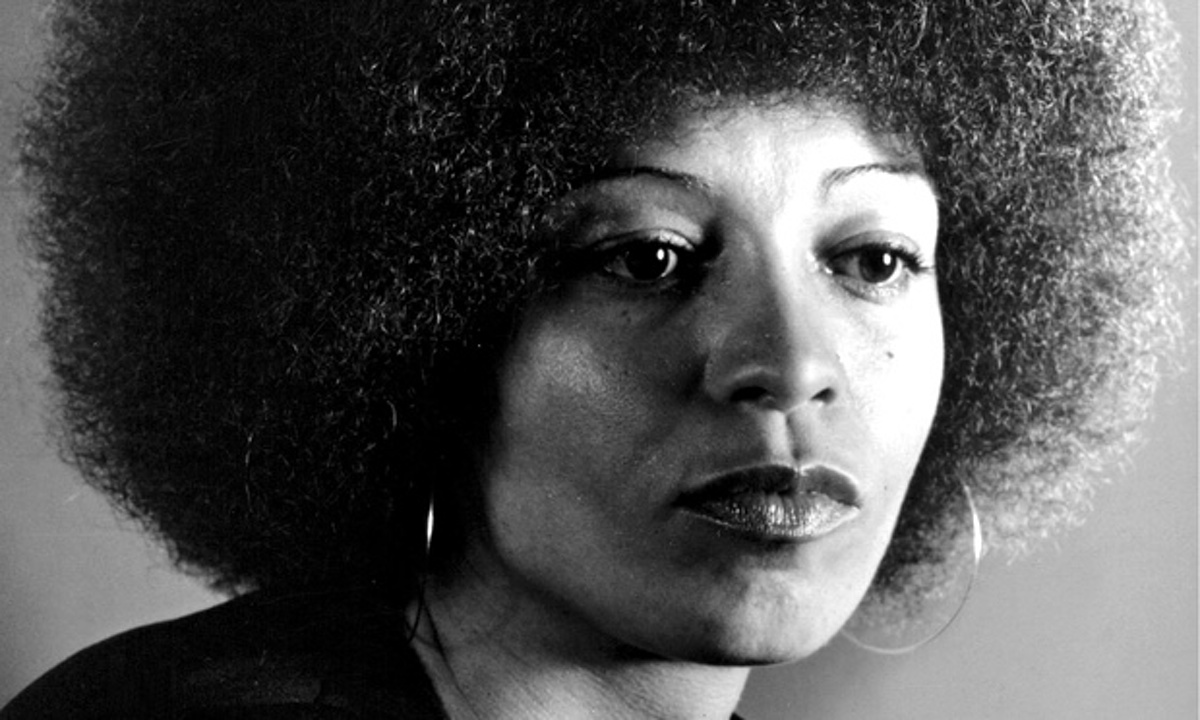
Living History: Freedom Fighter, Former Political Prisoner and Educator Angela Davis

Close your eyes and conjure up an image of Angela Davis. If you’re like me, that image most likely includes a powerful woman with a fist raised and a beautiful fro. I knew her image and name long before I knew anything about her but once I learned, I was proud to call her an elder. Here are 7 must-know facts about living legend and pioneer, Angela Davis.

Close your eyes and conjure up an image of Angela Davis. If you’re like me, that image most likely includes a powerful woman with a fist raised and a beautiful fro.  I knew her image and name long before I knew anything about her but once I learned, I was proud to call her an elder.  Here are 7 must-know facts about living legend and pioneer, Angela Davis.

1. Angela Davis was born and raised in “Dynamite Hill.”

Angela Yvonne Davis was born in Birmingham, Alabama in 1944 in an area nicknamed “Dynamite Hill.” The area gained it’s nickname because the Ku Klux Klan would regularly bomb and set fire to homes and businesses inhabited by African Americans to deter integration.  Notably, Condoleezza Rice and Alma Johnson, wife of Colin Powell, were from the same community.

2. Davis knew two of the girls killed in the 16th Street Church Bombing.

Davis grew up two houses down from Cynthia Wesley and Carole Robertson, two of the little girls murdered in the 16th Street Church Bombing in 1963. The day of the bombing Davis’s mother drove Carole Robertson’s mother to the church to pick up her daughter not knowing she had been murdered. Davis was in college at the time.

Watch Davis talk about growing up in Birmingham and the 16th Street Church Bombing below:

3. She was only one of three black students when she enrolled at Brandeis University.

While attending Brandeis, she met German philosopher Herbert Marcuse who she credits with teaching her “it was possible to be an academic, an activist, a scholar, and a revolutionary.” She graduated from Brandeis magna cum laude.

4. She was a member of the Communist Party.

Davis attended graduate school at the University of California, San Diego.  While attending, she joined the Black Panthers and also the Che-Lumumba Club, an all-black branch of the Communist Party named after Che Guevera and Patrice Lumumba.  Her affiliation with the Communist Party caused her to get fired from her job as an Assistant Professor at the University of California, Los Angeles.  In 1969, University of California’s policy barring Communists from employment was struck down in Los Angeles Superior Court and Davis was reinstated.

5. She spent 18 months in jail.

In January 1970, three African American prison inmates of Soledad Prison, John Wesley Cluchette, Fleeta Drumgo, and George Lester Jackson, were accused of killing a prison guard following the murder of several African American inmates by another guard. Davis organized protests, raised funds for the inmates’ defense, and publicly called for their release. Davis received death threats for supporting the inmates and reportedly purchased guns for her protection. During Jackson’s trial in August 1970, his younger brother attempted to free him by holding the courtroom at gun point and taking the judge, a district attorney and jurors hostage.  The judge, Harold Haley, was killed during the escape attempt.   The guns used by Jackson’s brother were registered to Davis.  Davis was brought up on several charges, including murder.  After spending roughly 18 months in jail, Davis was acquitted in June 1972. During her time in jail, many celebrities and members of the community came to her defense dubbing her a political prisoner.

boston_1970_protest_against_the_vietnam_war

6. Davis now works as a professor and lecturer.

During the last twenty-five years, Professor Davis has lectured nationally and internationally.  She is the author of nine books, including Angela Davis: An Autobiography; Women, Race, and Class; Blues Legacies and Black Feminism: Gertrude “Ma” Rainey, Bessie Smith, and Billie Holiday; The Angela Y. Davis Reader; Are Prisons Obsolete?; a new edition of Narrative of the Life of Frederick Douglass; and The Meaning of Freedom.

Following her termination from the University of California, San Diego, then-California Governor Ronald Reagan vowed that Angela Davis would never teach in the University of California system again. As of this writing, Professor Davis is Distinguished Professor Emerita in the History of Consciousness and Feminist Studies Departments at the University of California, Santa Cruz. In 1994, she was appointed as the University of California Presidential Chair in African American and Feminist Studies.

7. Davis endorsed Hillary Clinton in the 2016 Presidential Election.

On October 1, 2016, at the “Many Rivers to Cross Festival” in Atlanta, Georgia, Davis stated that although she is not enthusiastic about Democratic presidential nominee Hillary Clinton, she will vote for Clinton to prevent Donald Trump from winning the presidential election.

Information Attained From:

http://www.history.com/topics/black-history/angela-davis

http://atlantablackstar.com/2016/10/03/angela-davis-claims-there-will-be-a-political-revolution-just-vote-clinton-in-meantime

http://www.npr.org/sections/codeswitch/2013/07/06/197342590/remembering-birminghams-dynamite-hill-neighborhood

http://www.nytimes.com/1997/04/14/us/jerry-pacht-75-retired-judge-who-served-on-screening-panel.html

http://www.fembio.org/english/biography.php/woman/biography/angela-davis/

http://feministstudies.ucsc.edu/faculty/singleton.php?singleton=true&cruz_id=aydavis


***

About The Author

Faye McCray is anMcCray_AuthorPhoto (1) attorney by day and writer all the time. Her work has been featured on My Brown Baby, AfroPunk, AfroNews, For HarrietMadame NoireBlack Girl NerdsBlack and Married with Kids, and other popular publications.  Faye also has a number of short stories and a full length novel available for purchase on Amazon.  Most importantly, Faye is a proud wife and mother to three beautiful and talented young boys who she is fiercely passionate about raising. You can find Faye on Twitter @fayewrites and on the web at fayemccray.com.
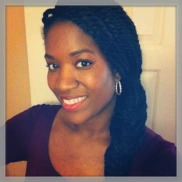
Meet Lynquay Sanford: Incredible Mom and Entrepreneur Who Returned to School to Pursue Her Dreams

My own mother’s choice to achieve her dreams not only changed the opportunities available to me and my brothers, it motivated me to pursue my own dreams. When I heard Lynquay Sanford’s story of similar fortitude and grit for her own children, I knew I had to talk to her to learn more.

When I was nine, my mother went back to school to pursue her Bachelor’s degree in Political Science.  Just a few year earlier, she and my father went through a tough divorce, and she was left as the primary guardian of me and my two older brothers. Even as a kid, I understood the magnitude of her decision to go back to school.  I knew she had to overcome naysayers, self-doubt and the financial uncertainty of pursuing a degree while working full-time and raising three kids. My own mother’s choice to achieve her dreams not only changed the opportunities available to me and my brothers, it motivated me to pursue my own dreams.  When I heard Lynquay Sanford’s story of similar fortitude and grit for her own children, I knew I had to talk to her to learn more.

1. Tell us a little about yourself. Where are you from? Where do you live? How would people who know you describe you?

My name is Lynquay Sanford, and I was born and raised in Queens, NY. I currently reside in Wendell, NC. People would describe me as being very straight forward, funny, strong-willed, caring, loving, and a great friend and motivator. I am always open to new ideas. I am also a great mother to my children.

20151212_102501-11

2.What made you decide to go back to school?

I opened a Family Child Care Home because I wasn’t satisfied with the child care centers in my area that my son attended. I wanted to learn more about how I can help preschool children and bring quality education to my Family Child Care Home. I started off by taking one class that is required to operate a Family Child Care Home. I liked it so much that I decided to pursue a degree in Early Childhood Education.

3. What were you doing before you decided to go back to school?

I was an EMT and I worked at a level one trauma center in Raleigh, NC dispatching helicopters and transport ambulances.

4. How did you prepare to get your degree? For example, internships, certifications, application process. How much time did it take?

I received my Associate’s degree in Early Childhood Education in December 2015. I will continue on to pursue my Bachelor’s degree in Early Care and Education and or Human Development and Family Service. What prepared me for this was operating my Family Child Care Home. I stepped out on faith and started my childcare business. It may take me three years to receive my Bachelor’s degree as I will be taking classes online and at my own pace. The cost of pursing any degree is expensive; however, I’ve graduated debt free because I had a scholarship to attend school. I will also be on a scholarship when I return to school the fall of 2017.

5. What do you plan to do with/have you done with your degree?

My plan is to expand my Child Care home and open a Child Care Center and or ½ day preschool.

“I was going through a very difficult divorce and working 7 days a week the last two years of me being in school. I’ve wanted to throw in the towel many times, but I couldn’t help but look at my children, especially my daughter, to show them no matter how tough life gets never give up.”

6. Who was your biggest inspiration? Mentors? Family? Friends?

I have so many people that have inspired me into going back to school. I was introduced to a group of ladies, all African American, who owned child care centers and family child care homes. They inspired me to stay in school and obtain my degree. My child care consultant also stayed on me to stay in school. I also come from a long line of strong black females, including my mother, grandmother and aunt, that inspired me to follow my dreams.

7. What was your biggest motivation? In other words, what kept you going?

My children kept me going. I also had the support of my mother and close friends who stepped in to help me with my children while I attended school at night.

8. Did you experience any setbacks? How did you overcome them?

Yes, I had many setbacks. I was going through a very difficult divorce and working 7 days a week the last two years of me being in school. I’ve wanted to throw in the towel many times but I couldn’t help but look at my children, especially my daughter, to show them no matter how tough life gets never give up. Just take your time pray about what you are going through and keep on moving. I tell them all the time that God does not give you or put you through anything he thinks you cannot handle.

9. If you had a chance to go back in time and speak to your 15 year old self, a) would she be surprised to see where you are now? b) what would you say to her?

Surprised? Yes! I thought I wanted to be a Veterinarian. I did not know anything about owning anything at that age. I would tell my 15 year old self to stay head strong and that she can do anything she puts her mind to. I would tell her that she is stronger than she thinks she is.

“Don’t let people change your mind or put doubt in your mind. Surround yourself with people who will push you and not distract you from pursing your dreams.”

20160328_174444

10. What advice would you give to someone thinking about going back to school or going after any dream?

Do it. Don’t let people change your mind or put doubt in your mind. Surround yourself with people who will push you and not distract you from pursing your dreams. Surround yourself with people who will be honest with you when you have those weak moments from pursuing your dreams. Also, know that it will not be easy but if you want it bad enough, you can achieve it. Success does not happen overnight.

11. Any long term goals or dreams?

My long term goal is to stop working 7 days a week. My dream is to have several child care centers and half-day preschools that will service low income families and families with special needs children.

Check out Lynquay’s Family Child Care Home, Open Arms Daycare here.

***

About The Author

Faye McCray is anMcCray_AuthorPhoto (1) attorney by day and writer all the time. Her work has been featured on My Brown Baby, AfroPunk, AfroNews, For HarrietMadame NoireBlack Girl NerdsBlack and Married with Kids, and other popular publications.  Faye also has a number of short stories and a full length novel available for purchase on Amazon.  Most importantly, Faye is a proud wife and mother to three beautiful and talented young boys who she is fiercely passionate about raising. You can find Faye on Twitter @fayewrites and on the web at fayemccray.com.

Must-Read: A Candid Conversation with a Retired NYPD Officer on Surviving an Encounter with Police

While I believe confronting the issue of police violence requires systemic change, I also know that I need to prepare my children to deal with the realities of police violence while we work towards change. I fluctuate between feeling resentful and resigned to this fact. To better prepare myself and my sons, I asked Thomas W. Higdon, Sr., a retired New York City Police Officer with 36 years of experience, for his advice on surviving a police encounter.

As a mom of two, soon to be three boys, sometimes I find myself overwhelmed with anxiety about my sons’ safety as they grow older. My eldest son is 9 years old, and he is tall. He is often mistaken for 12 years old which is the same age as Tamir Rice, and one year younger than Tyre King, two children who were killed by police in separate incidents in Ohio. While I believe confronting the issue of police violence requires systemic change, I also know that I need to prepare my children to deal with the realities of police violence while we work towards change. I fluctuate between feeling resentful and resigned to this fact.  To better prepare myself and my sons, I asked Thomas W. Higdon, Sr., a retired New York City Police Officer with 36 years of experience, for his advice on surviving a police encounter.

1. Describe your experience.

I served in the New York City Police Department (NYPD) for 36 years.  For 25 years, I was a Supervisor or Commander in the Department. I patrolled some of the most violent precincts in New York City. I worked as a patrol supervisor in the rank of Sergeant as well as Lieutenant. I commanded various plain clothes units including the Anti-Crime (precinct violent crime unit),  NYPD Gang unit, and Principle Crime unit in the Intelligence Division. I’ve taken various police investigation courses. I’m a graduate of the FBI academy. I also have a Masters in Criminal Justice from St. John’s University.

2. Some argue that most cops are good. In your opinion, is police brutality a national problem or a series of isolated incidents?

Are some cops good? Let me just say that most police officers are professionals. Do most officers go on patrol with intent to brutalize people? No; however, there are some officers who abuse their authority. Based on today’s climate, I would definitively say we have a national problem. The police are a reflection of the country.  The country has a race problem and so do police departments. How do we change the heart of a racist? I believe only God can.

“Based on today’s climate, I would definitively say we have a national problem. The police are a reflection of the country.  The country has a race problem and so do police departments.”

3. How do you feel like it should be addressed? Within police departments? By law makers? Federal agencies (for example, The Department of Justice)? Prosecutors?

The police departments cannot police themselves. It has to be an outside agency, independent of the jurisdiction in which the department operates. I strongly believe federal agencies and outside prosecutors are necessary.

4. I often find myself stuck on where to start when I begin to talk to my children. On one hand, I want them to be able to trust that the police exist to protect them. On the other hand, I am afraid that if they interact with police, they may be unsafe. Where do you feel the conversation begins for parents?

I believe that people must understand that the police department is comprised of men and women who are trained professionals yet they come to the job from various backgrounds and with plenty of bias. We should educate our kids at an early age, teaching them right from wrong, and their rights as citizens. While on patrol early in my career, people would come to me on the street with their kids and present me as a disciplinarian. That would upset me.  I felt that it was one of the reasons young people disliked cops.  Parents displayed us as bogeymen.

police-depts

5. What should they know about interacting with police?

Remain calm no matter what the circumstance and follow the instructions of the officer(s). Know your rights/laws concerning search and seizure as well as your right to remain silent (read more about your Miranda rights here). The officers are not your friends. They are law enforcement officers trying to solve cases. There are plenty innocent people who are in jail that haven’t committed crime.

6. What suggestions would you have for remaining safe during an interaction with police?

Stay calm and follow instructions. Never run or move unnecessarily. I often told my sons, try to remember the officer(s) name and shield number without asking for it, if possible. Also, use technology available to you, i.e. live stream.  Just keep in mind, the officer may very well be aggravated by it.

7. Often deadly police interactions begin when someone is “suspected” of a crime or misidentified. How would suggest someone handle being stopped by police when mistaken for a crime they did not commit?

Cooperate, cooperate, cooperate.  Once you have identified an officer as being one, he has the authority to question you if he has reasonable suspicion that a crime has been committed and the suspect fits your description. Unfortunately, in Black and Latino communities, this has been abused. Black and Latino communities are patrolled differently from white communities. Laws are enforced more aggressively.  For example, a disorderly conduct offense in a White community is treated as a violation. The same scenario in a Black community would lead to a more serious charge, e.g., riot.

“Remain calm no matter what the circumstance, and follow the instructions of the officer(s). Know your rights/laws concerning search and seizure as well as your right to remain silent. The officers are not your friends. They are law enforcement officers trying to solve cases. There are plenty innocent people who are in jail that haven’t committed crime… [L]ive to fight another day!”

8. Does your advice change for someone stopped in a car or on foot?

Basically the same, cooperate.  However, when an individual is in a vehicle he is not completely visible so he/she must make every effort to stay as still as possible (don’t move unnecessarily) and keep your hands where they can be seen at all times.  Also, only speak when you are spoken too.

9. In today’s climate, what would you tell your sons about dealing with police?

Remain calm no matter what and cooperate, cooperate and cooperate. As I said earlier identify the officer(s) as best you can, and live to fight another day!

10. Any other advice?

The best advice I would give a parent is to raise your kids to respect authority, regardless of the individual in the position. Teach them morals and empathy. I believe only God can change the hearts of man and in order for God to do that we must have a relationship with Him.

***

About The Author

Faye McCray is anMcCray_AuthorPhoto (1) attorney by day and writer all the time. Her work has been featured on My Brown Baby, AfroPunk, AfroNews, For HarrietMadame NoireBlack Girl NerdsBlack and Married with Kids, and other popular publications.  Faye also has a number of short stories and a full length novel available for purchase on Amazon.  Most importantly, Faye is a proud wife and mother to three beautiful and talented young boys who she is fiercely passionate about raising. You can find Faye on Twitter @fayewrites and on the web at fayemccray.com.

Decision 2016: What You Need to Know

The stakes are high in the upcoming presidential election. Often it is hard to sift through the political rhetoric and get to the core of the candidates stance on important issues. After reviewing their websites, we have outlined the candidates stances on key issues impacting parents in our communities.

The stakes are high in the upcoming presidential election.  In can be difficult sifting through the political rhetoric and getting to the core of the candidates stance on important issues. After reviewing their websites, we have outlined the candidates stances on key issues impacting parents in our communities.

On Education

Secretary of State Hillary Clinton

  • Secretary Clinton wants preschool to be standard for every four year old child in the United States.
  • Secretary Clinton said she does not think any family should have to pay in excess of 10% of their income in childcare.  To ensure this she wants to increase government investments in child care.
  • Secretary Clinton believes that the child care workforce in the United States is underpaid and the quality of child care and early learning could be improved by raising the pay for these workers.
  • Secretary Clinton wants to raise government expenditure on Early Head Start and the Early Head Start-Child Care Partnership Program at least twofold.
  • Secretary Clinton supports initiatives like evidence-based home visiting programs; these involve social workers or nurses visiting a mother in her home during and immediately after pregnancy.  She wants to increase women’s access to these type of programs.
  • Secretary Clinton wants to help college students who are supporting children while attending school by offering scholarships of $1,500 to as many as one million students.  The scholarship funds could be used for child care or emergency financial aid.
  • Secretary Clinton wants to increase government funding for child care centers on college campuses to provide more support for parents who are also attending college.

Donald Trump

  • Donald Trump wants to have an immediate federal investment of twenty billion dollars for school choice; this is the premise that parents can pick where their child attends school without geographic limitations.  He claims this can be accomplished by redistributing current federal dollars.
  • Mr. Trump wants to give this twenty billion dollars to states that have favorable laws regarding school choice; specifically for private schools, magnet schools and charter schools.  He also wants states to allow funds to go with an individual student to the school they attend.
  • Mr. Trump wants to set a federally mandated goal that school choice be available to every family with school aged children that live in poverty.
  • Mr. Trump wants the states to all contribute $110 billion dollars of their education budgets toward school choice, in combination with the federal funds of $20 billion dollars, which he claims will provide $12,000 in school choice funds for every student who lives in poverty from Kindergarten through Twelfth Grade.
  • Mr. Trump wants to collaborate with Congress on legislation that would ensure universities are making a good faith effort to reduce college debt as a consideration for the federal aid that the universities receive.
  • Mr. Trump has a goal to make it easier for people to attend, pay for and finish two or four year colleges or pursue trades through vocational education.

On Police Violence

Secretary of State Hillary Clinton

  • Secretary Clinton proposes to prevent police-involved shootings by: 1) having a set of national standards around how to manage the situations including training to prevent situations and 2) restore bonds between communities and law enforcement by investing in community policing and making sure that local police have the resources to build the resources in the community to prevent deadly incidents.
  • Secretary Clinton has said she wants to end private prisons and immigrant detention centers.
  • Secretary Clinton has been criticized for her and her family’s involvement in the War on Drugs at home and abroad, and the implications that has had on communities of color.

Donald Trump

  • Donald Trump commented on the police shooting deaths of two black men, Terence Crutcher in Oklahoma and Keith Lamont Scott in North Carolina, in mid-September 2016 and noted that Crutcher appeared to be complying with law enforcement.
  • Trump has expressed his support for law enforcement. At the candidates first televised debate on September 26, 2016, he reiterated the answer to police violence in communities of color is “law and order.”
  • Trump believes the previously ruled unconstitutional “Stop and Frisk” policy was “so incredible, the way it worked.” At the September 26, 2016 debate, he again argued it efficacy in reducing crime.

On the Economy

Secretary of State Hillary Clinton

  • Secretary Clinton wants to pass legislation in her first 100 days that would create a large federal investment in infrastructure to promote massive job creation.
  • Secretary Clinton’s goal is to make college debt free and to help people with student debt refinance their loans.
  • Secretary Clinton wants to promote legislation that benefits companies that have profit sharing plans with their employees and punish companies that take their jobs overseas by taking away their tax breaks.
  • Secretary Clinton wants to increase the taxes on Wall Street firms and the richest Americans in the country to pay for her other initiatives.
  • Secretary Clinton says she will fight for equal pay and guaranteed paid leave.

Donald Trump

  • Donald Trump’s goal is to create an economy that will add 25 million new jobs over the next ten years.
  • Mr. Trump wants to change the tax policy, create an “America-First” trade policy and take away regulations on American energy policy.
  • He has a goal to increase economic growth by at least 3.5% per year.

On Health Care

Secretary of State Hillary Clinton

  • Secretary Clinton says she will fight against a Republican Congress to preserve the Affordable Care Act and wants to expand it to cover more people.  She also wants to allow people over 55 years old to buy into Medicare.
  • Secretary Clinton has a goal to help reduce copays and deductibles arguing that this can be done because there has been a slower growth of national spending on health care.
  • Secretary Clinton has a goal to promote legislation that will reduce costs for prescription drugs.
  • Secretary Clinton wants to increase competition in the drug making business to reduce costs to consumers and create punitive measures for companies that raise their drug prices suddenly.
  • Secretary Clinton wants to give incentives to states to expand Medicaid and increase access to health insurance for poor citizens.
  • Secretary Clinton wants to allow families to purchase health insurance on the health exchanges regardless of their immigration status.
  • Secretary Clinton wants to ensure that all American women have access to inexpensive contraception, legal abortions, and preventative care.

Donald Trump 

  • Donald Trump wants to repeal the Affordable Care Act and replace it with Health Savings Accounts (HSAs).
  • Mr. Trump wants to collaborate with Congress to create a replacement health care system for the Affordable Care Act.
  • Mr. Trump wants to collaborate with states to guarantee access to health insurance coverage for people who have not had continuous coverage.
  • Mr. Trump wants to allow citizens to buy insurance in every state across state lines to create a sustainable insurance market.
  • Mr. Trump wants to give block grants to states to allow them to design their Medicaid programs to deliver coverage to their poorer residents.

On Taxes

Secretary of State Hillary Clinton

  • Secretary Clinton wants to promote legislation that will close tax advantage loopholes for millionaires and billionaires and add a surcharge tax to capture more of their income to ensure their tax rate is equivalent with other Americans.
  • Secretary Clinton wants to close tax loopholes that benefit major corporations and firms on Wall Street and wants companies to be charged an “exit tax” that leave the United States.
  • Secretary Cinton has a goal to reduce taxes for small businesses and simplify their process for tax compliance to encourage them to spend more money on investing in their business.
  • Secretary Clinton has a goal to provide a reduced tax burden for working families that face rising cots for goods and services.
  • Secretary Clinton believes that by taxing the wealthiest individuals and major corporations she can pay for debt free college and major infrastructure investment by the federal government without increasing the country’s debt.

Donald Trump

  • Donald Trump wants to reduce tax rates for every group and especially for those who are working and middle class Americans.
  • Mr. Trump says he wants to ensure the rich are paying an adequate amount, but worries about destroying job creation and minimizing America’s ability to compete.
  • Mr. Trump says he wants to eliminate loopholes for special inerests, but also decrease the business tax rate.
  • Mr. Trump wants to allow families to deduct fully the average cost of childcare from their taxes; this would include stay at home parents as well.


Remember, although the presidential election gets the most press, other federal, local, state, and municipal elections are just as important! Register, do your research and most importantly, VOTE! For more information, on elections and deadlines in your state, visit Ballotpedia.org.

Information attained from:

hillaryclinton.com

donaldjtrump.com

ballotpedia.com

***

About The Author

Rick McCray is a maRAMrried father of three amazing sons. He is also a proud graduate of Duke University where he holds a BA in History and African/African American History, and Howard University School of Law. He is also a regular commentator on the In The Black podcast.  Rick is passionate about our history and helping to educate our community concerning the great contributions of people of color to the world. You can find Rick on Twitter @RealRickMcCray.

25 Positive Affirmations For Parents

Though the ability to parent is a gift and a blessing, it can also be tough. It’s easy for self doubt to creep in which can leave you questioning your ability and worthiness. Say these 25 positive affirmations to get you on the right track.

Though the ability to parent is a gift and a blessing, it can also be tough.  It’s easy for self doubt to creep in which can leave you questioning your ability and worthiness.  Say these 25 positive affirmations to get you on the right track.

  1. I love my child.

  2. I am loved.

  3. I am strong.

  4. I am reliable.

  5. I am capable.

  6. I am motivated by love in caring for my child.

  7. I act in my child’s best interests.

  8. I can manage my child’s needs.

  9. I show my children I love them.

  10. I enjoy my children.

  11. I respect my children.

  12. I challenge myself.

  13. I am not afraid.

  14. I am present.

  15. I have good judgment.

  16. I am intuitive.

  17. I am consistent.

  18. I am fair.

  19. I am patient and calm.

  20. I am worthy of self-care.

  21. I am worthy of respect.

  22. I am doing my best.

  23. I am inspiring.

  24. I am valued.

  25. I am needed.

    ***

    About The Author

    Faye McCray is anMcCray_AuthorPhoto (1) attorney by day and writer all the time. Her work has been featured on My Brown Baby, AfroPunk, AfroNews, For HarrietMadame NoireBlack Girl NerdsBlack and Married with Kids, and other popular publications.  Faye also has a number of short stories and a full length novel available for purchase on Amazon.  Most importantly, Faye is a proud wife and mother to three beautiful and talented young boys who she is fiercely passionate about raising. You can find Faye on Twitter @fayewrites and on the web at fayemccray.com.

5 Amazing Facts About the NEW Smithsonian National Museum of African-American History and Culture

On Saturday, September 24, 2016, the National Museum of African-American History and Culture will open to incredible fanfare in Washington, D.C. This magnificent museum is finally opening after decades of hard work from luminaries who were dedicated to creating a national archive that told the our story of strength and perseverance. Here are five facts about how we got to this glorious day.

On Saturday, September 24, 2016, the National Museum of African-American History and Culture will open to incredible fanfare in Washington, D.C.  This magnificent museum is finally opening after decades of hard work from luminaries who were dedicated to creating a national archive that told our story of strength and perseverance.  Here are five facts about how we got to this glorious day.

1. For Founding Director, Lonnie G. Bunch III, the National Museum of African-American History and Culture has been almost 40 years in the making.

Lonnie Bunch has wide-ranging experience in making history come alive.  In the 1980s, he served as the curator of history and program manager for the California Afro-American Museum.  In this role he organized successful exhibitions like, “Black Angelenos: The Afro-American in Los Angeles, 1850-1950” which was an award-winning feature that explored the Black contribution to Los Angeles history and culture.  He also produced historical documentaries that aired on public television.

His work with the Smithsonian began in 1989 when he worked as a supervising curator for the National Museum of American History.  During his tenure, he managed curatorial staff, worked on educational projects, and helped create the “Smithsonian’s America” for the American Festival Japan 1994.  This was an exhibit presented in Japan, which revealed the history, culture and diversity of the United States of America.

He has taught at his alma mater, American University, and the University of Massachusetts in Dartmouth, and George Washington University.  He is a prolific author and has either written, co-written, or contributed to over thirty books.  He has traveled internationally and given lectures on education and museum curation to professionals throughout the globe.  He was appointed the Founding Director for the National Museum of African-American History and Culture in 2005.

2. Over 75% of donations from individuals came from the African American community!

The Museum’s final price tag was $540 million.  In 2003, Congress passed the legislation establishing the Museum and pledged to fund $270 million or half of the Museum’s expense.  Interestingly, previous Smithsonian museums had received all or most of their funds from the government.  The shortfall was made up by donations from major corporate sponsors and our community.  Churches, fraternities, sororities, celebrities and civic organizations were galvanized for the fundraising effort.  Over 75% of donations from individuals came from the African American community.  Over $4 million in funds came from people donating in amounts less than $1,000.  Oprah Winfrey has been the largest donor at $21 million.  As of this writing, the Museum has raised over $315 million in private funds which far exceeded the congressional requirement.

3. The museum’s collection was built from scratch.

Museum Director Lonnie Bunch and the other organizers of the museum had the monumental task of building the collection from scratch.  Unlike any of the Smithsonian’s eighteen previous museums, the National Museum of African-American History and Culture was created without any artifacts on hand.  To grow a collection, the organizers came up with the unique idea of “Saving African-American Treasures,” which was a 15 city tour launched in 2009.  During this effort, they encouraged Americans to donate family heirlooms to the museum.  The result was amazing.  Precious artifacts were found hidden in the community.  One woman from Virginia Beach, Virginia donated Nat Turner’s Bible which had been kept safe in her closet for decades!  It is estimated that over half of the Museum’s 37,000 artifacts came from donations.

4. The building’s architecture is an ode to African and African-American roots.

The principle architect for the building, David Adjaye, wanted the building to be unique and speak to the creativity of Africans throughout the Diaspora.  The building is inspired by a Yoruban caryatid, which is a column popular in West Africa with a corona at its peak.  The building’s patterns also allude to architecture found in Georgia and South Carolina that was built by enslaved and freed Blacks.  This metalwork inspired Mr. Adjaye and the bronze color and shape of the building is an additional aspect similar to that Southern style of architecture.

5. The fight to create a museum to honor our history initially began in the 1800’s.

The idea to create a museum that honored African-American history started from a desire to create a museum that honored Black Civil War veterans.  After different permutations of honoring African Americans with a national museum festered, the strongest push came in the 1980s.  In 1988, Mickey Leland who was a Representative in the United States House of Representatives from the state of Texas, co-sponsored legislation with fellow Representative and Civil Rights legend John Lewis of Georgia to establish a museum honoring African-American history.  Mr. Leland died in a plane crash the next year, so Mr. Lewis took up the cause himself.  Each year for the next fifteen years, Mr. Lewis proposed his legislation but it was defeated.  In 1994, it passed the House of Representatives but staunch segregationist Jesse Helms of North Carolina filibustered against the bill and it died in the Senate.

It was not until the early 2000s when Republicans like Representative J.C. Watts of Oklahoma and Senator Sam Brownback of Kansas showed their support that the bill was passed.  On December 16, 2003, George W. Bush signed H.R. 3491 into law which authorized a Smithsonian Institution museum created to honor the legacy of African Americans in America.

Information attained from:

Michael Kimmelman, “David Adjaye on Designing a Museum that Speaks a Different Language”, New York Times, published September 21, 2016, http://www.nytimes.com/2016/09/22/arts/design/david-adjaye-museum-of-african-american-history-and-culture.html?action=click&contentCollection=Art%20%26%20Design&module=RelatedCoverage&region=EndOfArticle&pgtype=article

Graham Bowley, “How the Fight for a National African American Museum was Won”, New York Times, published September 4,2016, http://www.nytimes.com/2016/09/05/arts/design/how-the-fight-for-a-national-african-american-museum-was-won.html

Lonnae O’Neal, “Our place in America: New Smithsonian museum portrays the furious flowering of black history and culture”, The Undefeated/ESPN.com, published September 22, 2016, http://theundefeated.com/features/smithsonian-museum-of-african-american-history-our-place-in-america/

African American Registry, “H.R. 3491 Signed to create African American museum in Washington,”http://www.aaregistry.org/historic_events/view/hr3491-signed-create-african-american-museum-washington

Newsdesk, “Staff Biographies: Lonnie G. Bunch III,” Smithsonian, http://newsdesk.si.edu/about/bios/lonnie-g-bunch

***

About The Author

Rick McCray is a maRAMrried father of three amazing sons. He is also a proud graduate of Duke University where he holds a BA in History and African/African American History, and Howard University School of Law. He is also a regular commentator on the In The Black podcast.  Rick is passionate about our history and helping to educate our community concerning the great contributions of people of color to the world. You can find Rick on Twitter @RealRickMcCray.


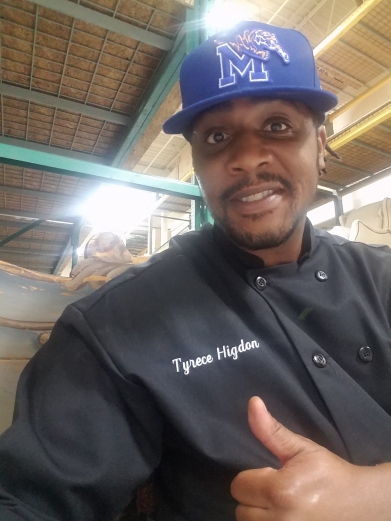
From Long Beach to Valedictorian: Interview with University of Memphis Head Chef Tyrece Higdon

Pursuing a dream is rarely, if ever, easy. Along the way, you inevitably face set-backs and obstacles that stop many people before they even started. University of Memphis Head Chef Tyrece Higdon is not one of those people. Check out the inspiring story of his road to success.

Pursuing a dream is rarely, if ever, easy.  Along the way, you inevitably face set-backs and obstacles that stop many people before they even started.  University of Memphis Head Chef Tyrece Higdon is not one of those people. Check out the inspiring story of his road to success.

20160823_184813

Q. Tell us a little about yourself. Where are you from? Where do you live? How would people who know you describe you? 

A. I was born and raised in Long Beach, NY.  I currently reside in Millington, TN.  I am very outgoing, laid back, silly, and all about positive thinking.

Q. Describe your job. 

A. I am the Kitchen Manager/Head Chef over Residential Dining at the University of Memphis.  I am responsible for ensuring over 1,200 people are fed daily.  On a daily basis, I lead a crew of cooks to produce food from standardized recipes.  In addition to overseeing the food production, I do the ordering, keep track of inventory, station merchandising, and training, just to name a few of my tasks.

Q. What were you doing before you decided to pursue culinary arts?

A. I owned a bread route in the Memphis Area, waking up at 2:30am, 7 days a week.

Q. What made you decide to change careers?

A. I ruptured my Achilles tendon.  Being a route owner, I was forced to sell my route due to being physically unable to run my business  effectively.

“I have two children that mean the world to me.  I wanted to show them to never give up on your dreams.  So, I hopped into culinary school on crutches and walked out Valedictorian.”

Q. What did you have to do to pursue your current career? For example, education, internships, certifications. How much time did it take? 

A. I started school at the age of 33, with NO restaurant knowledge.  I used financial aid assistance, student loan approval (40k), a lot of determination and on crutches.  I spent two years in Culinary School.  Then, I worked as a Sous chef for 3 years and I have been working catering events for 3 years.

Q. Who was your biggest inspiration? Mentors? Family? Friends?

I would most definitely say my mother.  To watch her have the strength to raise 4 children and fight and defeat her demons gave me that kick I needed to not just “TRY” but “DO.”

Q. What was your biggest motivation? In other words, what kept you going?

A. I have two children that mean the world to me.  I wanted to show them to never give up on your dreams.  So, I hopped into culinary school on crutches and walked out Valedictorian.

Q. Did you experience any setbacks? How did you overcome them?

My only setback was the inconvenience of being partially disabled, due to crutches and a walking cast.  Since I was unable to hang out or do a lot of ripping/running, I utilized my time to study fiercely.

“When it comes to pursuing dreams, give your all to it.  Use your nervousness as adrenaline to do great.  Don’t be afraid to fail at first because even a failed attempt is experience and knowledge of what not to do.”

Q. If you had a chance to go back in time and speak to your 15 year old self, a) would he be surprised to see where you are now? b) what would you say to him?

A. If I could speak to the skinny young me, I’d probably laugh at the weight I’ve gained, since I never thought, I could gain weight. I know I’d be giving myself a high five being that I made the decision back then that these streets will always be here.  I would tell young me to focus more in school.  You have a brain so use it and stop worrying if your so called friends are jealous. Do you with no holdbacks.

20150612_162042

Q. What advice would you give to someone thinking about pursuing culinary arts or going after any dream?

If going into the culinary arts field, know for sure that this is what you want.  If you are going just to learn how to cook using different methods, that’s cool, but very expensive if you are not putting the learned knowledge to use.  If you are going to become a great chef, who is passionate about his/her craft, and wants to teach others, then by all means, the right program is worth it.  When it comes to pursuing dreams, give your all to it.  Use your nervousness as adrenaline to do great.  Don’t be afraid to fail at first because even a failed attempt is experience and knowledge of what not to do.

Q. Any long-term goals or dreams?

I hope to one day be able to instruct urban youth on how to prepare nutritional meals.  I have been blessed with a strong culinary IQ, and I would love more than anything to help the youth and have the tradition carried on.

***

Minute Mentor provides a space for real people to tell their stories so if you or your little one is in search of mentorship on how to achieve their dreams, you can look no further than right here! Sometimes the best inspiration comes from seeing someone that looks like you achieving similar goals.

If you have any questions or comments for the featured guest, leave a comment, and we will do our best to bring it to their attention! Happy imagining!

***

About The Author

Faye McCray is anMcCray_AuthorPhoto (1) attorney by day and writer all the time. Her work has been featured on My Brown Baby, AfroPunk, AfroNews, For HarrietMadame NoireBlack Girl NerdsBlack and Married with Kids, and other popular publications.  Faye also has a number of short stories and a full length novel available for purchase on Amazon.  Most importantly, Faye is a proud wife and mother to three beautiful and talented young boys who she is fiercely passionate about raising. You can find Faye on Twitter @fayewrites and on the web at fayemccray.com.

Tears for Jordan*

One mom’s emotional reflection on parenting in the era of increased gun violence.

Featured Photo (c) Faye McCray 2016 All rights reserved.

He’s up from nap.

He stretches his long legs out over his blue and green sheets, snuggling his curly hair into his pillow.  He opens his big brown eyes and looks at me, a soft smile on his face, then he closes his eyes again, turning so his chubby golden cheeks nestle deep into his pillow.  He curls in a ball, drawing his knees to his chest and breathing softly.  He looks so tiny in his new big boy bed.  His three-year-old frame only making up a third of its length.  The rest crowded with his stuffed animal friends and fluffy comforter.

Are you up, baby?

I whisper it, kneeling beside his bed and breathing in his smell.  He smells like cookies and clay.  From the morning of playtime and the snack he just had to have.  I kiss his nose and he wipes it away, sitting up slowly.  His bare feet dangling over the edge of his bed and his eyes still hanging low from sleep.  I watch as a soft yawn escapes his tiny pink lips.  I remember him as the colorless baby, swaddled and content, nestled in my arms as I dreamed for him, wondering what his new life would bring.  Fresh steps, new soul.

Now, he reaches his arms out for me and I lift him.  Letting him nestle his head into that soft dip near my collarbone, and wrap his little legs around my waist.  I feel his body release a heavy sigh.

He is safe and he feels it.  I run my hand over his warm back, and I do too.

He fills me.  My soul forever pregnant.  Giving birth to thoughts and plans of his life and his brother’s, mine, ours and theirs.  I remember the love that made them.  The love that sustains them.  I nourish it so we witness them hand-in-hand.  I nourish my mind so I don’t miss a moment.  I dream of being silver-haired and watching the children they make, play off a country porch, their shadows dancing at sunset in a lake.  Smiling to myself, content.  Lived and full.

But now I cry.

My tears are puddles at my feet.  Joining in the streams that fill the rivers, staining the Diaspora.  For Lucia and Sybrina.  For Emmett, Addie Mae, Cynthia, Carole and Denise’s Mommies.  For Hadiya’s Mommy.  For Baltimore’s Mommies.  For Chicago’s.  For Detroit’s.  For New York City’s.  For all the dreams halted by bullets.  The joy buried in caskets.  The Mommy’s whose babies they were helpless to protect.  Guns loaded with worthlessness both mandated by a careless society and perpetuated needlessly by its victims.

It’s all hate crimes.

I once again lower my head beneath a stream of water and wash a festering sore.  Hoping to rinse away the virus infecting my dreams.  The virus that worries about the evil in others, the criminalization of the beautiful brown skin love made, and the lowered expectations of every teacher under a brainwashed spell.  That virus that caused me to worry when my sons grew out of their toddler clothes because I knew it was only a matter of time before the world stopped seeing the beauty I did.  Before those kind smiles and waves from strangers, became purse clutching, eye-avoiding fear, nurtured and fostered by an unkind media and an unfair justice system.

I place a Band-Aid on the festering sore and dream awake.  The lullaby of lies is only comforting to the unconscious.

My eyes are open now.

He’s awake.


*In 2012, after an argument over loud music, Michael Dunn, a 47-yr old white Floridian fired ten shots into a carful of unarmed black teenagers, killing Jordan Davis, a seventeen year old boy.  Yesterday, after more than thirty hours of deliberation, a jury found Dunn guilty of three counts of attempted second degree murder and one count of firing into an occupied car.  A mistrial was declared on the first-degree murder charge.

This post originally appeared on http://www.fayemccray.com.

***

About The Author

Faye McCray is anMcCray_AuthorPhoto (1) attorney by day and writer all the time. Her work has been featured on My Brown Baby, AfroPunk, AfroNews, For HarrietMadame NoireBlack Girl NerdsBlack and Married with Kids, and other popular publications.  Faye also has a number of short stories and a full length novel available for purchase on Amazon.  Most importantly, Faye is a proud wife and mother to three beautiful and talented young boys who she is fiercely passionate about raising. You can find Faye on Twitter @fayewrites and on the web at fayemccray.com.
20 Life-Changing Quotes on Parenting

I didn’t know my capacity to love until I had my children. I didn’t know how fiercely I would fight to protect them. I didn’t know how motivated I would be to leave the world a better place. Parenting has inspired great thinkers, artists and activists past and present. Here are 20 quotes on parenting by some of the greats to give you inspiration and solidarity as you navigate rearing the loves of your lives.

I didn’t know my capacity to love until I had my children.  I didn’t know how fiercely I would fight to protect them. I didn’t know how motivated I would be to leave the world a better place.  Parenting has inspired great thinkers, artists and activists, past and present.  Here are 20 quotes on parenting by some of the greats to give you inspiration and solidarity as you navigate rearing the loves of your lives.

***

1. “It is easier to build strong children than to repair broken men.” – Frederick Douglass

2. “Your children are not your children. They are the sons and daughters of Life’s longing for itself. They come through you but not from you and though they are with you they belong not to you. You may give them your love but not your thoughts, for they have their own thoughts. You may house their bodies but not their souls, for their souls dwell in the house of tomorrow, which you cannot visit, not even in your dreams. You may strive to be like them, but seek not to make them like you for life goes not backward nor tarries with yesterday. You are the bows from which your children as living arrows are sent forth.” – Kahlil Gibran

3. “My most important title is still mom-in-chief.  My daughters are still the heart of my heart and the center of my world.” – Michelle Obama

4. “Mother is a verb. It’s something you do. Not just who you are.” – Cheryl Lacey Donovan

5. “Your children need your presence more than your presents.” – Jesse Jackson

6. “The reality is that most of us communicate the same way that we grew up. That communication style becomes our normal way of dealing with issues, our blueprint for communication. It’s what we know and pass on to our own children. We either become our childhood or we make a conscious choice to change it.” – Kristen Crockett

7. “In a child’s eyes, a mother is a goddess. She can be glorious or terrible, benevolent or filled with wrath, but she commands love either way. I am convinced that this is the greatest power in the universe.” – N.K. Jemisin

8. “You don’t have favourites among your children, but you do have allies. ” – Zadie Smith

9. “When mother-cow is chewing grass its young ones watch its mouth” – Chinua Achebe

10. “To describe my mother would be to write about a hurricane in its perfect power. Or the climbing, falling colors of a rainbow.” – Maya Angelou

11. “Black people love their children with a kind of obsession. You are all we have, and you come to us endangered.” – Ta-Nehisi Coates

12. “Loving someone as fiercely as my mom loves me must be like wearing your heart outside of your body with no skin, no bones, no nothing to protect it.” – Nicola Yoon

13. “The best thing she was, was her children.” – Toni Morrison

14. “Beautiful is the man who leaves a legacy that of shared love and life. It is he who transfers meaning, assigns significance and conveys in his loving touch the fine art and gentle shaping of a life. This man shall be called, Father.” – Stella Payton

15. “Behind every great man is a man greater, his father.” – Habeeb Akande

16. “The kids who need the most love will ask for it in the most unloving of ways.” – Unknown

17. “Children learn more from what you are than what you teach.” – W.E.B. DuBois

18. “Family doesn’t have to be perfect. It doesn’t have to be flawless. It doesn’t have to be what you had in mind. You can’t control it. But it is a gymnasium for love to work out in.” – Bishop T.D. Jakes

19. “I tried to be the greatest boxer in the world and a good parent, too. I had instant feedback on my success as a boxer. Often, parents don’t really know if what they are doing is right or wrong until their child is grown and it is too late to change any of the decisions. Whatever my failings as a parent, I am very proud of all my children. It wasn’t easy for them to make their own way with such a controversial and public father.” – Muhammad Ali

20. “Children have never been very good at listening to their elders, but they have never failed to imitate them.” – James Baldwin

***

About The Author

Faye McCray is anMcCray_AuthorPhoto (1) attorney by day and writer all the time. Her work has been featured on My Brown Baby, AfroPunk, AfroNews, For HarrietMadame NoireBlack Girl NerdsBlack and Married with Kids, and other popular publications.  Faye also has a number of short stories and a full length novel available for purchase on Amazon.  Most importantly, Faye is a proud wife and mother to three beautiful and talented young boys who she is fiercely passionate about raising. You can find Faye on Twitter @fayewrites and on the web at fayemccray.com.

Living History: From the Black Panthers to Congress, Meet Bobby L. Rush

Congressman Bobby L. Rush has represented the 1st District of Illinois for over two decades. At almost 70, he has led a remarkable life full of activism and public service. Check out eight must know facts about this living legend.

Congressman Bobby L. Rush has represented the 1st District of Illinois for over two decades.  At almost 70, he has led a remarkable life full of activism and public service.  Check out eight must know facts about this living legend:

1. He co-founded the Illinois Black Panther Party in 1968.

While in the military and stationed in Chicago, Rush became a member of the Student Non-Violent Coordinating Committee (SNCC).  He participated in civil disobedience demonstrations in the South and upon his return to Chicago, he co-founded the Illinois Chapter of the Black Panthers at the request of Stokely Carmichael who was one of his mentors in SNCC.  One of Rush’s most notable recruits to the Panthers was Fred Hampton who at the time was the head of the Youth Division of the NAACP.  Hampton went on to become an influential activist and one of the most famous Black Panthers.  He was murdered by Chicago police during a raid on his apartment on December 4, 1969.

2. He helped develop the nation’s first mass testing program for sickle cell anemia.

When Mr. Rush was Defense Minister for the Illinois Black Panther Party, he also administered the Panther Party’s Free Breakfast Program for Children and ran a free medical clinic in Chicago.  One of the initiatives created by the clinic was a massive testing program for sickle cell anemia which was the the first of its kind in the United States.  Through these efforts, the organization also raised public awareness of sickle cell anemia’s impact on Black citizens in Chicago.

3. He is a military veteran.

In 1963, Mr. Rush enlisted in the United States Army directly out of high school and served in the Army until 1968 when he was honorably discharged.  Throughout his political career, he has sponsored and supported bills that would aid veterans and their families.

4. He lost a son to gun violence.

On October 18, 1999, Huey Rich, the son of Bobby L. Rush who was named after Huey P. Newton, was shot and killed as he was walking to his apartment in Chicago.  He was murdered by two men in an armed robbery.  Mr. Rush has six other children with his wife Carolyn.

5. He was the last person to beat Barack Obama in an election.

During the 2000 Democratic Primary, Rush was challenged by a young State Senator named Barack Obama.  As an incumbent, Rush had a clear advantage and won the contest by over 80% of the vote.  Eight years later, he endorsed that same young State Senator for President of the United States in 2008.

6. In honor of Trayvon Martin, he spoke before the House of Representatives while wearing a hoodie.

On Wednesday, March 28, 2012, one month after the murder of teenager Trayvon Martin, while speaking before the House of Representatives, Rush took off his suit jacket, pulled a gray hoodie on over his head and put on sunglasses stating, “Just because someone wears a hoodie does not make them a hoodlum.” The teen was wearing a hoodie when we was murdered by George Zimmerman.  Rush went on to speak out against racial profiling and discrimination.  The House forbids its members from wearing hats, and Rush was called out of order and ultimately escorted from the hall. According to CNN, Rush said the purpose of putting on the hoodie was to send a message to young people, “to stand their ground, stand up and don’t stand down.”

7. He is a cancer survivor.

In 2008, Mr. Rush was diagnosed with a very rare form of salivary gland cancer.  A deep tumor was removed from his jaw and he went through months of a combination of radiation and chemotherapy.  When Mr. Rush was found to be cancer free, he went through speech and physical therapy.  His cancer scare prompted him to push for universal healthcare for all Americans.

8. He routinely wins reelection by over 70% of the vote.

Mr. Rush’s long history in Chicago of activism and public service has made him incredibly popular.  The predominately African American electorate consistently turns out for him every two years to re-elect him.  He has won each general election against Republican challengers from 1992 through 2014 with at least 73% of the vote going in his favor.


Information attained from:

“Rush, Bobby L.” http://www.blackpast.org/aah/rush-bobby-l-1946

Biographical Directory of the United States Congress, http://bioguide.congress.gov/scripts/biodisplay.pl?index=R000515

John Mccormick, “A Father’s Anguished Journey”, Newsweek, published November 28, 1999, http://www.newsweek.com/fathers-anguished-journey-164318

Janny Scott, “In 2000, a Streetwise Veteran Schooled a Bold Young Obama”, New York Times, http://www.nytimes.com/2007/09/09/us/politics/09obama.html?_r=0

Deirdre Walsh, “Lawmaker wearing hoodie removed from House floor”, http://www.cnn.com/2012/03/28/politics/congressman-hoodie/


***

About The Author

Rick McCray is a maRAMrried father of three amazing sons. He is also a proud graduate of Duke University where he holds a BA in History and African/African American History, and Howard University School of Law. He is also a regular commentator on the In The Black podcast.  Rick is passionate about our history and helping to educate our community concerning the great contributions of people of color to the world. You can find Rick on Twitter @RealRickMcCray.

Let’s Talk About Discipline

I am constantly questioning my discipling decisions. I want to raise strong men and in doing so, it is important to me they understand the consequences of poor decisions. Here are five things I have learned to ask myself when deciding whether I made the right choice.

I am constantly questioning my discipling decisions.  I want to raise strong men and in doing so, it is important to me they understand the consequences of poor decisions.  I want to get it right so I can prepare them to make better choices in the future. Here are five things I have learned to ask myself when deciding whether I made the right choice:

1. Was my decision made in love?

My father passed away this year and at his funeral I told a story about the last whooping he gave me.  It began after my sister dared me to stick my head in between the iron bars on a staircase in our childhood home and stupidly, I accepted.  To make a long story short, it involved Herculean strength from my father, Country Crock butter, screaming from my mother, lots of crying (mostly from me), and finally, a spanking.  

While I remember very little about the pain of the spanking,  I remember how scared everyone was around me, including my father.  Although my father could have chosen a different approach to disciplining me, the spanking was calculated.  He wanted me to understand the severity of my actions and never do it again.  He acted out of fear but he also acted out of love.  Sometimes we react emotionally to our children’s behavior.  That is okay.  As long as we take a moment to make sure they understand the action we are taking is also in love.  

2. Did I include my co-parent in my decision?

When my eldest son was younger, I would get upset with him for talking to his mother about “man” things.  I felt certain conversations were not appropriate for him to have with his mom, and I would tell him as much when we were in private.  My wife hated this because she wants our sons to feel like there is nothing they can not speak to her about.  By making it seem wrong to talk to their mother about certain subjects, I was limiting their relationship with their mom.

Everyone disagrees at some point while raising kids.  However, in most situations, it is safe to assume that both you and your co-parent have the best interests of your children at heart.  My wife understood I was doing what I thought was best.  However, we had to come to an agreement to ensure our boys grow into emotionally healthy young men.  Although it would be unrealistic to discuss every action you take with your spouse, it is paramount you check in regularly to make sure you stay on the same team.

3. Am I taking advantage of teachable moments?

I cringe when I attempt to resolve a frustrating moment with my boys by yelling, “Because I said so!”  That phrase doesn’t do anything to help my boys understand the reason why they should do the right thing.  My goal as a parent is to raise extraordinary men of good character.  I don’t help them get there if I am just asking for rote actions without purpose.  That would only last as long as I am in front of them.

In each mistake, there is an opportunity to learn.  Although discipline is important, be sure to take the time to explain to your children why they are being punished. Help them understand the mistake they made and why it is important to make a different choice next time.

4. Was the punishment just?

As father of three, I’d like to be fair.  However, I have learned that fairness isn’t always guaranteed.   As an example, when my children fight. My eldest always faces tougher consequences because as the oldest and largest, he has the potential to really hurt his younger sibling.  While my eldest may rail against the fact that I am being harsher with him, the reality is that the circumstances warrant it.

When I discipline my sons, I try to assess the circumstances and react accordingly.  Being just as a parent does not mean you have the exact same answer for every situation; it means you make the best choice based on the situation.

5. Knowing what I know now, would I do it again?

My children are incredibly inquisitive.  As a result, they are constantly challenging boundaries.  It is a gift and a curse. We want our sons to question the world around them.  At the same time, it would be much easier on my wife and I if they didn’t question everything.  I’ve been guilty of punishing my children out of frustration.  However, if I send my son to his room and when he returns, we are both questioning why I sent him, then that was probably not the right move.  

As of this writing, I have been a dad for a little over nine years.  I have made about 10,043 mistakes.  While I am proud of the job I do as dad, I have had moments where I could have been better.  I think its crucial to our growth as parents to constantly ask yourself, if faced with the same decision tomorrow, would I take the same action?

***

About The Author

Rick McCray is a maRAMrried father of three amazing sons. He is also a proud graduate of Duke University where he holds a BA in History and African/African American History, and Howard University School of Law. He is also a regular commentator on the In The Black podcast.  Rick is passionate about our history and helping to educate our community concerning the great contributions of people of color to the world. You can find Rick on Twitter @RealRickMcCray.

Be Good to Your Daughters

While the myth of the absent black father has been debunked again and again, it doesn’t negate the reality that some dads could be doing much better by their daughters.

In 2003, recording artist John Mayer won the Grammy Award for Song of the Year for his song “Daughters.”  In it, Mayer paints a somber picture of girls with father issues navigating relationships as adults. He warns, “on behalf of every man, looking out for every girl, you are the God and weight of her world… so fathers, be good to your daughters.”  At the time, there were few things that annoyed me more than John Mayer (he was EVERYWHERE) but it was impossible to deny the truth in the song.  This year, Kelly Clarkson brought millions of people (including herself… and me) to tears when singing an acoustic version of her song, “Piece by Piece,” an emotional song reflecting on her disappointment with her own father.

I was reminded of these songs last night when I caught the tail end of Iyanla Vanzant’s reality show, Fix My Life.  The show focused on rehabilitating the so-called “Angry Black Woman.”  While the episode was everything you would expect, one theme rang true, so many of the women who were featured had issues that began with disappointment  in their fathers.

While the myth of the absent black father has been debunked again and again, it doesn’t negate the reality that some dads could be doing much better by their daughters.  My parents divorced when I was six and while my father was always present, it was impossible to ignore the void his physical absence left me with.  Luckily, I had two brothers, ten and twelve years older than me, who stepped up in ways he could not.  As I grew into a young lady and chose my spouse, here are some of things being loved by them taught me I needed.

1918698_595632315990_5325370_n
My brothers and I at my wedding in 2006. (c) Faye McCray

1. Be honest.

One of the more priceless lessons my eldest brother taught me was to recognize the humanity in the adults in my life.  It may seem like a simple lesson but when you’re a child, you tend to see your parents and other adults in your life as superhuman.  I think thats why it is so difficult to recover from childhood disappointment.  My brother was careful to dismantle the pedestal I put the adults in my life on… even him.  That way when they disappointed me, it didn’t crush me.

One of the most important things you can do for your daughter is be honest.  Don’t attempt to be superhuman by hiding your flaws or masking your vulnerability.  Admit when you made a mistake.  Admit when you lied. Tell her the truth even if it may hurt her.  Your honesty will help your daughter see you as a whole person.  That way when you disappoint her, and you will, she will recognize your humanity and not just see you as a liar.

2. Stand by your word.

My kids are constantly begging for things.  “Mommy, can we go here…” “Mommy, can we do this…”  Sometimes its easier to say, “Later” than “No” even if I know that saying “No” is inevitable.  The thing is, if you are constantly promising one thing and doing another, it won’t be long before your words means nothing.

In the words of Melania Trump… or First Lady Michelle Obama, “Your word is your bond.” If you say your going to be there, be there. If you say you are going to do something, do it.  If you aren’t sure you will be able to do either of those things, be honest about it.  Nothing stings worst to a young woman than disappointment.  You want your daughter to be able to rely on you and expect the same from the man she may choose to be with.

3. Tell her she is beautiful.

I had my fair share of awkward phases during adolescence.  I had a gangly rail-thin phase, a pimply phase, and a phase where my belly always poked out from under my shirt, no matter how hard I tried to suck it in.  Like most girls, it wasn’t always easy feeling secure in my body.  Some days, it felt like I would never learn to love myself, let alone find someone to love me.

Young girls are fragile. Especially girls of color.  Growing up, we are hard pressed to find images of ourself where we are symbols of beauty or the object of someone’s affection.  As a father, you have a unique ability to make your daughter feel beautiful.  You are your daughters first representative of the opposite sex.  Tell her you enjoy her smile, that the new color she painted her toes is cute, that she looks even more beautiful after browning in the sun. Feeling beautiful in your Dad’s eyes, even if just his, can make all the difference in how you cope with the many phases of adolescent insecurity.

child-with-braids-937658_1920

4. Don’t hit her.

This is pretty self explanatory, though, I know it may be controversial.  However, as a society that condemns all forms of domestic violence, I think it’s important to teach our daughters early that a man should never lay his hands on her in anger.  By saying it’s okay for fathers to hit their daughters in certain circumstances, I think we dangerously blur the line about whether it’s okay for a man to hit a woman.  If you tell your daughter no man is allowed to put his hands on her, show her you mean it by doing the same.

5. Treat other women the way you want to see men treat her.  Especially her mother.

Whether you are married, divorced or single, your daughter will see the way you treat the women in your life as an indication of how she should expect men to treat her.  If you are constantly disrespecting women, bad-mouthing her mother or womanizing, if will be difficult for her to build a foundation of trust with a man in the future because she will constantly worry he will turn into you; or worse, she will expect him to.  It’s hard enough navigating adulthood without entering it with trust issues.

If you can’t curb your womanizing ways, avoid exposing your daughter to your behavior.  Don’t bring multiple women around her.  Where possible, avoid bad-mouthing her mother in her presence.  Save your complaints for another adult.  Your daughter (or any child) is never an appropriate audience for this kind of behavior.

6. Enjoy her company.

My eldest brother used to pick me up from elementary school so we could ride the city bus home from school.  It was in the age of Kangols and boomboxes, and he would insist on sitting in the back of the bus with music blasting. Despite his efforts to be cool, little me didn’t get the memo. I would dance and act silly until it broke his facade and he was laughing right along with me.  I was too young to remember every detail of those moments, but what I do remember is how good it felt that my company was enjoyed.  As I grew older, I was confident that other people would enjoy my company too.  Even if I was a little weird.

With your own daughter, laugh at her jokes. Find joy in the things she does.  If your time with her is limited, find things to do that keep you two engaged. Don’t just plop her in front of a television or a movie and babysit her, spend actual time with her.  Find things to do together that allow you the opportunity to get to know who she is.  That will give her more confidence that she is someone worth getting to know.

7. Tell her you love her.

My nineties kids will likely remember that old Brownstone song, “If You Love Me.”  The chorus begins, “If you love me, say it.” While the song is about romantic love, that line always stuck with me. I think it stuck with me because saying I love you has never been easy for me to say unless I mean it.  My husband, then-boyfriend, was the first to say I love you.  To this day, we laugh at the memory because initially, I didn’t say it back, and his response was, “You know you love me too.”  While he was probably right, the words meant a lot to me.  I didn’t want to say it until I was sure I meant it.  Today, he couldn’t stop me from saying it if he tried.

Just as much as saying the words matter, hearing them matter too.  While arguably, showing you love someone is better, you can do both.  Tell your daughter you love her so she never has a reason to question whether you do.  If you can’t muster saying the words, write them.  Those three words are too important to be left untold.

8. Don’t walk away.

No matter how hard things get with her mother or how difficult her teenage years are on you, never walk away from your daughter.  Fight to stay present and in her life.  Even if the complexities of teen angst stop her from wanting to talk to you or make her hard to be around, never stop trying.  Love her unconditionally.  Show her she is worthy of unconditional love.


About The Author

Faye McCray is anMcCray_AuthorPhoto (1) attorney by day and writer all the time. Her work has been featured on My Brown Baby, AfroPunk, AfroNews, For HarrietMadame NoireBlack Girl NerdsBlack and Married with Kids, and other popular publications.  Faye also has a number of short stories and a full length novel available for purchase on Amazon.  Most importantly, Faye is a proud wife and mother to three beautiful and talented young boys who she is fiercely passionate about raising. You can find Faye on Twitter @fayewrites and on the web at fayemccray.com.